Close Menu
GeekBlog

    Subscribe to Updates

    Get the latest creative news from FooBar about art, design and business.

    What's Hot

    I used Gemini Nano Banana 2 to create sketchnotes – here’s what it got right (and hilariously wrong)

    March 4, 2026

    The Colorful MacBook Neo Is Apple’s Cheapest Laptop Ever

    March 4, 2026

    FCC chair calls Paramount/WBD merger “a lot cleaner” than defunct Netflix deal

    March 4, 2026
    Facebook X (Twitter) Instagram Threads
    GeekBlog
    • Home
    • Mobile
    • Tech News
    • Blog
    • How-To Guides
    • AI & Software
    Facebook
    GeekBlog
    Home»Tech News»Space Force officials take secrecy to new heights ahead of key rocket launch
    Tech News

    Space Force officials take secrecy to new heights ahead of key rocket launch

    Michael ComaousBy Michael ComaousAugust 13, 20253 Mins Read
    Share Facebook Twitter Pinterest LinkedIn Tumblr Email Copy Link
    Space Force officials take secrecy to new heights ahead of key rocket launch
    Share
    Facebook Twitter LinkedIn Pinterest Email Copy Link

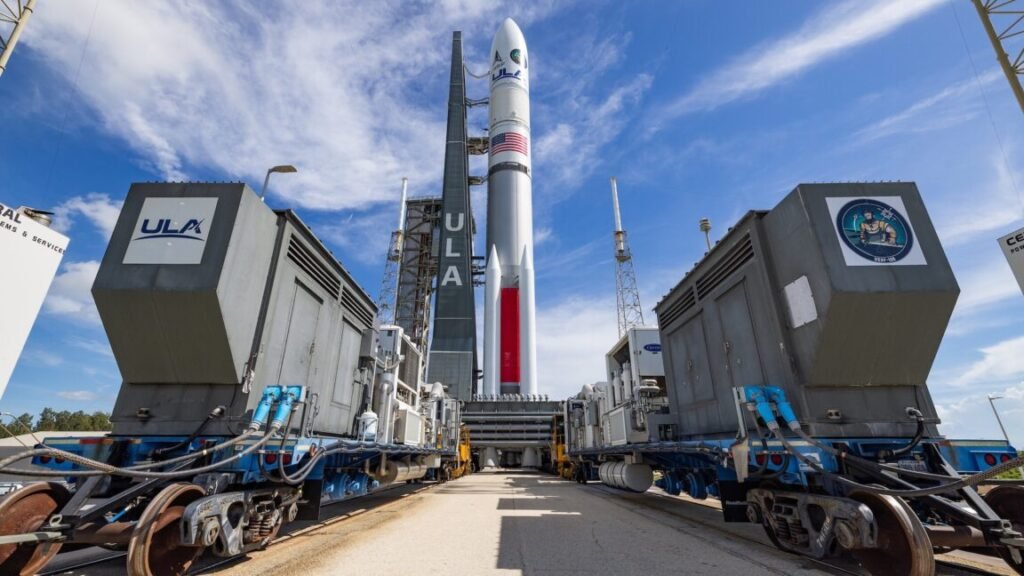
    The Vulcan rocket checks off several important boxes for the Space Force. First, it relies entirely on US-made rocket engines. The Atlas V rocket it is replacing uses Russian-built main engines, and given the chilled relations between the two powers, US officials have long desired to stop using Russian engines to power the Pentagon’s satellites into orbit. Second, ULA says the Vulcan rocket will eventually provide a heavy-lift launch capability at a lower cost than the company’s now-retired Delta IV Heavy rocket.

    Third, Vulcan provides the Space Force with an alternative to SpaceX’s Falcon 9 and Falcon Heavy, which have been the only rockets in their class available to the military since the last national security mission was launched on an Atlas V rocket one year ago.

    Col. Jim Horne, mission director for the USSF-106 launch, said this flight marks a “pretty historic point in our program’s history. We officially end our reliance on Russian-made main engines with this launch, and we continue to maintain our assured access to space with at least two independent rocket service companies that we can leverage to get our capabilities on orbit.”

    What’s onboard?

    The Space Force has only acknowledged one of the satellites aboard the USSF-106 mission, but there are more payloads cocooned inside the Vulcan rocket’s fairing.

    The $250 million mission that officials are willing to talk about is named Navigation Technology Satellite-3, or NTS-3. This experimental spacecraft will test new satellite navigation technologies that may eventually find their way on next-generation GPS satellites. A key focus for engineers who designed and will operate the NTS-3 satellite is to look at ways of overcoming GPS jamming and spoofing, which can degrade satellite navigation signals used by military forces, commercial airliners, and civilian drivers.

    “We’re going to be doing, we anticipate, over 100 different experiments,” said Joanna Hinks, senior research aerospace engineer at the Air Force Research Laboratory’s space vehicles directorate, which manages the NTS-3 mission. “Some of the major areas we’re looking at—we have an electronically steerable phased array antenna so that we can deliver higher power to get through interference to the location that it’s needed.”

    Arlen Biersgreen, then-program manager for the NTS-3 satellite mission at the Air Force Research Laboratory, presents a one-third scale model of the NTS-3 spacecraft to an audience in 2022.


    Credit:

    US Air Force/Andrea Rael

    GPS jamming is especially a problem in and near war zones. Investigators probing the crash of Azerbaijan Airlines Flight 8243 last December determined GPS jamming, likely by Russian military forces attempting to counter a Ukrainian drone strike, interfered with the aircraft’s navigation as it approached its destination in the Russian republic of Chechnya. Azerbaijani government officials blamed a Russian surface-to-air missile for damaging the aircraft, ultimately leading to a crash in nearby Kazakhstan that killed 38 people.

    “We have a number of different advanced signals that we’ve designed,” Hinks said. “One of those is the Chimera anti-spoofing signal… to protect civil users from spoofing that’s affecting so many aircraft worldwide today, as well as ships.”

    The NTS-3 spacecraft, developed by L3Harris and Northrop Grumman, only takes up a fraction of the Vulcan rocket’s capacity. The satellite weighs less than 3,000 pounds (about 1,250 kilograms), about a quarter of what this version of the Vulcan rocket can deliver to geosynchronous orbit.

    Ahead Force heights Key launch officials Rocket secrecy Space
    Share. Facebook Twitter Pinterest LinkedIn Tumblr Telegram Email Copy Link
    Previous ArticleMatch Group will pay $14 million to settle claims of deceptive business practices
    Next Article AOL Will Shut Down Dial-Up Internet Access in September
    Michael Comaous
    • Website

    Michael Comaous is a dedicated professional with a passion for technology, innovation, and creative problem-solving. Over the years, he has built experience across multiple industries, combining strategic thinking with hands-on expertise to deliver meaningful results. Michael is known for his curiosity, attention to detail, and ability to explain complex topics in a clear and approachable way. Whether he’s working on new projects, writing, or collaborating with others, he brings energy and a forward-thinking mindset to everything he does.

    Related Posts

    10 Mins Read

    I used Gemini Nano Banana 2 to create sketchnotes – here’s what it got right (and hilariously wrong)

    2 Mins Read

    The Colorful MacBook Neo Is Apple’s Cheapest Laptop Ever

    2 Mins Read

    FCC chair calls Paramount/WBD merger “a lot cleaner” than defunct Netflix deal

    2 Mins Read

    Who needs data centers in space when they can float offshore?

    3 Mins Read

    I’m not ashamed to admit the Kobo Remote is the best gadget I’ve bought this year

    6 Mins Read

    Skyrover S1: The lightweight cinematic drone leading the next wave of accessible aerial creativity

    Top Posts

    Discord will require a face scan or ID for full access next month

    February 9, 2026761 Views

    The Mesh Router Placement Strategy That Finally Gave Me Full Home Coverage

    August 4, 2025561 Views

    Past Wordle answers – all solutions so far, alphabetical and by date

    August 1, 2025230 Views
    Stay In Touch
    • Facebook

    Subscribe to Updates

    Get the latest tech news from FooBar about tech, design and biz.

    Most Popular

    Discord will require a face scan or ID for full access next month

    February 9, 2026761 Views

    The Mesh Router Placement Strategy That Finally Gave Me Full Home Coverage

    August 4, 2025561 Views

    Past Wordle answers – all solutions so far, alphabetical and by date

    August 1, 2025230 Views
    Our Picks

    I used Gemini Nano Banana 2 to create sketchnotes – here’s what it got right (and hilariously wrong)

    March 4, 2026

    The Colorful MacBook Neo Is Apple’s Cheapest Laptop Ever

    March 4, 2026

    FCC chair calls Paramount/WBD merger “a lot cleaner” than defunct Netflix deal

    March 4, 2026

    Subscribe to Updates

    Get the latest creative news from FooBar about art, design and business.

    Facebook
    • About Us
    • Contact us
    • Privacy Policy
    • Disclaimer
    • Terms and Conditions
    © 2026 GeekBlog

    Type above and press Enter to search. Press Esc to cancel.

    Ad Blocker Enabled!
    Ad Blocker Enabled!
    Our website is made possible by displaying online advertisements to our visitors. Please support us by disabling your Ad Blocker.