

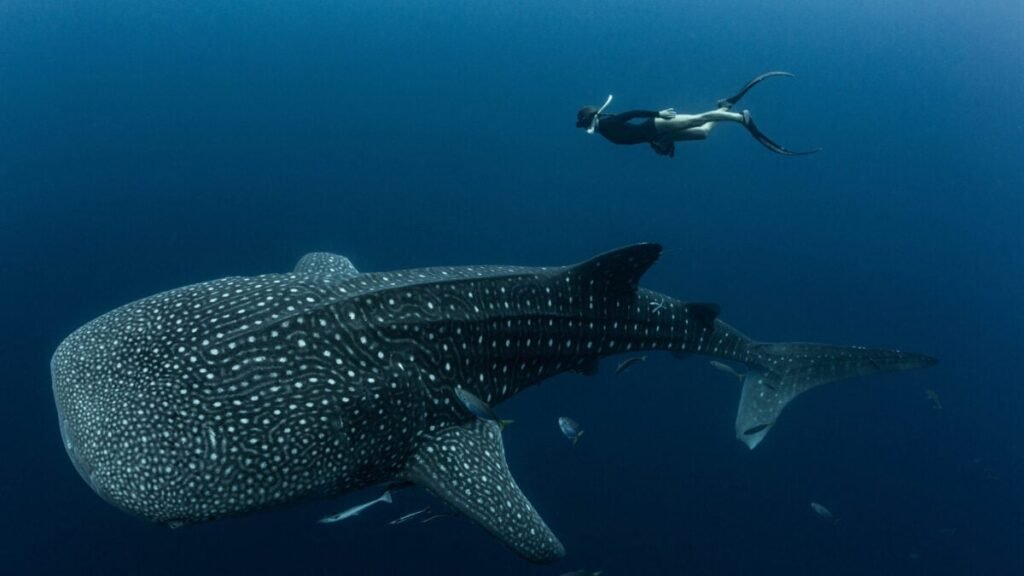
The world’s largest living fish has plenty to fear from people. New research shows that a large proportion of whale sharks at a popular and protected tourism region bear scars caused by human activity.
A large group of marine scientists examined more than a decade’s worth of whale shark sightings in the Bird’s Head Seascape off Indonesia. Among other things, they found that over half of the sharks had injuries attributable to humans. Many of these injuries were preventable, the researchers say, and simple measures can be taken to ensure the safety of these gentle giants moving forward.
“[The] high percentage of injured whale sharks shows that even in protected zones, the whale shark interactions with fishing gear and tourism still pose risks to them,” study author Edy Setyawan, lead conservation scientist at the Elasmobranch Institute Indonesia, told Gizmodo.
An endangered giant
Befitting its nickname, the whale shark (Rhincodon typus) is certainly hefty.
As adults, they commonly reach lengths between 30 and 40 feet (9 and 12 meters) and usually weigh around 18 tons; some get even larger. Despite their size, though, they’re no ferocious sea monster. These slow-moving fish are filter feeders that suck up their meals from the surrounding water. Though they can eat large and small marine organisms alike, they typically stick to microscopic plankton.
Whale sharks can be found in warm and tropical waters all over the world, but their numbers have dwindled dramatically in recent decades, and they’re classified as an endangered species. They face several human-made threats, including hunting, climate change, and bycatching (being unintentionally caught by fishing boats). And even with ongoing conservation efforts, their recovery has been slow, partly because it can take up to 30 years for the sharks to reach sexual maturity.
Common but avoidable harm
According to Edy Setyawan, previous studies looking at the population health of these sharks have been limited to short-term surveys or snapshots of a single location. In their new research, the team was able to analyze 13 years of sightings along the Bird’s Head Seascape (2010 to 2023) from four regions of the area.
The seascape is well known for its diversity and is estimated to contain three-quarters of the world’s coral species along with many other migrating species like the whale shark. The seascape is a popular destination for marine tourism and is covered by a network of 26 different Marine Protected Areas.
Though the researchers largely studied past data they themselves collected, they also relied on photos captured by tourism operators and citizen scientists. All told, they identified 268 unique whale sharks. Roughly 200 of these sharks sported visible injuries, they found. And of these, 80% had injuries determined to be human-caused (58.3% had injuries from natural causes, while some sharks had both).
On the positive side, severe injuries, including amputation, caused by humans were relatively rare (17.7%). The most common human-associated injuries were caused by sharks colliding into boats and bagans—floating platforms adorned with nets and lights used for fishing.
The team’s findings were published Thursday in Frontiers in Marine Science.
Fishing and marine tourism are important parts of the local economy, including whale shark sighting tours. And while the increasing popularity of these tours could lead to more injured sharks, the researchers argue this doesn’t have to be inevitable.
They lay out simple steps that can greatly cut down on whale shark injuries, such as stricter regulations that would compel bagan fishers and owners to remove the sharp edges from their platforms. Tourism-related measures, like limiting boat traffic, enforcing slow-speed zones, and promoting responsible diving and snorkeling practices, would further reduce harm, Setyawan said.
Not all the team’s findings are dire. They’ve learned a lot about these majestic aquatic beasts, including the main regions they reside within the seascape. Most of the sharks found there were also young juvenile males, suggesting the area is an important nursery habitat for the species.
They next plan to track the annual population trends of whale sharks living in the seascape via satellite tags, which should also help them answer important questions like whether these populations migrate elsewhere.
