

An incredibly rare, tragic death in the UK might still have a silver lining.
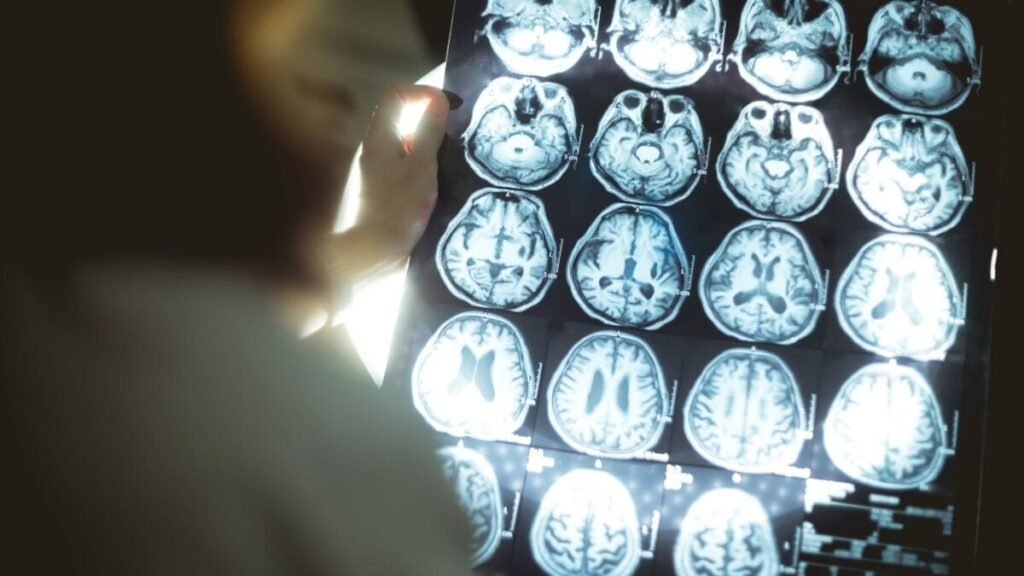
Late last December, British resident Andre Yarham died at the age of 24 from an extremely early form of dementia. Yarham was diagnosed with the condition only two years ago, after an MRI scan revealed his brain resembled that of a 70-year-old. His family agreed to donate his body to science, hoping that scientists can learn something from his untimely passing.
“He must have been one of the youngest,” Samantha Fairbairn, Yarham’s mother, told the BBC last week.
A cruel fate
According to Fairbairn, her son’s symptoms began to appear around late 2022. He started to easily forget things and behave strangely.
Tests showed unusual shrinking in Yarham’s brain, particularly around the frontal and temporal lobes, the regions that help govern personality and language. Eventually, in November 2023, doctors formally diagnosed him with early-onset frontotemporal dementia, or FTD.
Yarham remained relatively active and cognizant following his diagnosis. But by September 2025, he was enrolled in a care home. Within about a month’s time, he was no longer able to walk under his own power and required a wheelchair, and during his last month of life, he completely lost the ability to speak. Finally, on December 27, he passed away.
“Dementia is a cruel, cruel disease,” said Fairbairn. “People with cancer, they can have radiotherapy, they can have chemotherapy, and people go into remission and can lead a fruitful, memorable life. With dementia, there’s nothing.”
FTD is relatively uncommon, accounting for about 5% of reported dementia cases. And Yarham’s illness was even more unusual. Only about 7.5% of people living with dementia currently in the UK are early-onset, in which symptoms appear before the age of 65. But most of these cases still occur after age 30, while the typical onset of FTD is between the ages of 45 and 65.
According to a 2022 study, less than two dozen cases of extremely early-onset (25 and younger) FTD have been documented worldwide. The earliest known case of FTD occurred at age 14, but Yarham seems to have been the youngest case recorded in England, according to the Manchester Evening News.
Lessons to be learned
Dementia tends to be caused by a complex mix of factors, some of which may be preventable or modifiable through lifestyle changes. But early-onset dementia cases are strongly tied to genetic mutations, including some that make the disease all but inevitable. Yarham’s illness in particular was linked to a protein mutation, according to the BBC.
Though most cases aren’t early-onset, scientists could potentially learn important things about dementia, and FTD specifically, from better understanding the genetic factors underpinning Yarham’s case. Following his death, Fairbairn agreed to donate his brain to Addenbrooke’s Hospital for research.
“If in the future that can help one family get a few more years with their loved ones then, that would be worth it,” she said.
It’s estimated that over 55 million people globally are living with dementia, including around 7 million people in the U.S. These numbers are expected to more than double by 2050.
Source: gizmodo.com
