

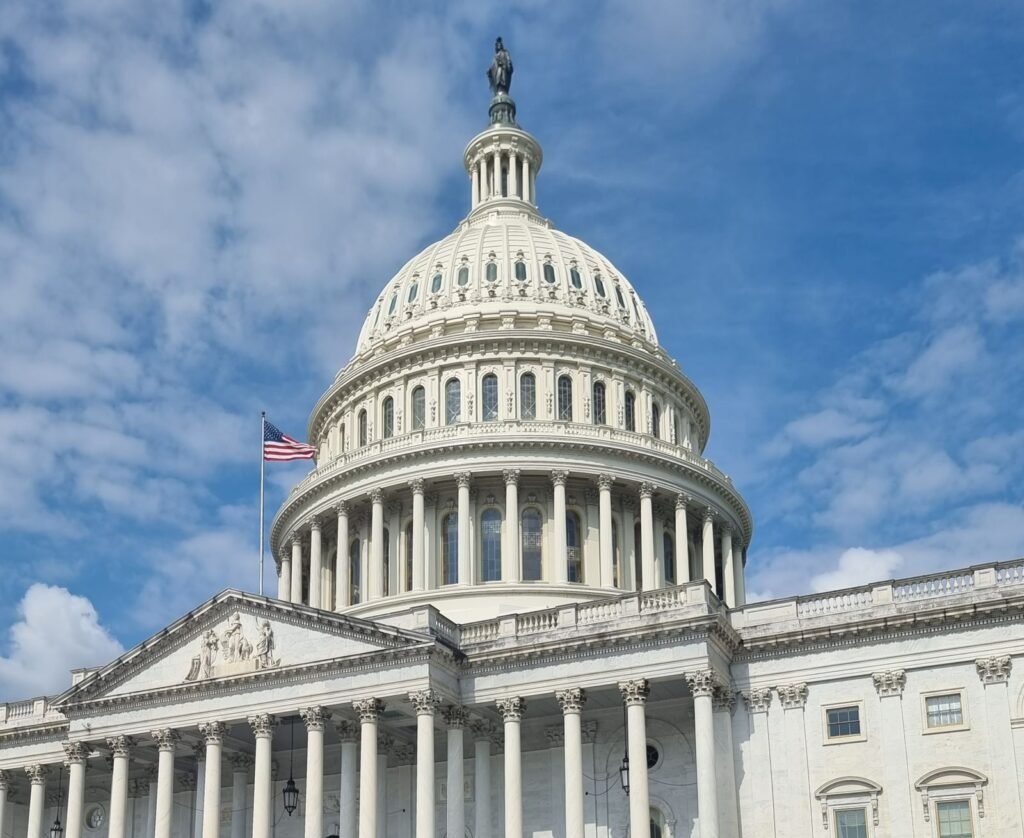
The US DeepSeek ban for government systems is now formal: a Department of Homeland Security order published on October 20, 2026 bars federal civilian agencies from buying DeepSeek products and requires them to remove what they already run. It also covers third party products and services “developed using DeepSeek implementations,” which reaches far beyond the DeepSeek app. The ban does not apply to private companies or individuals.
Quick answer
- Who is covered: federal civilian executive branch agencies; defense and intelligence systems fall under separate rules
- What it requires: no new purchases from DeepSeek or its affiliates, and removal of existing DeepSeek products
- The wide part: third party products built with DeepSeek technology must go too
- Legal basis: the Federal Acquisition Supply Chain Security Act of 2018 (FASCSA)
- Is DeepSeek banned for consumers? No. The order does not restrict businesses or the public
What the DHS order says
The notice appeared in the Federal Register on October 20, 2026 under docket DHS-2026-0628. The order itself, Order 2026-01, was signed by Homeland Security Secretary Markwayne Mullin and is dated July 24, 2026 according to law firm Haynes Boone and The Hacker News, so it sat for 87 days before being published. At least one outlet reported a June signing date, so treat the exact signing day as reported rather than settled.
The order does two things at once. First, it excludes IT products and services from Hangzhou DeepSeek Artificial Intelligence Co., Ltd. and its affiliates from federal civilian procurement, including agency approved product lists and government ecommerce marketplaces. Second, it requires agencies to remove DeepSeek products from their systems, along with “third party products and services developed using DeepSeek implementations.” Affiliates are defined by the federal control test, not by branding, so a rebranded subsidiary would still count.
| Detail | What the order says |
|---|---|
| Published | October 20, 2026, Federal Register, docket DHS-2026-0628 |
| Signed by | DHS Secretary Markwayne Mullin (order dated July 24, 2026, as reported) |
| Law used | Federal Acquisition Supply Chain Security Act of 2018 |
| Applies to | Federal civilian executive branch agencies |
| Excluded | DeepSeek and affiliate products from all civilian procurement |
| Removed | DeepSeek products and third party products built with DeepSeek implementations |
| Exceptions | Written request with a compelling justification, within 60 days of issuance |
| Review | At least once a year |
Why DHS says DeepSeek is a risk
The Federal Register notice itself gives no reasons, but the risk summary in the signed order does, according to Haynes Boone’s review. It points to four concerns: DeepSeek’s servers are in China, where the government has broad authority to access company infrastructure; DeepSeek’s hosted accounts collect personal information and may track and fingerprint users; prompts typed into DeepSeek’s most widely used apps may send sensitive data to China; and the models may contain malware or other vulnerabilities, with security flaws previously found in DeepSeek’s iOS app cited as an example.
DeepSeek’s own privacy policy says it collects, processes and stores personal data in the People’s Republic of China. That is the core issue for any government user typing official information into the hosted chatbot.
Why the third party clause matters most
A ban on one vendor’s app is easy to follow. A ban on anything built with that vendor’s technology is not. DeepSeek publishes open weights models, so other companies can download them, fine tune them and wrap them in their own products. A document summarizer, a coding assistant or a support chatbot sold to an agency could run a DeepSeek derived model without saying so.
The order does not define “DeepSeek implementation,” and its removal text does not distinguish between DeepSeek’s hosted service and a copy running on an agency’s own servers, nor does it address fine tuned derivatives. That gap matters: a self hosted model does not send prompts to China, so the data transfer risk applies most directly to the hosted app and API. Until DHS clarifies, the cautious reading is that any model with DeepSeek lineage is in scope.
The practical headache
Agencies now need to ask every software vendor which models sit under their AI features. Many vendors have never been asked that question, and some may not have a clean answer ready, especially when models come through resellers or open source toolkits.
What contractors have to do
The order reaches federal suppliers through FAR clause 52.204-30, which applies to FASCSA orders. Absent a waiver, contractors may not provide or use covered DeepSeek products in performing a contract. Law firms Wiley and Haynes Boone summarize the duties this way:
- Check regularly. Search SAM.gov for FASCSA orders at least every three months and make a reasonable inquiry into your supply chain.
- Report fast. Notify the contracting officer within 3 business days of finding a covered product, then send mitigation details within 10 business days.
- Flow it down. The clause must be included in subcontracts, including for commercial products and services.
- Watch your contract terms. For contracts signed before the order, the prohibition applies once it is added by amendment, but the inquiry and reporting duties apply right away.
How US restrictions on DeepSeek built up
| Date | Action | Who it covers |
|---|---|---|
| January 2025 | DeepSeek R1 release rattles the AI industry and markets | n/a |
| By February 2025 | Congress, NASA, the Navy, the Pentagon and Texas bar DeepSeek on official devices | Individual offices and one state |
| December 18, 2025 | FY2026 defense bill (Public Law 119-60) orders removal from Defense Department systems and bars use by DoD contractors from January 17, 2026; a separate section covers intelligence systems | Defense and intelligence community |
| September 8, 2026 | NSA, FBI and CISA accuse DeepSeek and five other Chinese AI firms of “industrial scale” distillation of US models | Advisory, no legal ban |
| October 20, 2026 | DHS FASCSA order published | All federal civilian agencies |
The FASCSA tool itself is still new. The Director of National Intelligence used it first in 2025, against the Swiss firm Acronis, for intelligence community purchases. The DeepSeek order is the first time DHS has used it across the civilian government. It also fits a wider pattern of Washington tightening how AI enters government work, from the people Pete Hegseth brought into the Pentagon’s AI effort to the backlash that followed when ChatGPT uninstalls jumped after OpenAI’s defense deal.
The distillation backdrop
The order lands weeks after the September 8 advisory in which the NSA, FBI and CISA named DeepSeek, Moonshot AI, Alibaba, MiniMax, StepFun and Z.AI. The agencies said these companies had been extracting capabilities from Claude, GPT, Gemini and Grok since at least late 2024, routing requests through gray market API proxies. Distillation means training one model on another model’s outputs.
The DHS order rests on supply chain and data security grounds, not on the distillation claims, and it names only DeepSeek. Moonshot’s Kimi and Alibaba’s Qwen are not covered, even though both appear in the September advisory. That inconsistency is one of the first things agencies and vendors will ask DHS about.
Beijing pushes back
At a briefing on October 20, Chinese Foreign Ministry spokesperson Mao Ning said China “consistently opposes the overstretching of the concept of national security” and would “resolutely safeguard the legitimate rights and interests of Chinese companies.” China has framed US technology restrictions this way for years, alongside its own regulatory moves against US firms, such as the antitrust probe into Google’s Android that it later closed. DeepSeek did not respond to requests for comment from the Associated Press.
Latest update, November 2026
The order’s 60 day window for exception requests ran from its July 24 issue date, which means it closed on September 22, before the public even saw the order. Agencies were therefore expected to have acted already, and outside observers cannot yet tell how many exceptions DHS granted. DHS questions go to CISA’s FASCSA Order Implementation Team.
Meanwhile DeepSeek keeps shipping. Two days before the notice was published, it released a new V4.1 Flash checkpoint under the MIT license, and its models remain popular with developers because they are cheap and close to the US frontier on benchmarks. The order removes that option for federal civilian systems, but it changes nothing for companies, schools or individuals who choose to use DeepSeek.
What to watch next
- A definition. Guidance on what counts as a “DeepSeek implementation,” especially for self hosted or fine tuned models.
- Vendor disclosures. Expect software suppliers to start listing which models power their AI features, a lesson in supply chain vetting similar to the one exposed when North Korean IT workers slipped into remote jobs.
- Other Chinese labs. The same FASCSA tool could be used against the other five firms named in the September advisory.
- Congress. Bills to ban DeepSeek on all government devices were introduced in February 2025 but had not moved past committee as of late October 2026.
The bottom line
The DeepSeek order is less about one chatbot and more about a principle: if a model comes from a vendor the government distrusts, so does everything built on top of it. That is hard to enforce in an industry where models are routinely rebranded, fine tuned and bundled. Federal IT teams now have to find out what they actually run, and vendors have to be ready to tell them.
FAQ
Is DeepSeek banned in the United States?
Not for the public. The October 20, 2026 DHS order applies only to federal civilian agencies and their contractors’ work for them. Private companies, schools and individuals can still use DeepSeek.
What does the DHS DeepSeek order require?
Federal civilian agencies may not buy DeepSeek products or services, and they must remove existing DeepSeek products, including third party products and services developed using DeepSeek implementations.
Does the DeepSeek ban cover apps built on DeepSeek models?
Yes. The order explicitly covers third party products built with DeepSeek implementations. It does not define that term or say how self hosted and fine tuned models are treated.
Why did the US government ban DeepSeek from federal systems?
The order’s risk summary cites DeepSeek’s servers in China, Chinese government access powers, collection and tracking of user data, sensitive prompts flowing to China, and possible malware or vulnerabilities in its models and apps.
Can agencies get an exception to the DeepSeek order?
Yes. Agencies could request an exception in writing with a compelling justification within 60 days of the order’s issuance. The order was dated July 24, 2026, so that window closed in September.
What do federal contractors need to do about DeepSeek?
Under FAR clause 52.204-30 they must not provide or use covered DeepSeek products, check SAM.gov for FASCSA orders at least every three months, and report any covered product within 3 business days.
Sources
- Federal Register: Notice of order regarding exclusion and removal of DeepSeek products
- Haynes Boone: DHS issues DeepSeek exclusion and removal order
- The Hacker News: US orders DeepSeek removed from federal systems
- Wiley: DeepSeek ban creates new compliance and reporting obligations for contractors
- TechCrunch: US orders federal agencies to remove China’s DeepSeek AI from their systems
- ExecutiveGov: NSA, FBI, CISA warn of China AI distillation attacks
- Petronella Technology: DeepSeek and the FY2026 NDAA
About this article: GeekBlog covers U.S. technology news, AI, phones, smartwatches and gaming. Every story is written and checked under our Editorial Policy. Spotted a mistake or have a story tip? Contact our editors.
