

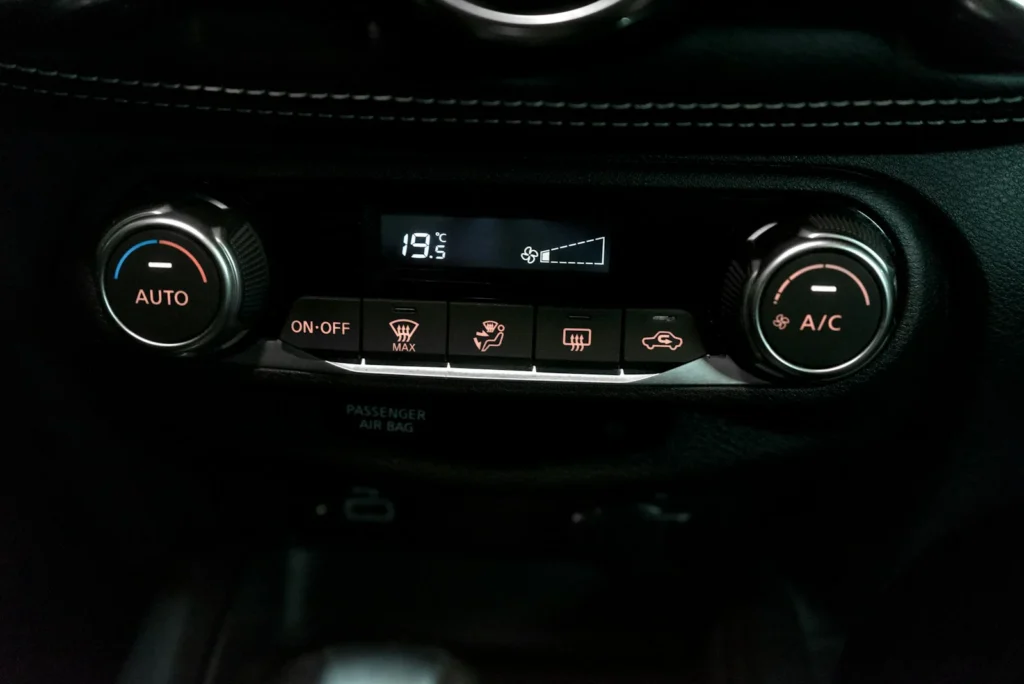
Physical buttons are making a comeback in new cars, and crash test programs are a big reason why. Since January 2026, Euro NCAP rewards cars that keep real controls for key driving functions, and Australia’s ANCAP has adopted the same idea in its 2026 protocols. Here is what the rules actually say, which controls are covered, and where the United States stands as of October 2026.
What Euro NCAP changed in 2026
Euro NCAP is the independent crash test program whose star ratings appear in car ads across Europe. It does not make laws, but automakers care deeply about five star results, so its protocols shape how cars are designed.
Its 2026 rules took effect in January and add a stronger focus on safe driving and driver distraction. As part of that, the program checks whether the most important controls can be operated without hunting through a screen. A car that uses a button, stalk or dial for each of the listed functions earns the available points. A car that relies on touch panels or menus for them loses those points, which makes a top rating harder to reach.
Which controls need to be physical
The two programs cover a similar short list of functions you might need instantly, often in an emergency:
Called indicators in Australia. Usually a stalk on the steering column.
Needs to be found in a split second after a breakdown or crash.
A warning tool that cannot wait for a menu.
Sudden rain or spray from a truck demands an instant response.
The emergency call button, known as eCall in Europe.
ANCAP’s public guidance also lists headlights among the key driver controls. It gives automakers two ways to score: offer physical buttons for these functions, or dedicate a fixed portion of the cabin display to them so they are always in the same spot. ANCAP says the new driving controls assessment is worth up to five points in its safe driving category.
| Program or body | Region | Status in October 2026 |
|---|---|---|
| Euro NCAP | Europe | In force since January 2026, affects star ratings |
| ANCAP | Australia and New Zealand | Part of 2026 protocols, up to five points |
| China (MIIT) | China | Draft national standard requiring physical controls for core functions |
| NHTSA and IIHS | United States | No button requirement; voluntary distraction guidelines only |
Why safety groups want buttons back
The core issue is distraction. A physical control has a fixed location and a shape you can feel, so after a few days of ownership most drivers can use it without looking. A touchscreen control demands your eyes: you have to glance at the screen, find the right icon, tap it and often check that the tap registered. Every one of those glances is time your eyes are off the road.
Touch panels also spread for a reason that has little to do with drivers. A single screen or capacitive panel that controls many functions is generally cheaper and faster to install than a row of individual switches, each with its own wiring. It also lets automakers change features with software. The tradeoff is that simple tasks like turning on the wipers can turn into a multistep job.
How automakers are responding
Several brands had already started reversing course before the new rules arrived. Volkswagen’s design chief Andreas Mindt said in 2025 that future VW models will get physical buttons for crucial functions, starting with the ID.2all electric small car, and called the move away from buttons a mistake the company would not repeat. VW had already brought back real steering wheel buttons after complaints about touch pads.
Kia’s head of interior design, Jochen Paesen, said in January 2026 that the brand will keep physical switches for functions drivers need instantly, such as climate and volume, while using screens for less critical features. Porsche has also signaled a return to more physical controls in its newest models. On the other end, Tesla still runs most functions, including gear selection in some models, through the central screen, which shows how far apart design philosophies remain.
The US situation
American drivers are not covered by any of these rules. NHTSA, the federal safety regulator, has had voluntary visual and manual distraction guidelines since 2013, which recommend that in car tasks be doable with short glances of about two seconds and no more than twelve seconds in total. They are guidelines, not requirements, and they do not demand physical buttons.
The US New Car Assessment Program does not score physical controls, and the Insurance Institute for Highway Safety has no button test in its awards. In Congress, Rep. Kevin Mullin has introduced the Driver Technology and Pedestrian Safety Act, which would only order a federal study of touchscreen distraction. Still, because automakers design many models for global markets, cars sold in the US are likely to benefit from the European, Australian and Chinese push anyway.
FAQ
Are touchscreens being banned in cars?
No. Euro NCAP and ANCAP only reward physical controls for a short list of key functions. Infotainment, navigation and most settings can stay on the screen.
Is Euro NCAP a law?
No. It is an independent rating program. Carmakers can sell a car with a lower score, but a weaker rating can hurt sales.
Does the US require physical buttons?
Not as of October 2026. NHTSA has voluntary distraction guidelines, and a bill in Congress only calls for a study.
Which functions count under the 2026 rules?
Turn signals, hazard lights, horn, windshield wipers and the SOS call, with ANCAP also naming headlights.
The verdict
Crash test programs have found a practical way to slow the march of touchscreens: make buttons for essential functions part of the safety score. Europe and Australia are leading, China is drafting its own rules, and the US is still at the study stage. For buyers, the takeaway is simple: test the basic controls before you sign.
Updated October 2026: covers the Euro NCAP and ANCAP 2026 physical control rules, automaker responses and the current US position.
Featured photo: Luca Freddi on Unsplash.
About this article: GeekBlog covers U.S. technology news, AI, phones, smartwatches and gaming. Every story is written and checked under our Editorial Policy. Spotted a mistake or have a story tip? Contact our editors.
