Close Menu
GeekBlog

    Subscribe to Updates

    Get the latest creative news from FooBar about art, design and business.

    What's Hot

    Stop falling for scams when Norton’s antivirus software is 70% off right now

    March 28, 2026

    Acer Promo Codes and Deals: Save 40% on Bundles

    March 28, 2026

    Playing Wolfenstein 3D with one hand in 2026

    March 28, 2026
    Facebook X (Twitter) Instagram Threads
    GeekBlog
    • Home
    • Mobile
    • Tech News
    • Blog
    • How-To Guides
    • AI & Software
    Facebook
    GeekBlog
    Home»Tech News»Here’s What a Google Subpoena Response Looks Like, Courtesy of the Epstein Files
    Tech News

    Here’s What a Google Subpoena Response Looks Like, Courtesy of the Epstein Files

    Michael ComaousBy Michael ComaousFebruary 25, 20263 Mins Read
    Share Facebook Twitter Pinterest LinkedIn Tumblr Email Copy Link
    Here’s What a Google Subpoena Response Looks Like, Courtesy of the Epstein Files
    Share
    Facebook Twitter LinkedIn Pinterest Email Copy Link

    Last month, the Department of Justice released over 3 million documents related to convicted sex offender Jeffrey Epstein. While the dumps shed light on Epstein’s own social circle and activities, they also provide a rare window into the inner workings of a federal investigation, including how tech companies like Google respond to government requests for information.

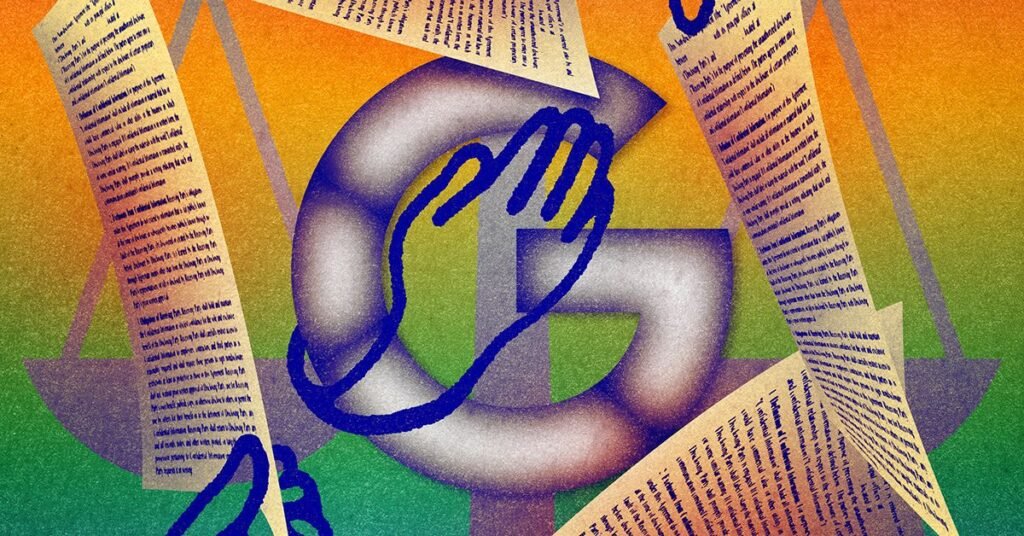
    WIRED found several grand jury subpoenas addressed to Google in the DOJ’s most recent release, along with files that appear to be Google data produced about specific users and letters on Google letterhead responding to specific subpoena requests.

    Google declined to comment on the specific documents included in the dumps, but spokesperson Katelin Jabbari said in a written statement that the company’s “processes for handling law enforcement requests are designed to protect users’ privacy while meeting our legal obligations. We review all legal demands for legal validity, and we push back against those that are overbroad, including objecting to some entirely.”

    The documents show how much the government will sometimes attempt to obtain without a judge’s sign-off, how Google pushes back against requests that it says are beyond what’s required by law, and what types of information the company has turned over about its users.

    Secret by Design

    Subpoenas are normally shrouded in secrecy. A 2019 letter signed by the then US attorney for the Southern District of New York and addressed to Google’s legal department prohibited the company by law from revealing the letter’s existence to Epstein coconspirator Ghislaine Maxwell, the subject of the subpoena, for 180 days from the date of the order. The letter also instructed Google to alert prosecutors if it planned to tell Maxwell about the existence of the order after the 180 days were up, “in case the investigation remains ongoing and the order needs to be renewed.”

    Even when not required by law, prosecutors requested Google’s silence. A 2018 letter instructing Google to preserve all emails (including those in draft and trash folders) and Google Drive content associated with four gmail accounts also requested that Google not disclose the existence of the letter to anyone, including the people who owned the accounts. The letter also requested that Google notify federal prosecutors if the company intended to make a disclosure, so the prosecutors could “obtain a non-disclosure order if necessary.”

    It’s unclear whether Google informed the account holders of the redacted emails after the 180-day period described in the 2019 letter were up. Google’s privacy and terms says that when it receives a request from a government agency, it will email the subject of that request before it discloses that information, unless it is prohibited by law.

    Back to Basics

    Many of the files included in the Epstein dumps were titled “GOOGLE SUBSCRIBER INFORMATION,” and contained the account name, recovery email address and phone numbers, what Google services the account can access, when the account was created, the “Terms of Service IP” address, and a log of IP address activity.

    Mario Trujillo, a senior staff attorney at the Electronic Frontier Foundation, says that subscriber information requires the lowest legal bar for the government to access under the Stored Communications Act, a 1980s law that lays out a lot of the rules for what kind of information the government can access from electronic service providers like Google.

    While some types of information, like email contents, require a search warrant under the law, “on the opposite end of that is basic subscriber information,” Trujillo says. The act explicitly permits the government to obtain that information with just a subpoena, which does not necessarily require judicial approval.

    Source: www.wired.com

    Courtesy Epstein Files Google Heres response Subpoena
    Share. Facebook Twitter Pinterest LinkedIn Tumblr Telegram Email Copy Link
    Previous ArticleBoozy chimps fail urine test, confirm hotly debated theory
    Next Article 90% of sales teams use AI agents – but half of them have the same data problem
    Michael Comaous
    • Website

    Michael Comaous is a dedicated professional with a passion for technology, innovation, and creative problem-solving. Over the years, he has built experience across multiple industries, combining strategic thinking with hands-on expertise to deliver meaningful results. Michael is known for his curiosity, attention to detail, and ability to explain complex topics in a clear and approachable way. Whether he’s working on new projects, writing, or collaborating with others, he brings energy and a forward-thinking mindset to everything he does.

    Related Posts

    3 Mins Read

    Stop falling for scams when Norton’s antivirus software is 70% off right now

    4 Mins Read

    Acer Promo Codes and Deals: Save 40% on Bundles

    2 Mins Read

    Playing Wolfenstein 3D with one hand in 2026

    7 Mins Read

    Whoop has LeBron – now it wants your mom

    1 Min Read

    Sony temporarily suspends memory card sales due to shortages

    2 Mins Read

    Apple TV is now home to CrunchyRoll anime

    Top Posts

    The Mesh Router Placement Strategy That Finally Gave Me Full Home Coverage

    August 4, 2025804 Views

    Discord will require a face scan or ID for full access next month

    February 9, 2026765 Views

    Trade in your old phone and get up to $1,100 off a new iPhone 17 at AT&T – here’s how

    September 10, 2025329 Views
    Stay In Touch
    • Facebook

    Subscribe to Updates

    Get the latest tech news from FooBar about tech, design and biz.

    Most Popular

    The Mesh Router Placement Strategy That Finally Gave Me Full Home Coverage

    August 4, 2025804 Views

    Discord will require a face scan or ID for full access next month

    February 9, 2026765 Views

    Trade in your old phone and get up to $1,100 off a new iPhone 17 at AT&T – here’s how

    September 10, 2025329 Views
    Our Picks

    Stop falling for scams when Norton’s antivirus software is 70% off right now

    March 28, 2026

    Acer Promo Codes and Deals: Save 40% on Bundles

    March 28, 2026

    Playing Wolfenstein 3D with one hand in 2026

    March 28, 2026

    Subscribe to Updates

    Get the latest creative news from FooBar about art, design and business.

    Facebook
    • About Us
    • Contact us
    • Privacy Policy
    • Disclaimer
    • Terms and Conditions
    © 2026 GeekBlog

    Type above and press Enter to search. Press Esc to cancel.

    Ad Blocker Enabled!
    Ad Blocker Enabled!
    Our website is made possible by displaying online advertisements to our visitors. Please support us by disabling your Ad Blocker.