

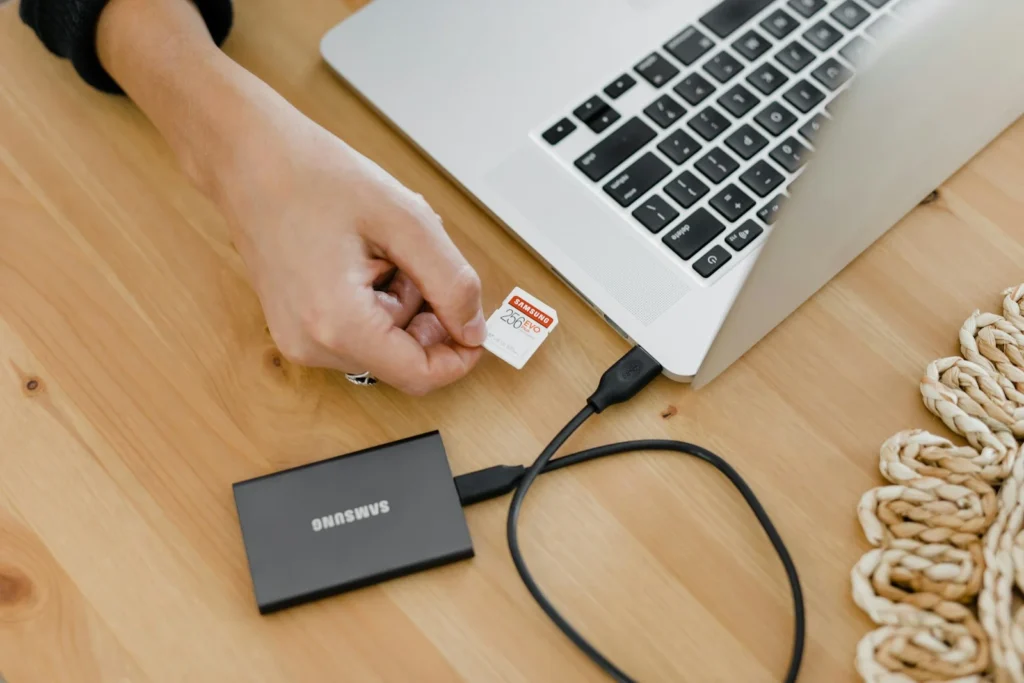
The best SSD for you in 2026 depends on what your computer can actually use. A PCIe 5.0 drive only makes sense on a recent desktop or laptop with a Gen 5 M.2 slot, a PCIe 4.0 drive is still the sweet spot for most gaming PCs and the PS5, and SATA or portable SSDs cover older machines and backups. Below are the current drives worth shortlisting in each class, how they compare on official specs, and what changed in the SSD market this year.
What changed in the SSD market in 2026
Two shifts make this year unusual. First, Micron announced in December 2025 that it would leave the consumer business, and Crucial branded SSDs and memory stopped shipping to retailers after February 2026. Drives like the Crucial T710, T500 and MX500 can still turn up as remaining stock, and Micron says warranty support for existing Crucial products continues, but they will not be restocked.
Second, demand from data centers has absorbed much of the world’s NAND flash supply. At Computex 2026, an executive at controller maker Silicon Motion said the retail SSD market had nearly disappeared and that prices on many NVMe drives had more than doubled, with tight supply expected to continue into 2027. In practice that means prices move quickly, so compare current listings rather than older deal prices, and buy only from the brand’s own store or authorized sellers, since counterfeit high capacity drives are circulating.
Best SSDs by category
| Drive | Interface | Rated read speed | Max capacity |
|---|---|---|---|
| Samsung 9100 Pro | PCIe 5.0 x4 M.2 | Up to 14,800 MB/s | 8TB |
| WD Black SN8100 | PCIe 5.0 x4 M.2 | Up to 14,900 MB/s | 8TB |
| Samsung 990 Pro | PCIe 4.0 x4 M.2 | Up to 7,450 MB/s | 4TB |
| Samsung 990 EVO Plus | PCIe 4.0 x4 or 5.0 x2 M.2 | Up to 7,250 MB/s | 4TB |
| WD Black SN7100 | PCIe 4.0 x4 M.2 | Up to 7,250 MB/s | 4TB |
| Samsung 870 EVO | SATA, 2.5 inch | Up to 560 MB/s | 4TB |
| Samsung T9 | USB 3.2 Gen 2×2 | Up to 2,000 MB/s | 4TB |
All speeds above are the manufacturers’ rated maximums for sequential transfers. Real world performance depends on capacity, your slot, cooling and the type of work.
Best PCIe 5.0 SSDs
The Samsung 9100 Pro is rated at up to 14,800 MB/s reads and 13,400 MB/s writes on the larger models and comes in 1TB, 2TB, 4TB and 8TB, with or without a heatsink. Samsung says the 8TB heatsink model is thin enough for the PS5 expansion slot. The WD Black SN8100, now sold by SanDisk, is rated at up to 14,900 MB/s reads and 14,000 MB/s writes, also scales to 8TB, and offers a heatsink version. If you find a Crucial T710 in stock, it is rated at up to 14,500 MB/s reads, but remember the brand is winding down.
Gen 5 drives shine with very large file copies, video editing and heavy creative work. For gaming, load times rarely improve enough over a good Gen 4 drive to justify the higher price, and these drives run hotter, so they usually need the motherboard heatsink or a heatsink model.
Best PCIe 4.0 SSDs
For most desktops, laptops and consoles, a Gen 4 drive is the smart buy. The Samsung 990 Pro is a high end Gen 4 drive with DRAM cache, rated at up to 7,450 MB/s. The Samsung 990 EVO Plus and WD Black SN7100 both reach up to 7,250 MB/s without a DRAM cache, which keeps them cooler and more power efficient, a good fit for laptops and handheld gaming PCs that accept full length M.2 drives. The 990 EVO Plus can also run on two PCIe 5.0 lanes in newer thin laptops.
Best SATA SSD
If your PC is older and only has 2.5 inch SATA bays, the Samsung 870 EVO remains a dependable pick at up to 560 MB/s, which is about the ceiling of the SATA interface. Any SATA SSD is still a huge step up from a spinning hard drive.
Best portable SSDs
The Samsung T9 is rated at up to 2,000 MB/s, but only on a USB 3.2 Gen 2×2 port, which many laptops and all Macs lack. On a standard 10 Gbps USB port, drives like the Samsung T7 Shield or SanDisk Extreme Portable deliver around 1,050 MB/s in a rugged, compact shell and cost less.
How to choose the right SSD
- Check your slot. Look up your motherboard or laptop manual to see whether the M.2 slot supports PCIe 5.0, 4.0 or only SATA, and which length it accepts. Most use the 2280 size.
- Pick capacity first. 1TB is the practical minimum for Windows plus a few games, and 2TB is more comfortable. Drives also tend to perform better with free space left over.
- DRAM or not. Drives with a DRAM cache handle sustained heavy work better, while DRAMless drives run cooler and suit laptops and handhelds.
- Look at endurance and warranty. The TBW rating shows how much data the drive is rated to write over its life. Five year warranties are common on the drives above.
- Plan for heat. Gen 5 drives and consoles need a heatsink. Laptops usually do not have room for one.
FAQ
Is a PCIe 5.0 SSD worth it for gaming?
Usually not yet. Game load times are similar on fast Gen 4 drives, so most gamers get more value from a larger Gen 4 drive.
Can I still buy Crucial SSDs?
Only from remaining stock. Micron stopped shipping Crucial consumer products after February 2026, though it says warranties on existing drives are still honored.
Why are SSD prices higher in 2026?
NAND flash makers are prioritizing AI data center orders, which has cut supply for retail drives and pushed prices up across most capacities.
Does a PCIe 5.0 SSD work in a PCIe 4.0 slot?
Yes. PCIe is backward compatible, but the drive runs at the slower Gen 4 speed.
The verdict
Match the drive to your slot and your workload. The Samsung 9100 Pro and WD Black SN8100 are the top PCIe 5.0 picks for heavy creative work, while a Gen 4 drive like the Samsung 990 Pro, 990 EVO Plus or WD Black SN7100 is the best balance for gaming PCs, laptops and the PS5. With prices volatile this year, buy the capacity you need from an authorized seller.
Updated October 2026: refreshed with current PCIe 5.0, PCIe 4.0, SATA and portable picks, the Crucial exit and the 2026 NAND price surge.
Featured photo: Samsung Memory on Unsplash.
About this article: GeekBlog covers U.S. technology news, AI, phones, smartwatches and gaming. Every story is written and checked under our Editorial Policy. Spotted a mistake or have a story tip? Contact our editors.
