Close Menu
GeekBlog

    Subscribe to Updates

    Get the latest creative news from FooBar about art, design and business.

    What's Hot

    Stop falling for scams when Norton’s antivirus software is 70% off right now

    March 28, 2026

    Acer Promo Codes and Deals: Save 40% on Bundles

    March 28, 2026

    Playing Wolfenstein 3D with one hand in 2026

    March 28, 2026
    Facebook X (Twitter) Instagram Threads
    GeekBlog
    • Home
    • Mobile
    • Tech News
    • Blog
    • How-To Guides
    • AI & Software
    Facebook
    GeekBlog
    Home»Tech News»This Startup Thinks It Can Make Rocket Fuel From Water. Stop Laughing
    Tech News

    This Startup Thinks It Can Make Rocket Fuel From Water. Stop Laughing

    Michael ComaousBy Michael ComaousFebruary 9, 20264 Mins Read
    Share Facebook Twitter Pinterest LinkedIn Tumblr Email Copy Link
    This Startup Thinks It Can Make Rocket Fuel From Water. Stop Laughing
    Share
    Facebook Twitter LinkedIn Pinterest Email Copy Link

    There’s been this hand-wave, this assumption, this yada yada at the core of our long-term space programs. If we can return astronauts to the moon, we’ll find ice there. And if we find that ice in sufficient quantities, we’ll break it down into hydrogen and oxygen, and yada yada, we’ll use that fuel to fly deeper into the solar system, maybe even to Mars. And if we get to Mars, we’ll find even more ice on the Red Planet. We’ll mine that, combine it with the carbon dioxide in the atmosphere, and yada yada, we’ll use that to fly the astronauts back.

    It’s an idea that’s been around since the Apollo era and has been touted in recent years by the likes of former NASA administrator Bill Nelson and SpaceX’s Elon Musk. But here’s the thing: No one has ever successfully turned water into rocket fuel, not for a spaceship of any significant size. A startup called General Galactic, led by a pair of twentysomething engineers, is aiming to be the first.

    This fall, General Galactic plans to fly an 1,100-pound satellite, using water to supply its only propellant in-orbit. If it works, it not only could start to solve the yada yada problem, it could make US satellites more maneuverable at a time when there’s a growing possibility of a conflict in space.

    “Everybody wants to go build a moon base or a Mars base or whatever. Who’s going to pay for it? How does it actually work?” asks Halen Mattison, CEO of General Galactic. “Our vision is to go build a gas station on Mars,” he adds, “but also eventually build out the refueling network” in between.

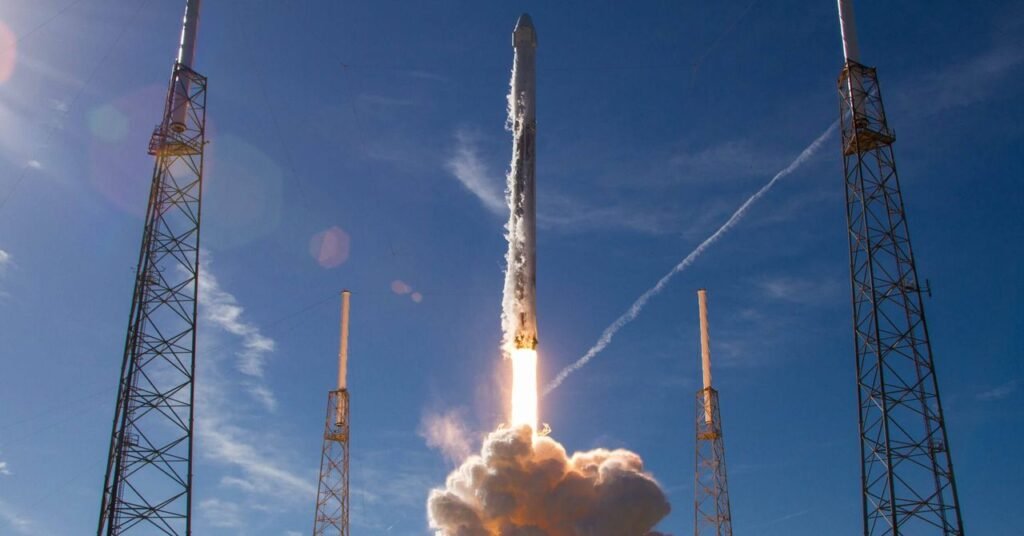
    That’s the very, very long-term plan, at least. For starters, Mattison, a former SpaceX engineer, and his CTO, Luke Neise, a veteran of Varda Space, have purchased a spot on a Falcon 9 rocket launch. Scheduled liftoff is October or later in the fall.

    There are, to broadly oversimplify, two main kinds of engines that you can use in your spacecraft. You can take a fuel like liquid methane, maybe combine it with an oxidizer, and burn it. That’s called chemical propulsion, and every big rocket you’ve ever seen take off uses some variation of that method, because it provides a lot of thrust, even if it’s not terribly efficient.

    Or you can take a gas like xenon, zap it with electricity, and shoot it out of the spacecraft, either as an ionized gas or a plasma. That’s called electric propulsion—again, I’m way oversimplifying. And “it’s very, very low thrust. People jokingly like to call it a burp in space,” Mattison says. “But it lasts forever. The efficiency is crazy.” Enough burps over time can actually be quite effective. Electric propulsion is used to keep satellites in their proper orbit and to power space probes like Dawn, which NASA sent to explore the asteroid belt.

    Water isn’t ideal for either electrical or chemical propulsion. But it might be just good enough for both. Unlike, say, liquid methane, you don’t need to worry about water accidentally blowing up your spacecraft or keeping it cooled at -260 degrees Fahrenheit or having it boil off when your satellite faces the sun.

    General Galactic plans to demonstrate the two methods during its Trinity mission. For chemical propulsion, it’ll use electrolysis to split the water into hydrogen and oxygen, then burn the hydrogen, with oxygen as the oxidizer. For the electrical propulsion system—this one’s called a “Hall thruster”—it’ll split the water, then apply enough electrical energy that the oxygen becomes a plasma. From there, you use a magnetic field to shape the plasma and shoot it out.

    Source: www.wired.com

    fuel Laughing Rocket startup stop thinks water
    Share. Facebook Twitter Pinterest LinkedIn Tumblr Telegram Email Copy Link
    Previous ArticleWaymo leverages Genie 3 to create a world model for self-driving cars
    Next Article You can unlock this secure SSD with the touch of your smartphone
    Michael Comaous
    • Website

    Michael Comaous is a dedicated professional with a passion for technology, innovation, and creative problem-solving. Over the years, he has built experience across multiple industries, combining strategic thinking with hands-on expertise to deliver meaningful results. Michael is known for his curiosity, attention to detail, and ability to explain complex topics in a clear and approachable way. Whether he’s working on new projects, writing, or collaborating with others, he brings energy and a forward-thinking mindset to everything he does.

    Related Posts

    3 Mins Read

    Stop falling for scams when Norton’s antivirus software is 70% off right now

    4 Mins Read

    Acer Promo Codes and Deals: Save 40% on Bundles

    2 Mins Read

    Playing Wolfenstein 3D with one hand in 2026

    7 Mins Read

    Whoop has LeBron – now it wants your mom

    1 Min Read

    Sony temporarily suspends memory card sales due to shortages

    2 Mins Read

    Apple TV is now home to CrunchyRoll anime

    Top Posts

    Discord will require a face scan or ID for full access next month

    February 9, 2026765 Views

    The Mesh Router Placement Strategy That Finally Gave Me Full Home Coverage

    August 4, 2025729 Views

    Trade in your old phone and get up to $1,100 off a new iPhone 17 at AT&T – here’s how

    September 10, 2025322 Views
    Stay In Touch
    • Facebook

    Subscribe to Updates

    Get the latest tech news from FooBar about tech, design and biz.

    Most Popular

    Discord will require a face scan or ID for full access next month

    February 9, 2026765 Views

    The Mesh Router Placement Strategy That Finally Gave Me Full Home Coverage

    August 4, 2025729 Views

    Trade in your old phone and get up to $1,100 off a new iPhone 17 at AT&T – here’s how

    September 10, 2025322 Views
    Our Picks

    Stop falling for scams when Norton’s antivirus software is 70% off right now

    March 28, 2026

    Acer Promo Codes and Deals: Save 40% on Bundles

    March 28, 2026

    Playing Wolfenstein 3D with one hand in 2026

    March 28, 2026

    Subscribe to Updates

    Get the latest creative news from FooBar about art, design and business.

    Facebook
    • About Us
    • Contact us
    • Privacy Policy
    • Disclaimer
    • Terms and Conditions
    © 2026 GeekBlog

    Type above and press Enter to search. Press Esc to cancel.

    Ad Blocker Enabled!
    Ad Blocker Enabled!
    Our website is made possible by displaying online advertisements to our visitors. Please support us by disabling your Ad Blocker.