Close Menu
GeekBlog

    Subscribe to Updates

    Get the latest creative news from FooBar about art, design and business.

    What's Hot

    AI’s Biggest Productivity Gains Are Still Ahead, and Small Businesses May Get There First

    July 15, 2026

    The Hisense A10 Is an E Ink Phone With a Detachable Color Screen, and It Might Be Onto Something

    July 15, 2026

    Best Quickscope Sniper in COD Mobile: DL Q33 vs Locus vs LW3 Tundra

    July 14, 2026
    Facebook X (Twitter) Instagram Threads
    GeekBlog
    • Home
    • Mobile
    • Tech News
    • Blog
    • How-To Guides
    • AI & Software
    Facebook
    GeekBlog
    Home»Tech News»Your electronics could be quietly draining energy – this gadget prevents that
    Tech News

    Your electronics could be quietly draining energy – this gadget prevents that

    Michael ComaousBy Michael ComaousSeptember 7, 20254 Mins Read
    Share Facebook Twitter Pinterest LinkedIn Tumblr Email Copy Link
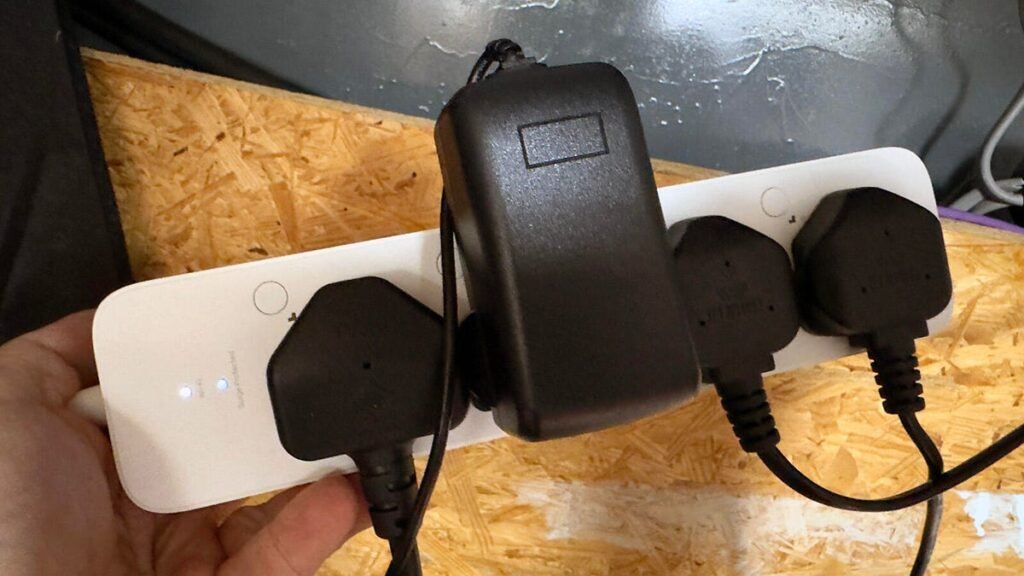
    Your electronics could be quietly draining energy - this gadget prevents that
    Share
    Facebook Twitter LinkedIn Pinterest Email Copy Link

    Smart Wi-Fi power strips are a great way to save on your power bill. But do they pay for themselves?

    Adrian Kingsley-Hughes/ZDNET

    Follow ZDNET: Add us as a preferred source on Google.


    ZDNET’s key takeaways

    • Leaving devices plugged and switched on can be wasteful.
    • Monitoring usage and remote switching helps reduce bills.
    • This Tapo smart power strip is a great option to monitor power consumption, and at $45, it pays for itself. 

    I have three 3D printers that are on the go a lot of the time. I use them to make everything from replacement car parts to signs, and I even print material for local businesses. What’s even better, I can print both when I’m physically there with the printers or remotely (yes, I can send projects to print from my iPhone — what a time we live in!).

    And because of this convenience of remote printing, I got into the habit of leaving everything on. Not all the time, but a lot of the time. After all, it’s convenient. And the times I did turn them off, I got annoyed because I couldn’t use them remotely.

    And because each printer has different filaments and capabilities, I couldn’t just keep one on. I needed all three to be on. 

    Also: This handy USB meter tells you what’s actually going on with your ports – and it’s only $20

    Then, one day, I was ideally thinking about power consumption of random household and workshop devices, and my eye shifted to my 3D printers. I mean, these things have lights and motors and heaters inside. They had to use a reasonable amount of power when they’re making stuff, but what about when they’re just sitting there doing nothing?

    I pulled out my power meter and decided to investigate. What I discovered wasn’t bad, but it wasn’t great either. Each of the three 3D printer — complete with the filament switchers, each has two installed — consumed about an average of 50W in standby.

    Also: What I use to measure device power consumption (and what you should use instead)

    So, between them that’s 75W. I did some back of the envelope calculations that the printers were on standby for about 12 hours a day, say for six days a week, and the power consumption adds up.

    I worked out the power consumption for the past three months, and it was ballpark of 80 kWh. The average US cost of this much power is about $15. Not a huge amount, but it’s still $60 a year, it’s wasteful, and money that could be better spent elsewhere.

    For three large, industrial printers, that’s cheap. Even if I kept them on 24/7/365, they’d only cost about $140. Modern electronics are incredibly efficient.

    So, I bought a smart power strip. I went with the Tapo branded smart Wi-Fi power strip because I’ve had good experience with the company’s products (Tapo is a TP-Link brand, which is a company that’s been making Wi-Fi routers and accessories for years). 

    The US version of this smart strip has six outlets (the UK version only has four) that can be controlled using an app or physically, and as well as being able to let you control each outlet separately, the app does cool stuff like monitor power consumption and live usage. 

    And if you don’t have a separate power meter – something like this or this — these smart outlets offer a handy way to measure power consumption.

    Also: I tried to destroy this $45 power bank (including driving over it with a tractor) – it refused to break

    And it only cost me $45, so it’ll pay for itself in about a year. But, I hear you wondering, how much does that smart outlet cost to run 24/7/365? Pennies a month. Less than $3 a year.

    Sure, not negligible, especially if you have a few of them in your home, but this is better than leaving things on all the time, and more convenient than having to be at home or the workshop to physically turn the switch on.

    I don’t mind paying that $3 convenience tax. 

    Share. Facebook Twitter Pinterest LinkedIn Tumblr Telegram Email Copy Link
    Previous ArticleHow to watch the US Open men’s final for *FREE* – Stream from anywhere
    Next Article Texans vs. Rams Livestream: How to Watch NFL Week 1 Online Today
    Michael Comaous
    • Website

    Michael Comaous is a dedicated professional with a passion for technology, innovation, and creative problem-solving. Over the years, he has built experience across multiple industries, combining strategic thinking with hands-on expertise to deliver meaningful results. Michael is known for his curiosity, attention to detail, and ability to explain complex topics in a clear and approachable way. Whether he’s working on new projects, writing, or collaborating with others, he brings energy and a forward-thinking mindset to everything he does.

    Related Posts

    6 Mins Read

    AI’s Biggest Productivity Gains Are Still Ahead, and Small Businesses May Get There First

    6 Mins Read

    LinkedIn Declares War on AI Slop, But Can It Actually Tell the Difference?

    9 Mins Read

    Xbox Just Had the Biggest Reset in Its History. Here Is What Actually Changes for Gamers

    7 Mins Read

    The First AI-Run Ransomware Attack Just Happened, and It Barely Needed a Human

    8 Mins Read

    Data Centers Are Leaving Earth: Inside Big Tech’s Orbital AI Bet

    6 Mins Read

    Qualcomm’s New Wearable Chip Solves the Easy Problem. The Hard One Is Still Wide Open

    Top Posts

    Best Stores for Buying MP3 and Digital Music You Can Keep Forever

    August 2, 2025102 Views

    How to Block Twitch Ads with uBlock Origin (2026 Guide)

    June 15, 202643 Views

    uBlock Origin on Brave: Do You Need It? (2026 Setup Guide)

    June 15, 202629 Views
    Stay In Touch
    • Facebook

    Subscribe to Updates

    Get the latest tech news from FooBar about tech, design and biz.

    Most Popular

    Best Stores for Buying MP3 and Digital Music You Can Keep Forever

    August 2, 2025823 Views

    Discord will require a face scan or ID for full access next month

    February 9, 2026770 Views

    Trade in your old phone and get up to $1,100 off a new iPhone 17 at AT&T – here’s how

    September 10, 2025378 Views
    Our Picks

    AI’s Biggest Productivity Gains Are Still Ahead, and Small Businesses May Get There First

    July 15, 2026

    The Hisense A10 Is an E Ink Phone With a Detachable Color Screen, and It Might Be Onto Something

    July 15, 2026

    Best Quickscope Sniper in COD Mobile: DL Q33 vs Locus vs LW3 Tundra

    July 14, 2026

    Subscribe to Updates

    Get the latest creative news from FooBar about art, design and business.

    Facebook
    • About Us
    • Contact us
    • Privacy Policy
    • Disclaimer
    • Terms and Conditions
    © 2026 GeekBlog

    Type above and press Enter to search. Press Esc to cancel.