Close Menu
GeekBlog

    Subscribe to Updates

    Get the latest creative news from FooBar about art, design and business.

    What's Hot

    Amazon Has Been Writing Down Guesses About Your Body. The Page Is Two Taps Away.

    October 7, 2026

    Apple Watch Series 12 Hits a Record Low $349.99 on Prime Day, and the Ultra 4 Is $100 Off

    October 7, 2026

    YouTubers Are Getting Paid to Make You Afraid of AI. The Word “Secretly” Is Doing a Lot of Work.

    October 7, 2026
    Facebook
    GeekBlog
    • Home
    • Mobile
    • Tech News
    • Blog
    • Gaming
    • Smartwatch
    • How-To Guides
    • AI & Software
    Facebook
    GeekBlog
    Home»Tech News»Silent chip defects may be corrupting data in modern computers
    Tech News

    Silent chip defects may be corrupting data in modern computers

    Michael ComaousBy Michael ComaousFebruary 17, 20263 Mins Read
    Share Facebook Twitter Pinterest LinkedIn Tumblr Email Copy Link
    Silent chip defects may be corrupting data in modern computers
    Share
    Facebook Twitter LinkedIn Pinterest Email Copy Link

    Recommended for you:

    Cohere launches a family of open multilingual models
    Tech News·Feb 17, 2026

    Cohere launches a family of open multilingual models

    Computing is often celebrated for its precision and speed. But researchers and hyperscale data center operators are warning of a growing threat that challenges one of computing’s core promises: correctness. The issue is known as silent data corruption (SDC) – a phenomenon where hardware defects cause programs to produce incorrect results without crashing, triggering an error, or leaving any visible trace.

    The invisible threat inside modern chips

    At the heart of the concern are silicon defects in CPUs, GPUs and AI accelerators. These defects can originate during chip design, manufacturing, or even develop later due to aging or environmental factors. While manufacturers screen for most faults, even the most rigorous production testing can only catch an estimated 95% to 99% of modeled defects. Some flawed chips inevitably make it into the field.

    In certain cases, those defects lead to visible failures such as system crashes. But more troubling are silent errors. Here, a faulty logic gate or arithmetic unit may produce a wrong value during execution. If that value propagates through the program without triggering detection mechanisms, the system completes the task and returns an incorrect output – with no indication anything went wrong.

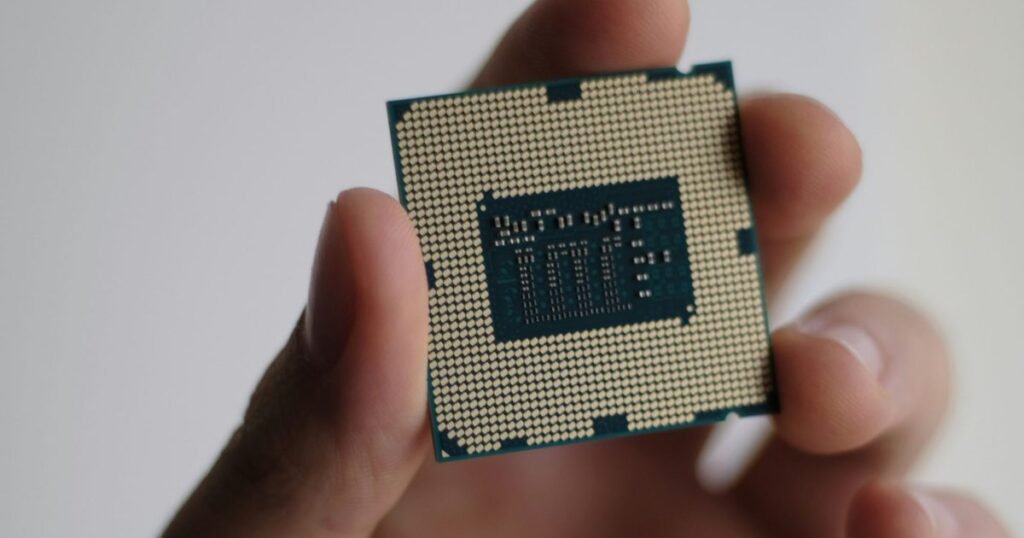
    Computer chip Unsplash

    For decades, many believed SDCs were rare, almost mythical events. However, major hyperscale operators including Meta, Google and Alibaba have disclosed that roughly one in 1,000 CPUs in their fleets can produce silent corruptions under certain conditions. Similar concerns have been reported in GPUs and AI accelerators.

    Correctness is a foundational property of computing. Whether processing financial transactions, running AI inference, or managing infrastructure, systems are expected to deliver accurate results within strict time constraints.

    Silent corruption undermines that trust. Unlike crashes, which are immediately visible and prompt investigation, SDCs quietly alter outputs. In data centers operating millions of cores, even a small defect rate can translate into hundreds of incorrect program results per day.

    The scale of modern computing intensifies the problem

    Massive parallel architectures such as GPUs and AI accelerators contain thousands of arithmetic units. The more components a system includes, the higher the statistical likelihood that some will be defective.

    Measuring SDCs directly is nearly impossible – by definition, they are silent. The industry must therefore estimate their rates and weigh the cost of prevention. Detection and correction mechanisms exist, but they can significantly increase silicon area, energy consumption and performance overhead.

    Computer chip
    Computer chip Unsplash

    Researchers are calling for multi-layer solutions, including improved manufacturing tests, fleet-level monitoring in data centers, smarter fault estimation models, and hardware-software co-design approaches that contain errors before they propagate.

    As computing systems grow larger and faster, the challenge is clear: maintain both speed and correctness without unsustainable cost. In what some describe as a “Golden Age of Complexity,” ensuring that computing remains trustworthy may become one of the industry’s defining engineering battles.

    Recommended for you:

    Warner Bros. gives Paramount one more week to beat Netflix merger offer
    Tech News·Feb 17, 2026

    Warner Bros. gives Paramount one more week to beat Netflix merger offer

    Source: www.digitaltrends.com

    About this article: GeekBlog covers U.S. technology news, AI, phones, smartwatches and gaming. Every story is written and checked under our Editorial Policy. Spotted a mistake or have a story tip? Contact our editors.

    Share. Facebook Twitter Pinterest LinkedIn Tumblr Telegram Email Copy Link
    Previous Article‘Aerial_Knight’s DropShot’ Shoots Strong and Lands Well Enough
    Next Article Cohere launches a family of open multilingual models
    Michael Comaous

      Michael Comaous is a dedicated professional with a passion for technology, innovation, and creative problem-solving. Over the years, he has built experience across multiple industries, combining strategic thinking with hands-on expertise to deliver meaningful results. Michael is known for his curiosity, attention to detail, and ability to explain complex topics in a clear and approachable way. Whether he’s working on new projects, writing, or collaborating with others, he brings energy and a forward-thinking mindset to everything he does.

      Related Posts

      10 Mins Read

      Amazon Has Been Writing Down Guesses About Your Body. The Page Is Two Taps Away.

      13 Mins Read

      YouTubers Are Getting Paid to Make You Afraid of AI. The Word “Secretly” Is Doing a Lot of Work.

      10 Mins Read

      20 Million Android Owners Are Already Inside a £1.2 Billion Case Against Google. Nobody Signed Up.

      12 Mins Read

      OpenAI Will Sign Every ChatGPT Reply in the EU. Swapping One Word in Four Erases It.

      6 Mins Read

      OpenAI Is Hiding a Watermark in ChatGPT Text in the EU. Swap 10% of the Words and It Weakens.

      6 Mins Read

      Mistral Large 4 Has 1 Trillion Parameters. You Cannot Download It Yet.

      Top Posts

      Every iPhone Camera Ranked in 2026 (Best to Worst)

      July 6, 2026116 Views

      Best Stores for Buying MP3 and Digital Music You Can Keep Forever (2026)

      August 2, 202550 Views

      Windows 11 vs Windows 10: Should You Upgrade in 2026?

      July 7, 202642 Views
      Stay In Touch
      • Facebook

      Subscribe to Updates

      Get the latest tech news from FooBar about tech, design and biz.

      Most Popular

      iPhone Battery Replacement Cost: Every Model, Apple vs Repair Shop

      October 6, 202629 Views

      Best Offline Music App in 2026: Free and Paid Picks

      October 7, 202620 Views

      iPhone 18 Pro Max Price: Every Storage Tier and How to Pay Less

      October 6, 202618 Views
      Our Picks

      Amazon Has Been Writing Down Guesses About Your Body. The Page Is Two Taps Away.

      October 7, 2026

      Apple Watch Series 12 Hits a Record Low $349.99 on Prime Day, and the Ultra 4 Is $100 Off

      October 7, 2026

      YouTubers Are Getting Paid to Make You Afraid of AI. The Word “Secretly” Is Doing a Lot of Work.

      October 7, 2026

      Subscribe to Updates

      Get the latest creative news from FooBar about art, design and business.

      HEICJPG.online - Convert HEIC to JPG online
      Facebook
      • About Us
      • Contact us
      • Privacy Policy
      • Disclaimer
      • Terms and Conditions
      • Editorial Policy
      • Cookie Policy
      • Your Privacy Choices
      © 2026 GeekBlog

      Type above and press Enter to search. Press Esc to cancel.