

Streaming is convenient, but nothing you stream is really yours. Licences expire, catalogues change, and albums quietly vanish from your library. Buying a download is the fix: you get a file, on your own drive, that no one can take back. Here are the best places to buy MP3s, FLAC and other digital music in 2026 — and how to make sure the files actually stay yours.
Why buy digital music instead of streaming it?
Streaming is the better deal for discovery. Buying is the better deal for keeping. A purchased download is stored on your own device, plays without an internet connection or a subscription, and cannot be removed because a licensing deal lapsed or an artist fell out with a label.
There are two other reasons worth knowing:
- Quality. Most download stores now offer lossless FLAC or ALAC alongside MP3 — often at the same price as the lossy version.
- Money reaching artists. A single album purchase typically pays an artist more than tens of thousands of streams. On Bandcamp, the artist keeps the large majority of the sale price.
Best digital music stores in 2026 at a glance
| Store | Formats | Lossless? | Best for |
|---|---|---|---|
| Bandcamp | MP3 320 / V0, AAC, Ogg, FLAC, ALAC, WAV, AIFF | Yes | Best overall & supporting artists |
| Apple iTunes Store | AAC 256kbps (DRM-free) | No | Biggest mainstream catalogue |
| Amazon Music | MP3 | No | Maximum device compatibility |
| Qobuz | FLAC 16-bit and 24-bit hi-res | Yes | Hi-res audio and audiophiles |
| Bleep | MP3, FLAC, WAV (incl. 24-bit) | Yes | Electronic, leftfield and indie |
| Beatport | MP3 320; WAV/AIFF/FLAC via upgrade | Optional | DJs and club music |
| Presto Music | MP3 320, FLAC/ALAC/WAV up to 24-bit/192kHz | Yes | Classical and jazz |
Bandcamp — best digital music store overall
Mini-verdict: The most generous store for artists and the most generous for you, too — buy once, then download the same album in any format, as many times as you like.
Bandcamp remains the store to beat. Every purchase can be downloaded in eight formats — MP3 320, MP3 V0, AAC, Ogg Vorbis, FLAC, ALAC, WAV and AIFF — so you can take a lossless copy for your archive and a smaller file for your phone without paying twice. Artists set their own prices, frequently bundle the digital album free with vinyl or a cassette, and the catalogue reaches far deeper into underground and independent music than any major storefront.
On a normal day Bandcamp takes a 15% share of digital sales, dropping to 10% once an artist passes $5,000 in lifetime sales, with payment-processing fees on top. On Bandcamp Friday the company waives its own cut entirely, so only the payment processor’s fee is deducted — the closest thing to handing an artist cash. The remaining 2026 dates are 7 August, 4 September, 2 October, 6 November and 4 December.
Ownership question: Bandcamp was sold by Epic Games to Songtradr in October 2023. Songtradr is closing its own Marketplace on 1 September 2026, but that is a separate B2B licensing product — Bandcamp is explicitly the platform the company is consolidating around, and it continues to operate normally.
Where it falls short: the catalogue depends on artists and labels choosing to be there, so chart pop and a lot of major-label back catalogue simply is not available.
Apple iTunes Store — best mainstream catalogue
Mini-verdict: Quietly still one of the biggest download stores in the world, even though Apple would much rather sell you a subscription.
The iTunes Store never went away — it just got buried. Tracks are sold DRM-free as 256kbps AAC (“iTunes Plus”), a format almost every modern phone, car stereo and media player can read, and popular albums commonly land around $9.99. Once bought, the files download permanently to a Mac, PC, iPhone or iPad and stay in your library whether or not you subscribe to Apple Music.
Finding it is the tricky part:
- Mac: open the Music app and choose iTunes Store in the sidebar (if it is hidden, enable it in the app’s settings).
- Windows: use the Apple Music app, which now contains the iTunes Store section since Apple split iTunes for Windows into separate apps in February 2024.
- iPhone / iPad: use the separate blue iTunes Store app, which is preinstalled or free from the App Store.
Where it falls short: no lossless purchases at all — if you want 24-bit files, Apple only offers them through an Apple Music subscription, which is streaming, not owning.
Amazon Music — best for universal compatibility
Mini-verdict: Plain MP3s that work on literally everything, sold through one of the web’s least loved storefronts.
Amazon still sells individual songs and albums as MP3 downloads in the US, and MP3 remains the most universally playable music format there is — old car head units, cheap MP3 players, Android phones, Linux boxes, everything. Purchases sit in your Amazon account for re-download, and you can grab them through the Amazon Music app or a browser.
Where it falls short: the digital storefront is poorly maintained and hard to browse, everything nudges you toward an Amazon Music Unlimited subscription, and some MP3 albums cost the same as the physical CD.
Qobuz — best for lossless and hi-res
Mini-verdict: The serious audiophile download store, with real CD-quality and 24-bit files and aggressive sales.
Qobuz sells lossless FLAC — 16-bit CD quality and 24-bit hi-res — across genres, and it is unusually good for classical and jazz. Prices vary by album and resolution, and the store runs frequent, genuinely steep promotions.
If you buy hi-res regularly, the Sublime subscription tier (billed annually, $14.99 per month) bundles the streaming service with discounts of up to 60% on hi-res downloads, which can pay for itself if you buy a handful of albums a year.
Where it falls short: the catalogue is thinner than Apple’s or Amazon’s for indie and underground releases, and hi-res files are big — plan your storage.
Beatport — best for DJs
Mini-verdict: The default club-music store, and now the only one you need after Beatsource was folded in.
Beatport sells electronic and dance tracks individually, in MP3 320 by default, with an optional lossless upgrade to WAV, AIFF or FLAC. Per Beatport’s own published pricing, general-catalogue tracks are $1.49, new releases within their first eight weeks $1.69, exclusives $2.49, and the lossless upgrade adds $0.75 per track. Since March 2026, Beatport has been migrating Beatsource — its open-format/mobile-DJ sibling — into the main platform.
Where it falls short: per-track pricing adds up fast, and outside dance genres the catalogue is limited.
Bleep and Presto Music — best specialist stores
Bleep, run by Warp Records, is the survivor of the leftfield download era and sells MP3, FLAC and WAV including 24-bit. It is the natural first stop for electronic, experimental and independent music — especially now that Juno Download is gone.
Presto Music is the specialist for classical and jazz, selling in US dollars with US delivery. It offers MP3 320, CD-quality FLAC, “Studio Quality” 24-bit/96kHz and “Hi-Res+” 24-bit/192kHz, with ALAC and WAV also selectable, plus editorial and reviews that actually help you choose between six recordings of the same symphony.
Also worth a look: Boomkat for leftfield and experimental releases, NativeDSD if you specifically want DSD and DXD files, and ProStudioMasters for hi-res PCM and DSD. HDtracks, the long-running US hi-res store, is still online — check the current catalogue and pricing before committing, as its consumer offering has changed since its 2024 partnership with Lenbrook.
MP3, AAC, FLAC or WAV? A plain-English format guide
The format you choose decides how good the music sounds, how much space it takes, and what will play it. Here is the short version.
| Format | Lossless? | Size (3-min track) | Best for |
|---|---|---|---|
| MP3 320kbps | No (lossy) | ~7 MB | Plays on absolutely everything |
| AAC 256kbps | No (lossy) | ~6 MB | Apple devices; better than MP3 at the same size |
| FLAC 16-bit/44.1kHz | Yes | ~20 MB | The archive copy you keep forever |
| FLAC 24-bit (hi-res) | Yes | 50–100 MB | Good headphones and hi-fi systems |
| ALAC | Yes | Similar to FLAC | Apple Music app and iPhone libraries |
| WAV / AIFF | Yes (uncompressed) | ~30 MB+ | DJ software and audio editing |
Stores that have closed — and what it teaches you
This is the part streaming defenders rarely mention: download stores die too. The difference is that when a store closes, the files you already downloaded still work.
| Store / service | What happened | When |
|---|---|---|
| Juno Download | Shut down overnight with no notice after 20+ years; customers pointed to Beatport and Traxsource | June 2026 |
| Nina Protocol | Wound down, then acquired by SoundCloud | 2026 |
| 7digital (consumer store) | Never formally closed, but the company pivoted to B2B licensing and the storefront is effectively dormant | 2023–2025 |
| Acoustic Sounds Super HiRez | Hi-res download store discontinued | Before 2026 |
| Google Play Music | Stopped selling downloads; users moved to streaming-only YouTube Music | Late 2020 |
| Amazon Music Storage | Cloud locker for your own uploaded files ended (purchased music unaffected) | 2018 |
How to actually keep your music forever
“You can keep it forever” is only true if you treat the files like files. Juno’s abrupt closure caught out DJs who had left a decade of purchases sitting in a web account. Four habits fix that:
- Download every purchase immediately — do not treat a store account as your library.
- Take the lossless version where it is offered, and keep it as your master copy.
- Follow the 3-2-1 rule: three copies of your library, on two different types of storage, with one of them off-site or in cloud storage you control.
- Keep a simple purchase log — a spreadsheet or text file of album, artist, store and date. If a drive fails, it tells you exactly what to restore.
Frequently asked questions
Can you still buy MP3s in 2026?
Yes. Amazon still sells MP3 downloads in the US, and Bandcamp, Bleep, Beatport and Presto Music all offer MP3 alongside lossless formats. Apple’s iTunes Store sells DRM-free AAC files rather than MP3, but they play on virtually all modern devices.
Which store pays artists the most?
Bandcamp. It takes a 15% share of digital sales (10% after an artist passes $5,000 in lifetime sales), and on Bandcamp Friday it waives its cut entirely so only payment-processing fees are deducted.
Is MP3 or FLAC better?
FLAC. MP3 is “lossy” — it permanently discards audio data to shrink the file, even at 320kbps. FLAC is “lossless”: it compresses like a ZIP file and unpacks to a bit-perfect copy of the original. FLAC files are roughly three times larger, which is the only real trade-off.
Do I really own music I buy as a download?
You own a personal-use copy of the file, which is not the same as owning the copyright — you cannot resell or redistribute it. But unlike a stream, it cannot be pulled from your library when a licensing deal changes, and it plays with no subscription and no internet connection.
What happens to my purchases if a store shuts down?
Files you have already downloaded keep working forever. What you lose is the ability to re-download, which is exactly what happened to Juno Download customers in June 2026. Always keep local backups.
Where can I buy music now that Google Play Music is gone?
Google Play Music stopped selling downloads in late 2020. Bandcamp is the closest replacement for independent music, and Amazon or the iTunes Store for mainstream releases. YouTube Music kept the old upload feature, so you can still upload purchased files to your own library.
Can I buy music directly on an iPhone?
Yes, through the iTunes Store app. Because of App Store rules, most other stores cannot sell downloads inside their own iOS apps — buy through Safari instead, then transfer or download the files to your phone.
Is buying music cheaper than streaming?
It depends on how you listen. If you replay a small number of favourite albums, buying wins quickly — an album typically costs about the same as a single month of a streaming subscription, and you keep it. If you listen widely and constantly, streaming is better value. Many people do both: stream to discover, buy the records that stick.
The verdict
Buy from Bandcamp whenever the release is there — best formats, best terms for artists, unlimited re-downloads. Fall back on the iTunes Store or Amazon for mainstream catalogue, use Qobuz when you want lossless and hi-res, and Beatport, Bleep or Presto Music for club, leftfield and classical respectively. Then do the thing most people skip: download the files, take the lossless version, and back them up. That last step is what turns “digital music you bought” into digital music you keep forever.
Once you own your music, you need a good player. See our picks for the best offline music app, including free, ad free players for your own files.
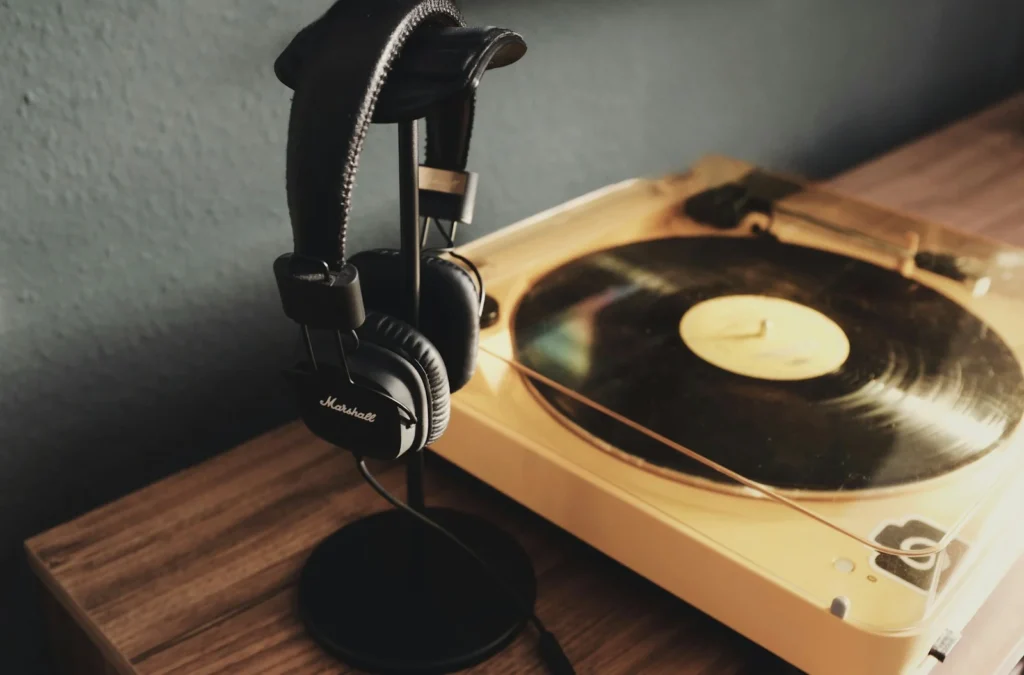
Featured photo: Thanos Pal on Unsplash.
About this article: GeekBlog covers U.S. technology news, AI, phones, smartwatches and gaming. Every story is written and checked under our Editorial Policy. Spotted a mistake or have a story tip? Contact our editors.
