

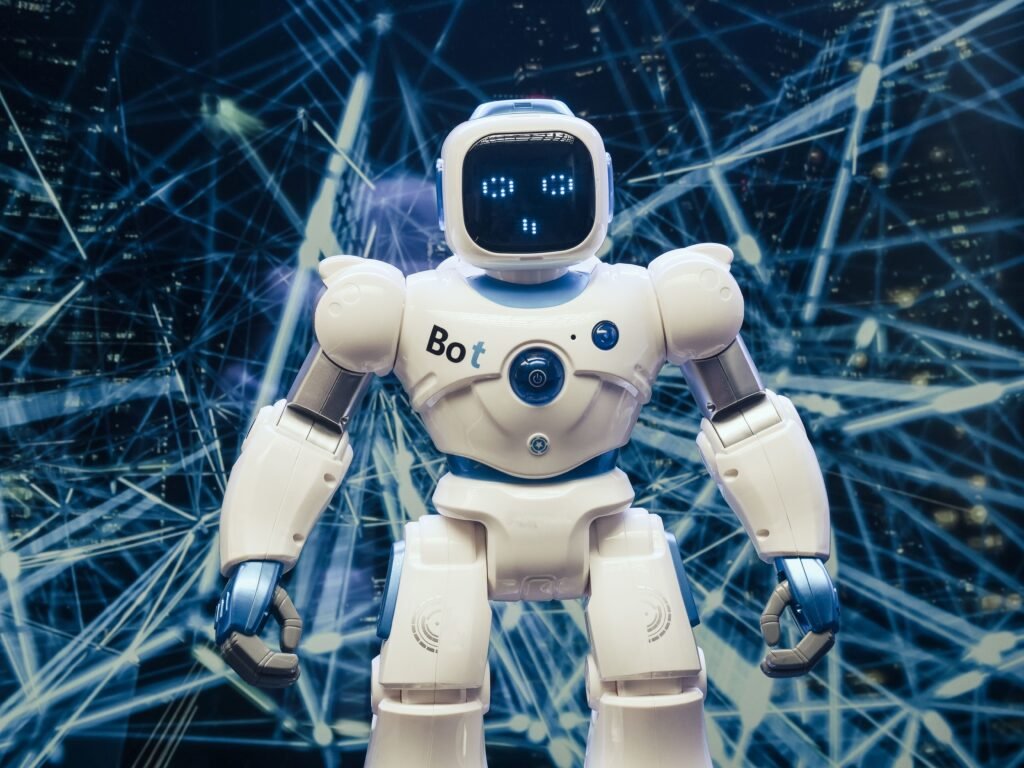
On September 8, a humanoid robot walked off an assembly line in Guangzhou under its own power. That sentence has been true, in a limited demo sense, for a few companies over the past two years. What changed this time is the setting: XPeng says its IRON robot did it on a real production line, one built to manufacture robots at volume rather than to produce a single polished unit for a stage.
The company is calling it the world’s first automated production line for advanced humanoid robots, with core process automation above 80 percent. That is a specific, checkable claim about a factory rather than a soft claim about a robot’s personality or intelligence, and it arrives at a moment when XPeng’s most obvious rival, Tesla’s Optimus, is running behind its own production targets.
The milestone in brief
- IRON autonomously walked off XPeng’s Guangzhou production line on September 8
- XPeng says the line is the first automated production line for advanced humanoid robots, over 80 percent automated
- Body: 178 cm tall, 70 kg, 76 degrees of freedom, plus 21 degrees of freedom per hand
- Compute: three in-house Turing AI chips, up to 2,250 TOPS combined by XPeng’s most recent figures
- Power: an all-solid-state battery with over 500 Wh/kg energy density
- Mass production targeted for the end of 2026, with external deliveries starting in 2027
A factory milestone, not a shipping date
It is worth being precise about what actually happened, because “walked off the production line” and “went on sale” are very different claims and the coverage of this event has occasionally blurred them. XPeng has not started selling IRON to outside customers. What it has done is commission a manufacturing line built to XPeng’s automotive quality standards, the same standards the company applies to its electric vehicles, and run a robot through it end to end.
That distinction is the whole story here. Plenty of humanoid robot companies have shown a working prototype walking, talking or folding laundry in a controlled demo. Far fewer have shown a repeatable industrial process for building the thing at scale, and repeatable manufacturing is generally the harder problem in robotics. XPeng is explicitly borrowing its answer from the car business: build the robot the way you build a vehicle, on a line with automotive-grade tolerances, rather than hand-assembling each unit like a research prototype.
The specs, and where XPeng’s own numbers disagree
IRON stands 178 centimeters tall, weighs 70 kilograms, and moves through 76 degrees of freedom across its body with another 21 in each hand, a dexterity figure aimed squarely at tasks that need fine manipulation rather than just walking and lifting. Its outer shell uses a composite designed to move like muscle rather than looking like stamped metal, part of a broader industry push toward humanoid robots that read as approachable rather than industrial.
The compute story is less tidy. XPeng’s own materials have not been consistent about IRON’s total processing power. A November 2025 release cited 3,000 effective TOPS from the robot’s three Turing chips, while the company’s more recent Singapore and Indonesia launch materials in early 2026 cite 2,250 TOPS for the same hardware. Neither figure is independently verified, and the gap between them, roughly 25 percent, is large enough that it is not simply rounding. It is the kind of inconsistency worth flagging rather than smoothing over, especially from a company that just staked a claim to a manufacturing first.
| Metric | XPeng IRON | Tesla Optimus |
|---|---|---|
| Production status | Walked off a real production line, September 2026 | Production still not started at scale |
| Mass production target | End of 2026 | Pushed back, commercial sales aimed at H2 2027 |
| Price target | Under $30,000, publicly stated goal | No firm consumer price announced |
| Battery | Solid-state, over 500 Wh/kg | Conventional lithium pack, lower density |

XPeng says its Guangzhou line runs at over 80 percent process automation, borrowing quality standards from its electric vehicle plants. Photo via Pexels.
How the humanoid robot race is actually shaping up
Twelve months ago, the humanoid robot conversation was dominated by demo videos and funding rounds. It is starting to sort itself into a clearer hierarchy, and manufacturing capacity is becoming the dividing line. XPeng brings something most robotics startups do not have: an existing car factory playbook, real supply chain relationships, and battery expertise from its EV business that translates directly into the solid-state pack inside IRON.
Where the major humanoid programs stand
Production line commissioned, mass production targeted for end of 2026.
Scale production delayed again, commercial sales now aimed at the second half of 2027.
Strong individual demos and funding, without a disclosed line built for volume manufacturing yet.
GeekBlog has tracked this field taking shape over the past year, from Boston Dynamics committing Atlas to Hyundai’s assembly lines to Figure AI’s home-focused Figure 03. XPeng’s advantage right now is not a smarter robot on paper. It is a factory that already knows how to hit automotive tolerances at volume, applied to a product category where almost nobody else has solved manufacturing yet.
What to actually watch next
The number worth tracking is not TOPS or degrees of freedom, both of which are easy for a company to state generously. It is unit output. XPeng has committed to mass production by the end of 2026 and external deliveries in 2027, first to its own retail stores and campuses, then to commercial customers in China and abroad. If that timeline holds even roughly, XPeng will have gone from a single robot walking off a line to a functioning supply chain faster than any other humanoid robot company has managed, at a price target, under $30,000, that would undercut every serious competitor by a wide margin.
If it slips the way Tesla’s own timeline has slipped more than once, the lesson will be the familiar one from this entire category: walking off a production line and actually filling one are two different achievements, and only one of them has ever been consistently hard to fake.
