

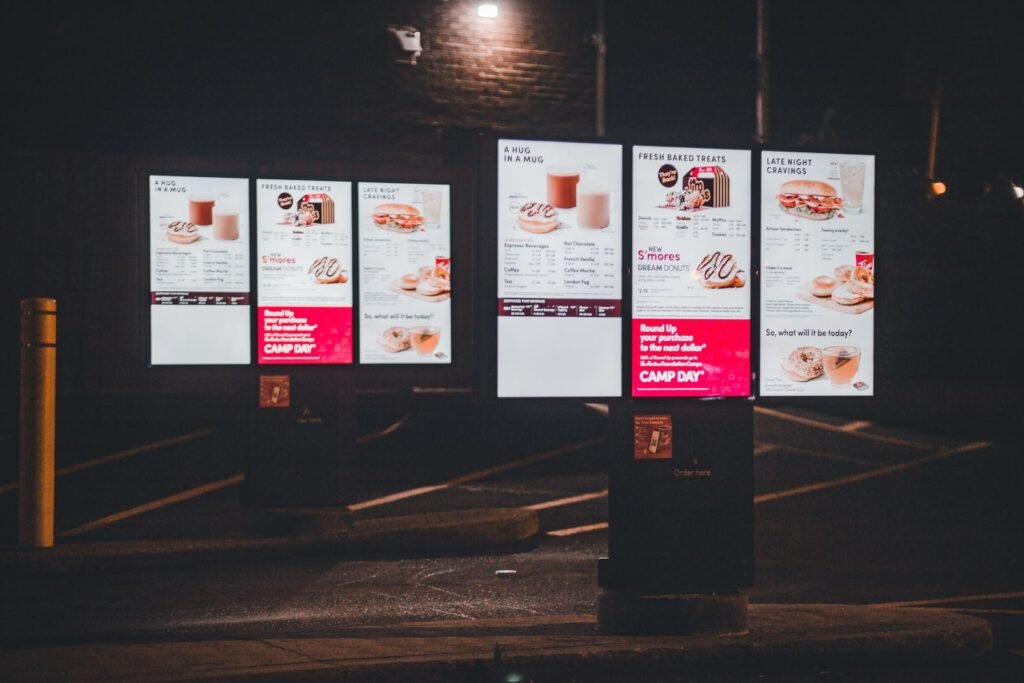
The voice at the drive-thru speaker has always been a person having a slightly worse day than you are. McDonald’s would like to change that, and it has put a number on the ambition.
At its Investor Day on Wednesday, September 23, the company laid out a plan it calls McDonald’s > NEXT, committed $8.5 billion in support to franchisees, and introduced an artificial intelligence platform named ArchIQ. The part everyone latched onto is the voice assistant sitting on top of it. Its name is Archy, and in pilot restaurants it has already taken more than a million orders.
The short version
- McDonald’s is committing $8.5 billion in franchisee support through 2036, roughly $5 billion of it by 2030, delivered as rent relief and capital assistance
- ArchIQ is an AI powered restaurant operating system covering drive-thru voice, inventory, connected equipment and order accuracy
- Archy, the drive-thru voice assistant, takes orders in English and Spanish with accuracy the company puts above 90 percent
- McDonald’s says Archy will free at least 50 labor hours per restaurant per week once it scales
- The data layer underneath spans more than 46,000 restaurants and what the company describes as billions of data points a day
- No firm completion date was given. Deployment is conditions based, and Google Edge hardware does not reach US restaurants until 2027
What ArchIQ actually is
Strip away the branding and ArchIQ is a data plumbing project that finally got a front end. Jill McDonald, the company’s executive vice president and global chief restaurant experience officer, presented it as one of four pillars of the NEXT strategy, alongside the menu, the customer experience and the physical restaurants.
Brian Rice, the global chief information officer, gave the technical version. Since partnering with Google in 2023, McDonald’s has pushed Google Edge technology into thousands of restaurants across seven major markets. It has also consolidated point of sale systems, moving, in Rice’s words, from “fragmented, bespoke local systems to a consistent platform built for rapid innovation.”
That consolidation is the boring part that makes the interesting part possible. “By interconnecting the operational heartbeat of over 46,000 restaurants worldwide, our data lake captures billions of data points daily,” Rice said. “This allows our AI models to make accurate split-second decisions.”
ArchIQ sits on top of that lake and bundles automation, diagnostics, predictive alerts and coaching into one interface used by crew, managers, franchisees and corporate operations teams. It is closer in spirit to a factory control system than to a chatbot, which is a useful thing to keep in mind when the headlines make it sound like a robot is flipping your burger.
The numbers McDonald’s put on the board
Investor Day presentations are sales pitches, and these figures are the company’s own. They are still worth laying out, because they show exactly where McDonald’s thinks the money is.
The four pieces, and what each one is supposed to do
ArchIQ is not one feature. It is four separate automation projects sharing a name and a data source, and they are at very different stages of maturity.
| Component | What it does | Claimed benefit |
|---|---|---|
| Archy voice AI | Takes drive-thru orders in English and Spanish | Above 90 percent accuracy, 50 labor hours a week freed |
| Automated inventory | Bluetooth Low Energy tags track stock in real time | About 5 labor hours a week saved, 15 percent less waste |
| Connected equipment | Computer vision plus predictive maintenance on fryers, grills and machines | Around 50 percent improvement in equipment and menu availability |
| Accuracy scales | Weighs bags to verify orders before they leave the window | Catches and corrects 10 percent of orders, across millions daily |
The accuracy scale is the quiet standout. It is not glamorous, it does not involve a large language model, and if it really catches one order in ten before it reaches a customer, it will do more for the average visit than the voice assistant will. Weighing a bag against what the register says should be in it is an old idea executed at a scale nobody had the data plumbing for until now.
McDonald’s has been here before, twice
Enthusiasm for this announcement should be tempered by the fact that McDonald’s has run at automated ordering twice already and walked away both times.
The 2019 Dynamic Yield purchase was supposed to make menu boards respond to weather, time of day and what was already in your order. McDonald’s sold the company to Mastercard two years later. The IBM partnership that began in 2021 put voice AI in test drive-thrus and became a running joke online as clips of misheard orders spread. McDonald’s ended it in 2024, citing accuracy.
That history is why the “above 90 percent” figure matters more than the dollar amount. A drive-thru that gets nine orders in ten right still means one car in ten leaving with the wrong food, and those are the ones that end up on TikTok. The company’s answer is that the accuracy scale catches errors downstream, which is a sensible piece of belt-and-braces engineering rather than a claim that the voice model is perfect.
What customers are actually worried about
The reaction online has not been about labor hours. It has been about pricing and profiling. Reddit threads following the announcement raised the prospect of surge pricing driven by demand models, and of menu recommendations generated from whatever the company already knows about you through the app.
McDonald’s has not announced either of those things. But the worry is not irrational, because the same data lake that lets a model predict when the fryer will fail also knows what you order, when, how often and how much you are willing to pay for it. Chief executive Chris Kempczinski framed the goal as removing a tradeoff, arguing that customers should not have to choose between hospitality and speed. Whether the second thing arrives without the first quietly getting worse is the open question.
This is the same tension showing up across retail as autonomous systems get handed real operational control. When Amazon opened Seller Central to AI agents, it deliberately walled off the customer-facing storefront and kept the agents on the back office side. McDonald’s is doing the opposite, putting the model in the one place where every customer has to interact with it.
What changes at the window, and what does not
- You can still ask for a human. In the pilots, roughly one interaction in ten was handed to a crew member, which is what the escalation path is for
- Your order is still checked by a scale. The weight verification runs whether a person or Archy took the order
- Prices are not changing because of this. Nothing McDonald’s announced ties pricing to the AI layer, whatever the speculation says
- It will not arrive everywhere at once. Restaurants have to meet hardware prerequisites first, and the US does not get Google Edge until 2027
The honest summary is that this is an operations project that happens to have a voice. The voice is the part you will notice.
Everyone else is building the same thing
McDonald’s is not moving early here, it is moving big. Yum Brands introduced a centralized technology platform called Byte in 2025 and has been expanding voice AI across Taco Bell drive-thrus. Burger King runs a voice tool called Patty, though it sits in the crew headset rather than facing the customer, helping staff with point of sale, equipment and inventory questions.
The strategic difference is where each company decided to point the microphone. Burger King aimed it at employees, which is lower risk and lower reward. McDonald’s aimed it at customers, which is the opposite. Scale is the argument for doing it that way. When you run 46,000 restaurants, a one percent improvement in throughput is a number that shows up in the quarterly results.
It also costs real money to run. Voice models handling millions of daily interactions are exactly the workload that makes the per-token economics of always-on AI agents the deciding factor rather than a footnote, which is probably why the Google partnership and the edge hardware came before the announcement rather than after it.
The rest of the plan is food
Lost in the AI coverage is that the technology is one of four pillars, and the other three are more conventional. Skye Anderson, McDonald’s new president, pointed to weak second-quarter results in the United States and to menu changes intended to pull customers back in.
Under discussion are bowls, grilled chicken options and egg bites, with an explicit focus on higher protein counts. That is a direct response to how eating habits have shifted, and the existing menu is not going anywhere. It is worth noting that the company thinks it needs both a new operating system and a protein strategy to fix the same problem, which tells you how soft US traffic has been.
What to take from this
- The $8.5 billion is franchisee support, not a technology budget. It is rent relief and capital assistance spread over a decade, and it is what pays for restaurants to meet the hardware prerequisites
- Archy is real and already taking orders. More than a million transactions in pilot locations, with about nine in ten handled without a crew member stepping in
- Accuracy is the whole ballgame. McDonald’s abandoned this once over exactly that, and above 90 percent still leaves a visible failure rate
- The timeline is soft. Deployment is conditions based, Google Edge hardware reaches the US in 2027, and no completion date was given
- The unglamorous parts may matter most. Bluetooth inventory tags and weighing scales will change day-to-day operations more reliably than the voice model will
There is a version of this that works beautifully, where the speaker understands you the first time, the bag contains what you asked for, and the crew has fifty more hours a week to spend on the things machines cannot do. There is also a version where the model mishears “no pickles” and a decade of investment gets relitigated in a viral video. McDonald’s has already lived through the second one. The difference this time is that it built the data layer first.
Sources and further reading
- Restaurant Dive: McDonald’s turns to AI for drive-thru, inventory management, order accuracy
- Restaurant Technology News: McDonald’s commits $8.5 billion to restaurant modernization as ArchIQ moves AI into daily operations
- UNILAD Tech: McDonald’s drops $8.5 billion tech plan to stay ahead of Burger King
About this article: GeekBlog covers U.S. technology news, AI, phones, smartwatches and gaming. Every story is written and checked under our Editorial Policy. Spotted a mistake or have a story tip? Contact our editors.
