

For 521 days, the search for Kylie Arellano went nowhere. The Utah teenager vanished from her family’s home in Garden City on May 29, 2025, when she was 15. The FBI and the Rich County Sheriff’s Office chased dozens of tips and sightings across the US and overseas. None of them led to her.
What finally did was a match of Among Us, the cartoon spaceship game that blew up during the pandemic. According to federal court documents first reported by Newsweek and picked up by UNILAD Tech, Arellano told another young player who she really was and that she was being held in a man’s basement in Oregon. That player’s mother called the FBI. On November 1, she was home.
It’s a story with a hopeful ending, but the details matter for every parent with a kid who games online. The same platforms that helped her get out are where investigators say she was first targeted.
The short version
- Kylie Arellano, now 17, was missing for 521 days before being rescued in Huntington, Oregon, on November 1, 2026.
- Her alleged captor gave her a phone with no cellular plan. It still worked on Wi-Fi, and she used it to play Among Us.
- She revealed her identity to another child in the game. The chat moved to another app, and that child’s mother tipped off the FBI.
- Adam Hunter Harmel, 39, is charged federally with transporting a minor to engage in criminal sexual activity.
- The Justice Department says she was targeted on gaming platforms also used by violent online networks such as The Com.
What happened, according to the charges
The federal complaint says Harmel first contacted Arellano online in May 2025. He allegedly told her he had a disability affecting his hips and offered her money to come to Oregon. A law enforcement source previously told reporters the two may have connected through Snapchat. Her family later told agents she had been groomed on gaming platforms and that the grooming “transitioned to other social media applications.”
On May 29, 2025, investigators say Harmel drove to Perry, Utah, picked her up, threw her phone into a river in Logan Canyon and took her to his home in Huntington. There, the complaint alleges, she was kept in the basement where he also slept, made to sleep against the wall with a knife under his pillow, assaulted, and forced to pull off her own braces with pliers so she’d be harder to recognize. A housemate told the FBI that Harmel introduced her as his “girlfriend” and that they didn’t even see her until about two months after she arrived.
All of these are allegations. Harmel has been charged, not convicted. The charge he faces, transportation of a minor with intent to engage in criminal sexual activity, carries a mandatory minimum of 10 years in federal prison and a maximum of life.
Why a phone with no data plan still worked
This is the detail that’s making the story spread. Harmel allegedly gave Arellano a phone without cellular service, probably assuming that cut her off. It didn’t. A smartphone without a SIM or a data plan is still a fully working internet device the moment it joins a Wi-Fi network, and the house had one.
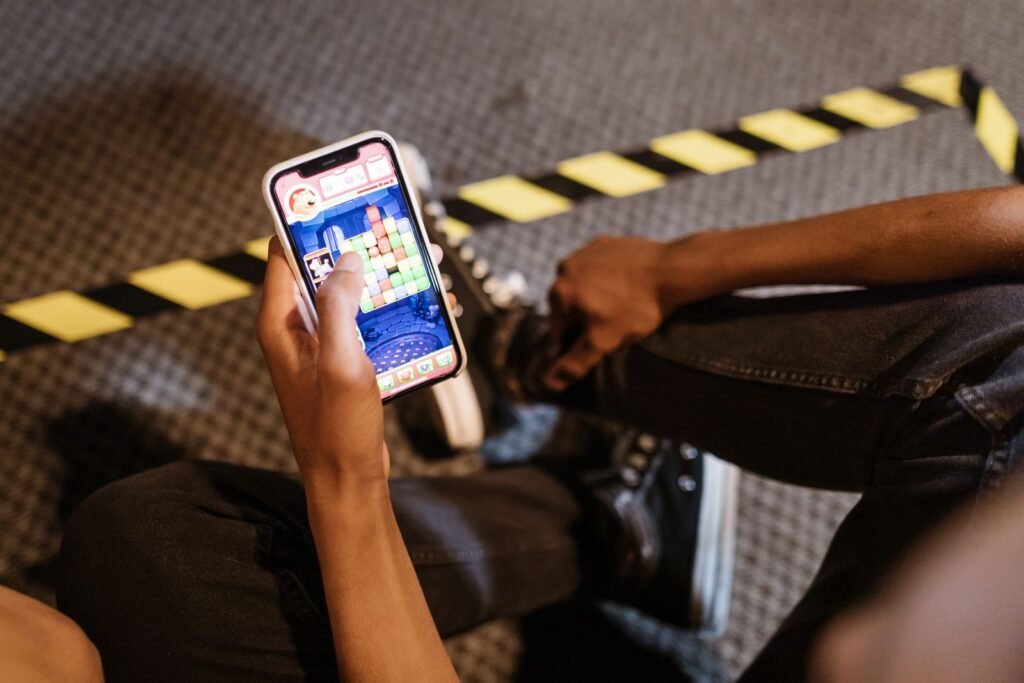
That left her with apps, and games are easy to overlook. A game like Among Us doesn’t look like a messaging app, but it is one. Every round ends in a group discussion where players type to each other in real time, often with strangers from anywhere in the world.
According to the complaint, the conversation started in the game in mid-October, then moved to another social media app where Arellano gave her real name. She told the other child she was being held against her will and that she believed police had stopped looking for her. The child’s mother contacted the FBI, which set up and monitored a video call on November 1. During that call, Arellano described what had happened and showed agents the knife she said Harmel kept by the bed. Oregon State Police and federal agents went in that same day. Harmel was arrested at a traffic stop in Ontario, Oregon.
The darker part: who’s hunting on gaming platforms
The Justice Department said on November 4 that Arellano was allegedly targeted on gaming platforms also used by members of what it calls nihilistic violent extremist groups. It named networks including No Lives Matter and Maniac Murder Cult, along with The Com, a loose web of online communities the FBI has warned about repeatedly. These groups find vulnerable kids in games and chat servers, then pull them onto private apps where they pressure them into sending images, hurting themselves or worse.
FBI Director Kash Patel didn’t soften it. “To anyone using gore groups to target and exploit children: the FBI and our partners are coming for you,” he said in a statement, adding that the bureau is “using every tool at our disposal to combat nihilistic violent extremism.”
The broader numbers show why the FBI is putting so much weight on this. The National Center for Missing and Exploited Children says reports of online enticement, adults using the internet to lure kids, nearly tripled in a single year.
Among Us safety settings parents should actually check
None of this means Among Us is the villain. In this case it was the lifeline. But it’s a reminder that any game with open text chat is a social network, and it deserves the same attention you’d give Snapchat or Discord. Here’s a quick rundown of what to look at on the platforms kids use most.
| Platform | Setting to check | What it does |
|---|---|---|
| Among Us | Chat type: Quick Chat vs Free Chat | Quick Chat limits players to preset phrases, so nobody can type a username or another app to a child |
| Snapchat | Family Center | Lets parents see who a teen is talking to, without reading the messages |
| Discord | Family Center and DM filters | Shows new friends and servers joined, and blocks DMs from strangers |
| Roblox | Parental controls, chat limits | Can turn off chat entirely or limit it to known friends |
| Xbox / PlayStation | Family settings apps | Control who can message, invite or voice chat with a child account |
Settings only go so far, though. Age verification is spreading, as we covered when Discord started requiring a face scan or ID for full access, but determined adults lie about their age and kids find workarounds. Some states are trying to force platforms to do more. California’s new child safety laws can fine companies up to $1 million per child harmed, although proving that harm in court is hard.
Red flags that show up in almost every grooming case
Investigators and child safety groups describe a pattern that looks a lot like what’s alleged here. It’s worth knowing, because it often starts somewhere that feels harmless.
- Moving the chat. A new “friend” from a game pushes to switch to Snapchat, Telegram, Discord or another private app.
- Gifts and money. Offers of game currency, gift cards or cash, often framed as help or kindness.
- Sympathy stories. An illness, a disability or a lonely life that makes the adult seem harmless. Harmel allegedly used a hip disability.
- Secrecy. “Don’t tell your parents, they won’t understand.”
- Isolation. Telling a child that nobody is looking for them or that their family doesn’t care. Arellano reportedly believed police had stopped searching.
If you want a starting point for the basics with your family, our guide to online safety for beginners covers passwords, privacy settings and spotting scams.
Arellano was taken for medical care after her rescue. Her mother, Stephanie Coleman, had kept appealing for information for a year and a half and had long suspected her daughter was lured away by someone she met online. She was right.
Sources and further reading
- UNILAD Tech: How a teenage girl trapped for 500 days used an online video game to alert the outside world
- Newsweek: Teenage girl held captive for 500 days raised alarm in online video game
- KSL: Oregon man accused of kidnapping Garden City teen charged in federal court
- NCMEC: CyberTipline
About this article: GeekBlog covers U.S. technology news, AI, phones, smartwatches and gaming. Every story is written and checked under our Editorial Policy. Spotted a mistake or have a story tip? Contact our editors.
