

This Christmas marks 30 years since six-year-old JonBenét Ramsey was found dead in the basement of her family’s home in Boulder, Colorado. Nobody has ever been charged. And now her older brother, Burke, who rarely speaks publicly, is pointing at the one piece of evidence he thinks can still break the case.
“The DNA says we didn’t do it. I know none of my family did it. I didn’t do it,” Burke told the Daily Mail, in comments picked up by UNILAD Tech. He said investigators need to find a match for the DNA recovered from under JonBenét’s fingernails. “It’s the best evidence we have. It’s probably the person who did it, you know, and it’s the best chance we have to solve this.”
His father, John Ramsey, has been saying something similar for years: that a technique called forensic investigative genetic genealogy, or IGG, is “the gold standard today.” So what is it, and why hasn’t it already solved this case?
The short version
- Unknown male DNA was found on JonBenét’s clothing as early as January 1997. It has never matched anyone in the FBI’s CODIS database.
- Genetic genealogy doesn’t need the killer to be in a criminal database. It looks for his cousins instead, using consumer DNA sites.
- The same method cracked the Golden State Killer case in 2018 and helped identify the suspect in the 2022 Idaho student murders.
- The catch: the Ramsey samples are tiny, old, and may contain DNA from more than one person, which makes genealogy much harder.
- Boulder police say DNA testing is ongoing but won’t discuss specifics. The family wants the evidence sent to a private genealogy lab.
What happened in 1996
JonBenét was reported missing early on December 26, 1996. Her mother, Patsy, found a long ransom note on a staircase demanding $118,000. About seven hours later, John Ramsey found his daughter’s body in the basement. The autopsy ruled her death a homicide caused by “asphyxia by strangulation associated with craniocerebral trauma.”
The investigation became one of the most picked-over in American history. Police focused on the parents early, and Burke, then nine, also came under suspicion. Critics, including a former Boulder police chief, have said the department mishandled the crime scene in those first hours. In 2008, then-District Attorney Mary Lacy formally cleared the family, saying DNA from the scene belonged to an unidentified male who was not a Ramsey. Patsy had died of ovarian cancer two years earlier.
Thirty years of DNA, in one timeline
The physical evidence has been tested, re-tested and argued over many times. Here’s how the DNA story has unfolded.
According to John Ramsey, a private lab, Bode Technology in Virginia, did the first testing and reported in January 1997 that it had found unidentified male DNA in JonBenét’s underwear. In 2003, investigators built a profile from a blood spot and uploaded it to CODIS, the FBI’s national DNA database. It didn’t match anyone. In 2008, newer “touch DNA” testing on her long johns found what investigators said was the same male profile, which led to the family being cleared.
Then things got murkier. In 2016, a review by outside analysts reported that the sample in CODIS may actually contain genetic markers from at least two people. That matters a lot, and we’ll get to why.
Why CODIS never found him
CODIS works like a giant lookup table. It stores profiles built from about 20 short tandem repeat (STR) markers, and it holds DNA from people who have been convicted of crimes or, in many states, arrested. If the killer was never arrested for a qualifying offense after DNA collection became routine, he simply isn’t in it. Searching CODIS for him again and again won’t change that.
Genetic genealogy flips the problem around. Instead of hunting for the suspect directly, it hunts for his relatives.
| CODIS (traditional) | Genetic genealogy (IGG) | |
|---|---|---|
| What’s tested | About 20 STR markers | Hundreds of thousands of SNP markers |
| Who’s in the database | Convicted offenders and arrestees, more than 20 million profiles | Consumers who opted in on sites like GEDmatch and FamilyTreeDNA |
| What a hit looks like | A direct match to one person | Distant cousins, then a family tree |
| Typical cost | Low, run by state and federal labs | Thousands of dollars, sometimes much more |
| Time to a name | Instant if there’s a match | Days to years of genealogy work |
| Final proof | Confirmatory STR test | Still needs a confirmatory STR test |
How genetic genealogy actually works
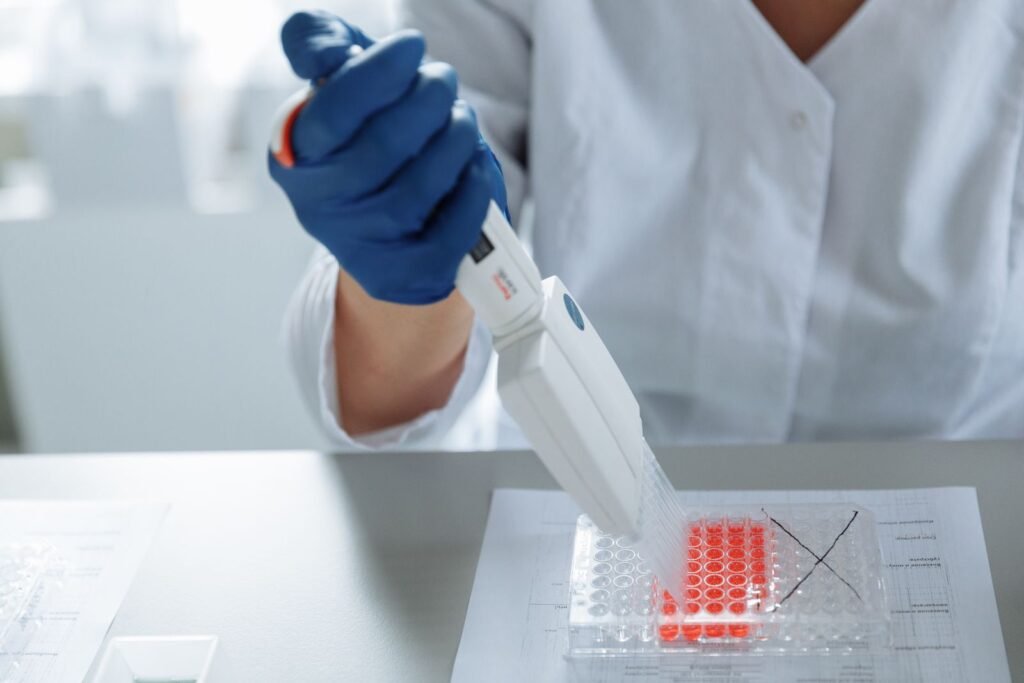
The idea is simple even if the work isn’t. A lab sequences the crime scene sample and turns it into the same kind of file you’d get from a consumer ancestry kit. That file gets uploaded to a database that allows law enforcement searches. Most big names, including Ancestry and 23andMe, don’t allow it. GEDmatch and FamilyTreeDNA do, and on GEDmatch users must opt in.
1. Extract DNA from evidence (blood, touch, hair)
2. Sequence it into a SNP profile
3. Upload to GEDmatch or FamilyTreeDNA
4. Find shared DNA with distant cousins
5. Build family trees back, then forward
6. Narrow to one candidate
7. Collect his DNA and confirm with an STR test
Genealogists then build family trees backward from those cousins to common ancestors, and forward again to living people who fit the age, sex and location of the suspect. That’s how investigators identified Joseph DeAngelo as the Golden State Killer in 2018, decades after his crimes. Genealogy work also helped the FBI identify Bryan Kohberger in the 2022 University of Idaho murders. John Ramsey’s ask is basically the same play: “Let’s do a reverse family tree and see if he had a relative living in Boulder in 1996,” he told ABC News.
Advanced labs can also do this with far less DNA than they could a decade ago. John Ramsey has pointed out that some private labs can now work with tiny amounts of touch DNA, the few skin cells someone leaves behind on a surface.
The hard part: tiny, old and possibly mixed
This is where the Ramsey case gets difficult, and why “just run genealogy” isn’t as easy as it sounds.
- The samples are tiny. Touch DNA and trace amounts under fingernails yield very little material. Every test consumes some of it, so labs and police get cautious about which method to use first.
- They’re old. DNA degrades. Thirty-year-old evidence stored in the 1990s wasn’t always handled to today’s standards.
- They may be mixtures. Genealogy works best with a single person’s DNA. If the 2016 review is right and the profile blends two contributors, separating them is much harder, and a mixed profile can send genealogists down the wrong family tree.
- Contamination is a real risk. The crime scene was crowded in the first hours. Investigators have to rule out DNA from anyone who was there legitimately.
None of that makes IGG impossible here. It does explain why police might move slowly and why the family thinks they’re moving too slowly.
What police say they’re doing
Boulder police say the case is active. “Techniques and technology constantly evolve. This is especially true with technology related to DNA testing,” Chief Stephen Redfearn said. In 2024 the department called claims that it was sitting on untested evidence “completely false,” and noted that it, not the state crime lab, convened a Cold Case Review Panel in December 2023.
The case also got pulled into a separate scandal this year. Former Colorado Bureau of Investigation analyst Yvonne “Missy” Woods, accused of manipulating DNA data in hundreds of cases, appeared in court in June 2026. Both Boulder police and the Boulder County District Attorney’s Office told Fox News that a CBI review found her misconduct had no effect on the Ramsey evidence. The DA’s office said the team working the case met as recently as last month and is reviewing evidence “to ensure DNA testing has kept pace with advancements in DNA testing methodologies.”
John Ramsey isn’t convinced that’s enough. He’s said cost should not hold anything up, and earlier this year he publicly asked President Trump to step in and help the family get the evidence to a private genetics lab. “I know they listen, but I don’t know where they are mentally, in terms of making that happen,” he told Fox News.
Could it really work?
It’s worked on cases this old before. The Golden State Killer’s crimes dated to the 1970s and 1980s. Since 2018, genealogy has helped name suspects in hundreds of cold cases across the US, many involving evidence collected long before anyone imagined sequencing it this way. If you follow how tech is changing cold case work, we also looked at how an AI-generated tip sent police after a witness who didn’t exist, a reminder that newer isn’t always better.
The difference with JonBenét is the evidence itself. Genealogy needs a usable single-source profile, and that’s the one thing nobody has publicly confirmed exists. If a lab can pull a clean male profile from the fingernail scrapings or another item, the odds go up fast. If what’s left is a degraded mixture, the technology may still fall short.
True crime keeps finding new audiences on streaming, from Netflix’s 2024 series Cold Case: Who Killed JonBenét Ramsey to documentaries like the one that recently retold how Breck Bednar was groomed online. In this case, though, the next chapter will be written in a lab.
Sources and further reading
- UNILAD Tech: The DNA tech that could help solve JonBenét Ramsey’s murder
- Fox News: JonBenét Ramsey’s father pushes for forensic genetic genealogy testing
- Newsweek: Boulder police reject critics’ DNA claims
- Denver7: JonBenét Ramsey’s father hopeful new DNA tools could solve case
- CNN: John Ramsey pushes for more DNA testing
About this article: GeekBlog covers U.S. technology news, AI, phones, smartwatches and gaming. Every story is written and checked under our Editorial Policy. Spotted a mistake or have a story tip? Contact our editors.
