


Featured image: Project Helix key art. Source: Microsoft, Xbox Wire
For most of this year, the biggest question hanging over Project Helix has been an identity question. Is the next Xbox a console, or is it a Windows PC with an Xbox logo on the box? Microsoft has now answered it in about as plain a sentence as a hardware executive is ever going to give you.
“Helix is designed to be a console that is also capable of playing games from your PC,” says Jason Ronald, the Xbox vice president who leads next generation console development. “It is not a PC that can also play console games.”
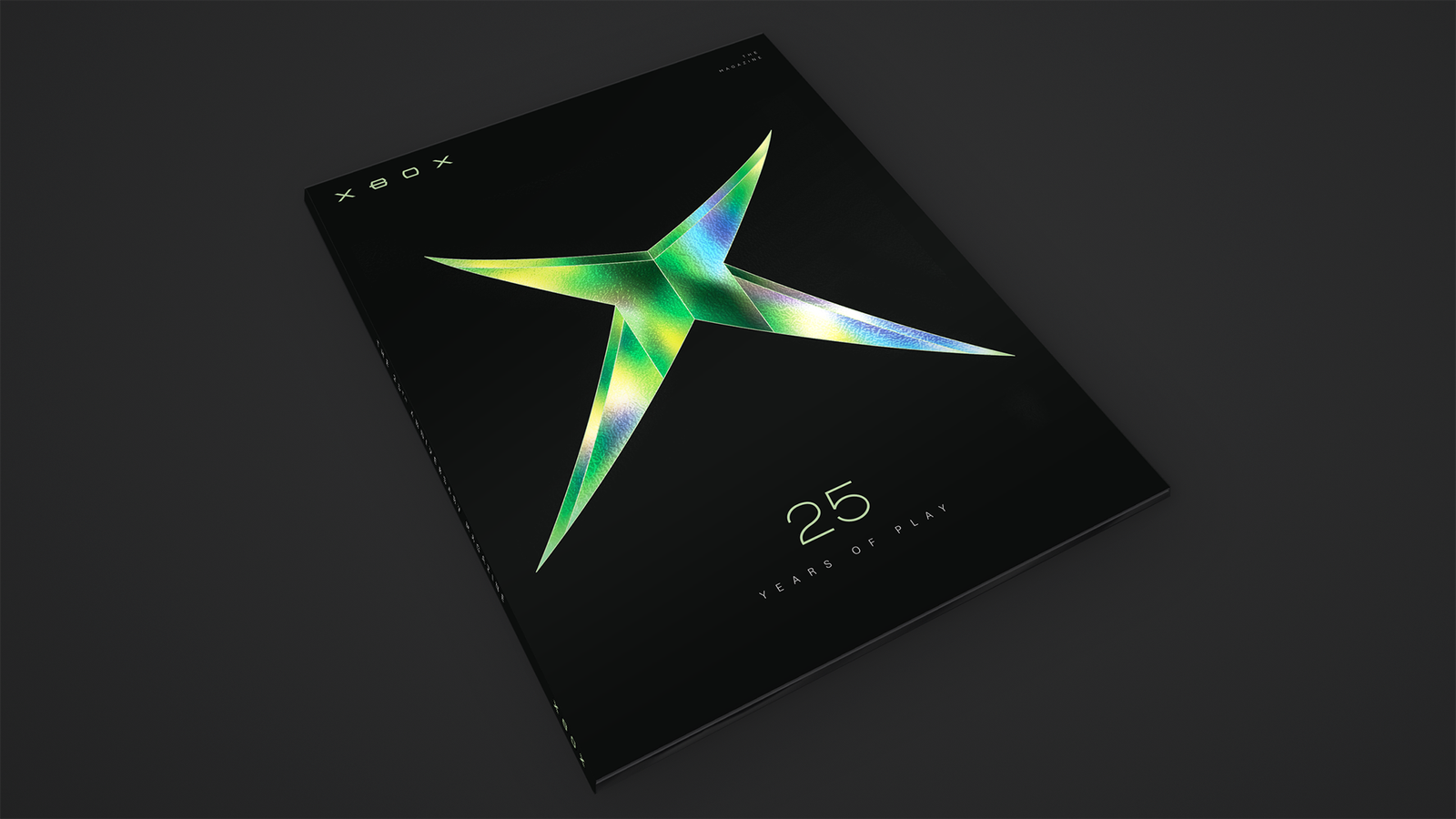
The quote comes from a four page interview in XBOX: The 25th Anniversary Magazine, a printed magazine Microsoft handed out at Xbox FanFest in Seattle last week and then posted in full on Xbox Wire on November 15. Ronald also talks about why the team is leaning so hard on neural rendering, and he admits that the memory shortage has made this “a challenging time” to design a console. That last part is the bit worth paying attention to, because it lands only weeks after a Fortune report said Helix could cost as much as $1,800.
The short version
- What Xbox said: Helix is a console first that can also run games from your PC library
- Backward compatibility: Games and progression from four Xbox generations come along
- The big tech bet: Neural rendering, to get better visuals without more raw horsepower or memory
- Still unannounced: Price, release date, design, and whether Steam or other stores will run on it
- Reported, not confirmed: Holiday 2028 launch and an internal price projection of $1,200 to $1,800
A console first, with your PC library riding along
The distinction Ronald draws sounds like marketing, but it matters for how the machine will actually feel. A PC that plays console games implies a desktop, a Windows login, driver updates and a store menu you have to dig through. A console that also plays PC games implies you turn it on, it boots into a dashboard built for a controller, and your games are just there.
Ronald frames the goal as removing “the arbitrary constraints between console and PC games.” In practice that builds on two things Microsoft already has running. The first is Xbox Play Anywhere, the buy once, play on console and PC program, which Microsoft said at GDC in March had grown to more than 1,500 games from over 500 development teams. The second is Xbox mode, the full screen, controller friendly Xbox interface that debuted on the ROG Xbox Ally handhelds and began rolling out to Windows 11 in April.
Helix is also meant to carry your history with it. Ronald says players will be able to bring four generations of Xbox games and their progression to the new hardware: original Xbox, Xbox 360, Xbox One and Series X|S. Microsoft has been laying the groundwork for that all year, most recently when it brought 21 more original Xbox games to PC as part of the 25th anniversary celebrations.
“It’s definitely a challenging time. It’s also one of the most exciting times, because we have to invent entirely new technology to continue to advance the state of the art while also continuing to make things accessible and affordable.”
Jason Ronald, VP of Next Generation, Xbox, in XBOX: The 25th Anniversary Magazine
Why neural rendering is the center of the pitch
The most revealing part of the interview is not about PC games at all. It is about cost. Ronald says the Helix team is “really focused on advancements like neural rendering, because it’s an entirely new way to generate a frame without requiring more computational horsepower, additional memory, and things like that.”
Read that sentence again with the memory market in mind. RAM and storage prices have climbed sharply this year as AI data centers buy up supply, and that is exactly why the Xbox Series X|S, PS5 and Nintendo Switch 2 have all seen price increases over the past year. If you cannot afford to simply pack more memory and a bigger GPU into a box, the other route is to make the GPU you have work smarter. Neural rendering uses machine learning models running inside the graphics pipeline to reconstruct detail, upscale and generate frames, so the hardware renders less and the AI fills in more.
This is not a sudden pivot. When Microsoft first detailed Helix at GDC on March 11, it described a custom AMD system on a chip “co-designed for the next generation of DirectX and FSR,” with “an order of magnitude leap in ray tracing performance” and intelligence built “directly into the graphics and compute pipeline.” AMD’s FSR roadmap has been heading the same way, and it has already reached current hardware: FSR 4.1 is now in the hands of Xbox developers working on Series X games. Sony is doing something similar, bringing its AI upscaling tech to the base PS5.
Ronald also pushes back on the idea that the generation will be defined by spec sheet numbers like 8K output or 240Hz. The pitch is visual quality you can see, delivered in “more efficient and innovative ways,” rather than a teraflop figure for the box.
How a neural rendering frame comes together
Simplified illustration of the approach Xbox and AMD describe, not an official Helix diagram
STEP 1
Render fewer pixels
The GPU draws the scene at a lower internal resolution, with ray tracing where it counts
STEP 2
AI reconstructs detail
A trained model upscales the image and cleans up ray traced lighting and noise
STEP 3
AI generates frames
Extra frames are predicted between rendered ones for smoother motion
The payoff Xbox is chasing: better looking games without paying for more memory and a much bigger chip, which are the two parts hit hardest by the current shortage.
The price problem nobody at Xbox will put a number on
Here is where the optimism in the interview meets reality. Ronald does not give a price, and neither does the magazine. But on October 20, Fortune’s profile of Microsoft Gaming CEO Asha Sharma reported that Helix has been internally projected to cost consumers between $1,200 and $1,800 unless Microsoft decides to subsidize it. The same report put the console’s launch in the 2028 holiday season, with a new handheld possibly arriving as early as late 2027. Microsoft has confirmed none of that, and Fortune did not say where the figures came from.
Even the friendlier scenarios are steep. Ampere Analysis modeled what happens if both the PS6 and Helix launch at $1,000 in 2028, and found that combined sales over their first five years could be up to 38% lower than the PS5 and Series X|S managed. That is the number that keeps getting rounded up to “40%” in headlines.
Next gen Xbox price: what has been reported
US dollars at launch. None of these are official prices. Bar scale: $1,800 = full width
38%
Possible drop in combined 5 year next gen sales at $1,000 (Ampere)
2027
Alpha hardware ships to developers (confirmed)
2028
Reported holiday launch window (unconfirmed)
Put Ronald’s comments next to those figures and the strategy becomes clearer. Neural rendering is not just a graphics feature. It is how Microsoft hopes to avoid shipping a box whose bill of materials is dominated by memory it cannot buy cheaply. Whether that gets Helix anywhere near a mainstream price is another matter, and it is the question that will decide whether this console is a mass market device or an enthusiast machine.
Confirmed, reported and rumored: where Project Helix stands
There is a lot of Helix information floating around, and it does not all carry the same weight. Here is how it breaks down as of today.
| Detail | What we know | Status |
|---|---|---|
| Identity | A console that also plays games from your PC | Confirmed |
| Chip | Custom AMD SoC co-designed for next gen DirectX and FSR | Confirmed |
| Ray tracing | “Order of magnitude” leap over current gen | Confirmed |
| Library | Games and progression from four Xbox generations | Confirmed |
| Dev kits | Alpha hardware to developers starting in 2027 | Confirmed |
| Launch | Holiday 2028, handheld possibly late 2027 | Reported |
| Price | $1,200 to $1,800 internal projection without subsidy | Reported |
| Specs | “Magnus” APU with 68 RDNA 5 compute units and Zen 6 cores | Leak only |
| Third party stores | Steam or other PC storefront support not addressed | Unknown |
The Steam question is still the big unknown
“Games from your PC” is doing a lot of work in Ronald’s sentence. For Xbox Play Anywhere titles bought through Microsoft’s own store, the meaning is obvious. What is less obvious is whether that phrase stretches to your Steam, Epic or GOG libraries. Microsoft said back in March that players should be able to play games “from other leading storefronts,” but Ronald does not explain in the new interview how that would work on Helix, or whether those stores would run natively on the console.
That detail could make or break the machine for a lot of people. A console that can boot straight into a decade of Steam purchases would be a genuinely new proposition. A console that only recognizes PC games sold by Microsoft is a much easier sell to make on a slide and a much harder one to make to players who have spent years building libraries elsewhere. Given how much Xbox’s strategy has shifted over the past year, with first party games on rival platforms and Game Pass changes, it is fair to say nobody should assume the answer either way.
What to watch for next
- Store support: Whether Microsoft names Steam or other storefronts as officially supported on Helix
- Subsidy signals: Any hint that Microsoft will sell the hardware at a loss to get under $1,000
- The handheld: A first party Xbox handheld in 2027 would show how the “family of devices” plan fits together
- Dev kit timing: Alpha hardware reaching studios in 2027 is the clearest sign the 2028 window is real
Our take
Ronald’s interview is a smart piece of positioning. Calling Helix “the ultimate gaming machine” and a console first is meant to calm the longtime Xbox fans who worried their console was turning into a Windows box, while the PC library talk is aimed at everyone who already games on a desktop. Both groups get something.
But the most honest line in the whole conversation is the one about this being a challenging time. Microsoft is designing a console in the middle of a memory crunch, and its answer is to bet heavily on AI doing the heavy lifting in every frame. If that bet pays off, Helix could look like a real generational leap without a real generational price jump. If it does not, all the clever positioning in the world will not make an $1,800 console feel like a console. We will know a lot more once those alpha kits start landing on developers’ desks next year.
Sources: Xbox Wire, 25th Anniversary Magazine, Xbox Wire, Project Helix at GDC, GamesRadar+, GameSpot, VGC, Wccftech, Wccftech on the Fortune report, VGC on Ampere Analysis.
About this article: GeekBlog covers U.S. technology news, AI, phones, smartwatches and gaming. Every story is written and checked under our Editorial Policy. Spotted a mistake or have a story tip? Contact our editors.
