

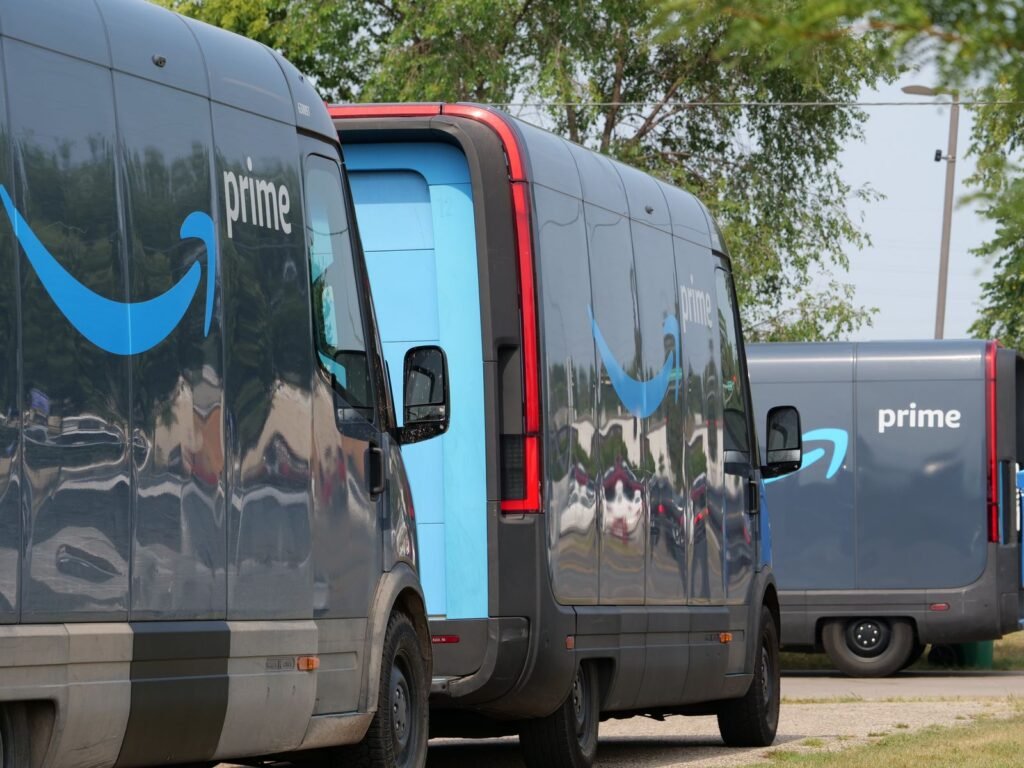
If you’ve opened the Amazon app in New York City lately, you may have seen the warning: the City Council “could add up to $5 per order.” Some customers are now finding the same message on stickers stuck to their packages, complete with a QR code that sends you straight to your council member.
It’s an aggressive campaign, timed right before Black Friday. And as UNILAD Tech points out, the bill Amazon is fighting doesn’t contain a $5 fee at all. So where does the number come from, and could you actually end up paying it?
The short version
- The Delivery Protection Act (Intro 518) would make big delivery companies hire last-mile drivers directly instead of using subcontractors.
- The only fee in the bill is a $500 license per warehouse facility.
- The $5 figure traces back to an Amazon-funded study estimating up to $5.20 per package.
- Nothing in the bill stops Amazon from raising prices or adding its own surcharge if it chooses.
- A council vote is expected before the end of the year.
What the Delivery Protection Act actually does
Amazon doesn’t employ most of the people who bring packages to your door. It relies on a network of small contractors, known as Delivery Service Partners, who hire the drivers. Amazon sets the routes, the quotas and the technology, but the drivers technically work for someone else.
The bill, sponsored by Council Member Tiffany Cabán and backed by Mayor Zohran Mamdani and the Teamsters, would change that in the city. According to the official bill text, operators of certain warehouses delivering to NYC customers would need a business license from the Department of Consumer and Worker Protection. That license would come with safety, training and employment requirements.
In plain terms, companies like Amazon and FedEx would have to directly employ their core warehouse and delivery workers after a 12-month phase-in. Supporters say that’s fair, since these companies already control how the work is done while using contractors to avoid legal responsibility for it.
The claim versus the bill
| Amazon’s message | What the bill says |
|---|---|
| “Up to $5 per order” | No per-order fee or surcharge anywhere in the text |
| “NYC Council could add” the cost | Any price increase would be Amazon’s own decision |
| Higher costs for households | A $500 license per facility, plus direct hiring rules |
| “Protect low prices” | The bill doesn’t regulate retail prices at all |
The number comes from a study Amazon commissioned, which found the rules could raise the cost of delivery by as much as $5.20 per package, or up to $664 a year per household. Amazon hasn’t publicly explained how that study reached its figure.
Doing the math on Amazon’s own numbers
$5.20
Maximum extra cost per package in Amazon’s study
$664
Claimed maximum extra cost per household, per year
~128
Packages a year that implies, or about 2.5 every week
$664 divided by $5.20. Most households order far less than that, so the yearly figure assumes very heavy shoppers.
How the fight escalated
Amazon has been working against the bill for months. Reports in August said the company was spending around $5 million to stop it. The campaign moved onto customers’ screens this fall with a banner on the website and pop-ups in the app, and now onto the boxes themselves.
Shoppers on Reddit have posted photos of stickers reading “NYC Council could add up to $5 per order. Act now to protect low prices.” Some say they received them outside New York City. The sticker’s QR code tells customers to “tell your council member: no increases for New Yorkers.”
Amazon says the push works. It claimed 60,000 people contacted council members in the first 36 hours, and The New York Times reports the number has since climbed to 110,000.
What city leaders and experts say
City Council Speaker Julie Menin, who had raised her own concerns about the bill back in October, didn’t hold back about the ads. “To put out an ad that falsely claims that if you purchase something on Amazon you’re gonna get with a $5 fee a piece every single time is completely” deceptive, she said, calling the campaign “nothing short of a cynical plot to trick New Yorkers.”
Mamdani put it more bluntly. “If Jeff Bezos adds $5 to your order, it’s not because of City Council’s efforts to protect workers’ rights and keep our streets safe.”
Outside experts are skeptical of the figure too. David Weil, a Brandeis University professor who has studied subcontracted work for years, told the Times that while costs would rise, “the idea that it would translate into $5 for every order is hyperbole.” Others argue that a directly employed workforce could mean lower turnover and better trained drivers, which would offset some of the extra cost.
The fight so far
AUGUST 2026
Mayor Mamdani backs the Delivery Protection Act. Amazon starts spending to oppose it.
OCTOBER 2026
Unions press Speaker Menin to pass it. She says the bill needs legal review.
NOVEMBER 2026
Amazon adds “$5 per order” banners, app alerts and package stickers.
BY DECEMBER 31
A full council vote is expected before the year ends.
So, could you actually pay $5 more?
Technically, yes. The bill doesn’t regulate retail prices, so Amazon is free to add a delivery surcharge for New York City or quietly raise prices there to cover higher labor costs. That part of the warning isn’t false. It’s the framing that’s misleading, because the decision to charge customers would be Amazon’s, not the council’s.
There are good reasons to doubt a flat $5 on every order, though. Amazon earned $113.6 billion in net income in the first nine months of 2026, up about 101% from a year earlier. And New York is one of its most competitive markets. A visible $5 charge on every order would push plenty of shoppers toward Walmart, Target and local stores that deliver.
What this means for your holiday shopping
Nothing changes this Black Friday. The bill hasn’t passed, and even if it does, direct hiring would only kick in after a 12-month phase-in. If prices go up in NYC down the line, it’ll show up on your receipt as a fee or a price change you can compare against other retailers.
While you’re checking your Amazon account, it’s also worth seeing if you’re owed money from the company. Millions of customers are eligible for a share of its $309.5 million refund settlement, and the claim deadline is December 1.
For now, the fight is really about who carries the cost of the people driving those vans. Amazon wants New Yorkers to believe it’ll be them. The council is betting that a company earning over $100 billion a year can afford to absorb it. The vote in the coming weeks will decide who’s right, at least on paper.
About this article: GeekBlog covers U.S. technology news, AI, phones, smartwatches and gaming. Every story is written and checked under our Editorial Policy. Spotted a mistake or have a story tip? Contact our editors.
