

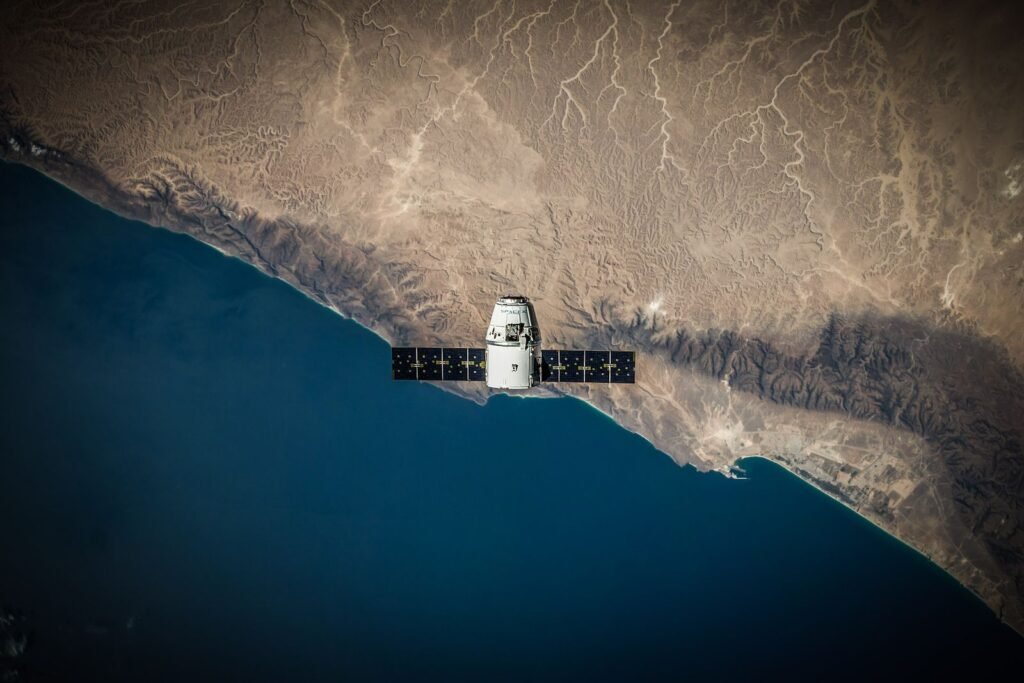
On Wednesday, FCC Chairman Brendan Carr posted what he called “a historic first.” The agency had approved SpaceX’s request for up to 1 million satellites, which Carr described as “orbital compute modules,” to build data centers in space. Elon Musk replied within hours: “Much appreciated. This will be a great asset to America and the world.”
Not everyone shares the enthusiasm. As UNILAD Tech notes, the decision has revived fears about Kessler Syndrome, the nightmare scenario where collisions in orbit trigger a chain reaction of debris. To understand whether that fear is fair, you have to look at the sheer scale of what was just signed off, and at the one big question the FCC left open.
The short version
- The FCC gave SpaceX conditional approval for up to 1 million “Starmind” satellites on November 25.
- They would fly between 500 and 1,002 km up and run AI computing on solar power.
- There are roughly 17,000 active satellites in orbit today, about 11,200 of them Starlink.
- The FCC has not yet approved SpaceX’s debris plan for satellites above 600 km.
- SpaceX must launch the first one by 2033 and all of them by 2040, or the license is void.
What exactly did the FCC approve?
The order from the FCC’s Space Bureau authorizes a constellation SpaceX calls Starmind. Unlike Starlink, these satellites aren’t mainly about beaming internet to your house. They’re meant to be flying data centers that soak up sunlight, run AI workloads and send results back to Earth.
The satellites would sit in orbital shells between 500 and 1,002 kilometers, in roughly 30 degree and sun-synchronous orbits. They’d talk to each other, and to Starlink, mostly over laser links. The FCC also granted backup radio frequencies so ground controllers can still reach a satellite if its main communications fail.
Each first-generation satellite, which SpaceX calls AI1, is a lot bigger than anything in the Starlink fleet.
| SpaceX AI1 satellite | Planned spec |
|---|---|
| Deployed height | About 30 meters |
| Solar array wingspan | Up to 75 meters |
| Mass | Up to 4,000 kg |
| Compute | Nvidia Vera Rubin NVL72-class hardware |
| Power | Up to 250 kW peak, about 175 kW average |
| Layout | Clusters of about 10 satellites linked by lasers |
The pitch is simple. On the ground, AI data centers are fighting over land, power, water for cooling and years-long waits for grid connections. Communities across the US have pushed back hard. In orbit, sunlight is nearly constant and there are no neighbors to complain. We dug into that argument and the companies chasing it in our look at Big Tech’s orbital AI bet.
A million is a very big number
It’s hard to picture what 1 million satellites means, so here’s a comparison. Astronomer Jonathan McDowell, who tracks every object in orbit, counted roughly 17,000 active satellites in October. As of early November, about 11,200 of them were Starlink. SpaceX has already built the largest constellation in history, and Starmind would be almost 90 times bigger than all of it.
Satellites in orbit vs. what was just approved
Bars drawn to scale. The small ones really are that small.
Sources: Jonathan McDowell’s satellite catalog, ESA Space Environment Report 2025, FCC Space Bureau order of Nov. 25, 2026.
So what is Kessler Syndrome?
The idea comes from a 1978 paper by NASA scientists Donald Kessler and Burton Cour-Palais. Their warning was that once enough objects crowd a region of space, collisions start producing debris faster than the atmosphere can clean it up. Each crash creates fragments, those fragments hit other things, and the cycle feeds itself.
NASA puts it plainly: “collisions create more debris creating a runaway chain reaction of collisions and more debris known as the Kessler Syndrome.” In the worst case, some orbits could become too dangerous to use for generations. That would threaten GPS, weather forecasting, satellite internet and the farm equipment and airline systems that quietly rely on all of it.
The problem is already real at smaller scales. ESA’s 2025 Space Environment Report estimated there are more than 50,000 objects larger than 10 centimeters in orbit and over 1.2 million larger than 1 centimeter. At orbital speeds, even a 1 centimeter chip can disable a satellite. Two famous events made things noticeably worse: China’s 2007 anti-satellite missile test and the 2009 collision between the Iridium 33 and Cosmos 2251 satellites. Each left thousands of trackable fragments behind.
The open question
The FCC has not approved SpaceX’s plan for handling debris from satellites above 600 km. FCC rules normally require satellites that end their missions below 2,000 km to come back down within five years. SpaceX asked for a waiver and has floated moving retired Starmind satellites into other orbits, or even into orbit around the sun, instead.
Why altitude matters so much
Height is the single biggest factor in how long junk sticks around. At around 500 km, leftover atmosphere drags dead satellites down fairly quickly. Starlink leans on this: most of its satellites fly low enough that a failed one falls and burns up within a few years.
Above 600 km, things change fast. Drag gets weaker the higher you go, and near the top of Starmind’s range a dead satellite can stay up for a very long time. That’s why the debris plan is the part experts are watching. A 4,000 kg satellite with a 75 meter solar array that breaks apart at 1,000 km isn’t a problem that cleans itself up. Researchers have argued that removing just 50 big derelict objects would halve the danger from space junk, which shows how much a handful of large, uncontrolled objects can matter.
Who objected
The FCC approved the plan over objections from Amazon, Viasat and the American Astronomical Society, which raised concerns about debris, congestion, radio interference and environmental impact. Amazon, which is building its own satellite internet network to compete with Starlink, called SpaceX’s application a “lofty ambition rather than a real plan” that still “risks real harm.”
The FCC brushed aside some of those concerns, including threats to astronomy and scientific research, on the grounds that they fall outside its authority. Astronomers have spent years complaining that bright satellites streak across telescope images. A million more large, sunlit spacecraft would make that much worse.
How fast could this actually happen?
Not quickly, and maybe not at full scale. The approval comes with a strict schedule, and missing it voids the license.
Starmind deployment deadlines set by the FCC
NOV 2033
First
satellite operating
2035
10%
100,000 satellites
2038
50%
500,000 satellites
2040
100%
1 million satellites
Musk has said the first Starmind computers could reach orbit as early as the third quarter of 2027. SpaceX’s IPO filing was a bit more cautious, pointing to 2028. The company is building a satellite factory in Bastrop, Texas, and plans to rely on Starship to carry these heavy spacecraft up.
The hurdles are huge, though. Launch and manufacturing costs need to fall dramatically. Cooling hot processors in a vacuum, where there’s no air to carry heat away, is a hard engineering problem that relies on big radiators. And somebody has to finance racks of expensive chips that can never be serviced by a technician. Musk has plenty of reasons to talk big right now, with SpaceX’s share price in the spotlight after his pledge of two SpaceX shares to every American kid.
The bottom line
Kessler Syndrome isn’t something that happens the day a license is signed. It’s a slow buildup that becomes dangerous when too many objects are left in orbits that don’t clean themselves. That’s exactly why this approval matters. SpaceX now has permission to put more objects into space than humanity has launched in its entire history, and the plan for what happens when they die is still pending.
If SpaceX keeps most Starmind satellites low, maneuvers reliably and brings dead ones down fast, the risk can be managed. If the debris waiver goes through with weak conditions, the people who will pay for it are the ones who need those orbits decades from now.
About this article: GeekBlog covers U.S. technology news, AI, phones, smartwatches and gaming. Every story is written and checked under our Editorial Policy. Spotted a mistake or have a story tip? Contact our editors.
