

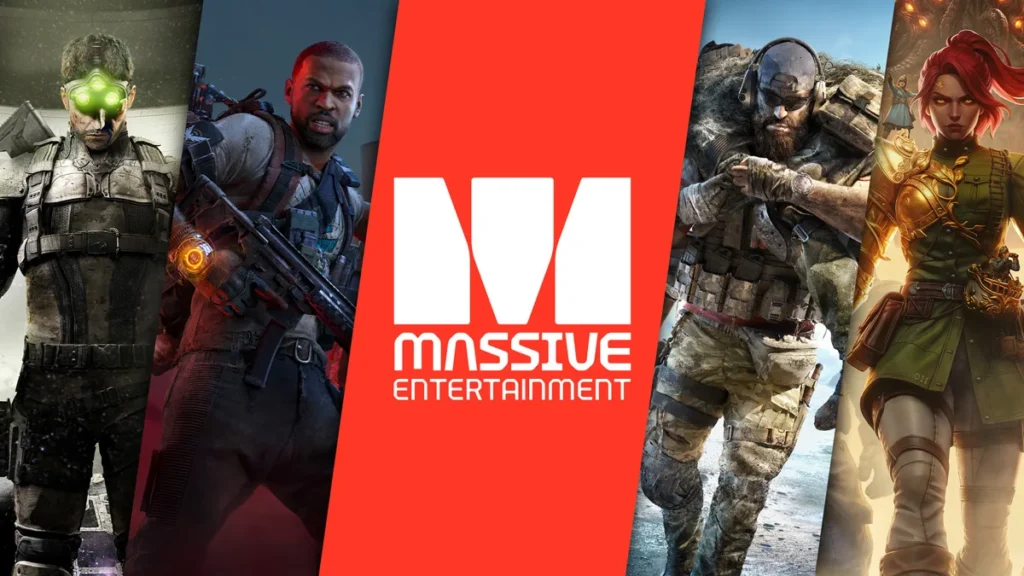
Featured image: Massive Entertainment label artwork. Source: Ubisoft, Massive Entertainment
Christoph Hartmann has spent 30 years making and selling video games, and after five months running one of Ubisoft’s biggest divisions he has picked a role model from a completely different industry. It is not another publisher. It is A24, the indie film studio behind Moonlight and Everything Everywhere All at Once.
“Really my dream would be to become like the A24 of video gaming,” Hartmann told Variety in an interview published on November 16, describing a place that wins Oscars “and still being commercially successful.” He also did something executives rarely do in a vision statement: he listed the games he will not make.
Hartmann is the general manager of what Ubisoft first called Creative House 2 and has since renamed Massive Entertainment. That label now owns The Division, Ghost Recon, Splinter Cell, the free to play MOBA March of Giants, and one more game nobody is allowed to talk about yet. So when he says he wants to build a prestige label, he is talking about some of the most recognizable shooter brands in the business.
The short version
- Who: Christoph Hartmann, former Amazon Games head and the man who built 2K Games, now general manager of Ubisoft’s Massive Entertainment label
- The goal: Become “the A24 of video gaming,” with games that win critics and still sell
- The portfolio: The Division, Ghost Recon, Splinter Cell, March of Giants and one unannounced new IP
- Ruled out: Racing, sports and casual kids games
- Still on the table: An RPG, an MMO, maybe even a strategy game, if the right talent shows up
Who Christoph Hartmann is, and why Ubisoft wanted him
If the name sounds familiar, it should. Hartmann spent roughly 20 years at Take-Two Interactive. He worked at Rockstar in the early days, up to Grand Theft Auto: Vice City, and then helped form 2K Games, the label behind BioShock, Borderlands, Civilization and XCOM. In 2019 he moved to Amazon Games, where he spent about seven years before leaving for Ubisoft this summer.
He is refreshingly blunt about why he left Amazon. “At the end of the day, it’s a Big Tech company,” he told Variety. With the tech industry pouring its attention into AI, “games just can’t be their prime focus right now.” His own line is that he is “a content person,” not a tech person, and he wanted to be somewhere games are “absolutely in the center of everything.”
Christoph Hartmann’s road to Massive Entertainment
Key stops in a 30 year career, based on his own account to Variety and Ubisoft’s announcements
EARLY YEARS
Take-Two and Rockstar
Publishing in Europe, then Rockstar through GTA: Vice City
2K ERA
Builds 2K Games
BioShock, Borderlands, Civilization, XCOM
2019 TO 2026
Amazon Games
About seven years, live service focus, starts March of Giants
2026
Ubisoft
GM of Creative House 2, renamed Massive Entertainment on Sept. 30
There is a nice bit of history in this, too. Hartmann says Ubisoft distributed his games in France and Europe decades ago, and that he actually published Rainbow Six in Europe before Ubisoft did. “It’s just a small industry, you know each other,” he said. “I almost felt like one day it’s gonna happen.”
What “the A24 of video games” actually means
A24 is a useful comparison because it solved a problem the games industry keeps failing at. Founded in 2012, the studio built a brand that audiences trust on its own. People go to see “the new A24 movie” without knowing much else about it. It won Best Picture with Moonlight, then swept seven Oscars with Everything Everywhere All at Once, a film that also earned more than $140 million worldwide. Prestige and profit, in the same building.
Very few game publishers have that kind of identity. Players follow studios like FromSoftware or Supergiant, and they follow certain franchises, but they rarely pick a game because of the label on the box. Hartmann wants Massive to be the exception, a label core players trust to deliver something challenging and well made, whatever the genre.
He is also clear that he means core gamers, specifically. “It’s almost easier to describe what we’re not going to do,” he said.
| Genre | Hartmann’s answer | Status |
|---|---|---|
| Shooters (Division, Ghost Recon, Splinter Cell) | The core of the portfolio, but “not just a shooter house” | In |
| MOBA | March of Giants proves the label can go beyond shooters | In |
| RPG, MMO, strategy | “Sure, it’s all coming down to the right talent” | Maybe |
| Racing | “I’m not going to do a racing game” | Out |
| Sports | “I’m not going to do sports” | Out |
| Casual and kids games | “I’m not going to do a casual kids title” | Out |
That list also lines up neatly with how Ubisoft is now organized. Casual and family games already have their own home in a different Creative House, so Massive does not need to chase them. The open question is whether an RPG or MMO would step on the toes of Ubisoft’s other units, which own Assassin’s Creed and the live service lineup.
How Massive Entertainment fits into the new Ubisoft
All of this sits inside the biggest shake up in Ubisoft’s history. In January, the publisher split itself into five Creative Houses, each with its own brands and budget, and canceled several projects along the way, including the long troubled Prince of Persia: The Sands of Time remake. Studios in Halifax and Stockholm were closed. The first and largest house, Vantage Studios, holds Assassin’s Creed, Far Cry and Rainbow Six, and is part owned by Tencent after a deal worth about 1.16 billion euros.
Ubisoft’s five Creative Houses at a glance
Based on Ubisoft’s January 2026 restructuring and later studio allocations
HOUSE 1
Vantage Studios
Assassin’s Creed, Far Cry, Rainbow Six. Co-owned with Tencent
HOUSE 2
Massive Entertainment
The Division, Ghost Recon, Splinter Cell, March of Giants. Led by Hartmann
HOUSE 3
Live services
Ongoing online titles, including Ivory Tower and Blue Mammoth
HOUSE 4
Legacy worlds
Anno, Rayman, Prince of Persia, Might and Magic, Beyond Good and Evil
HOUSE 5
Casual and family
Mobile and family titles, including Kolibri Games and Ketchapp
Creative House 2 got its new name on September 30. Instead of inventing a brand from scratch, Ubisoft borrowed the name of its Swedish studio, which has been part of the company since 2008 and built the Snowdrop engine. Development teams in Montréal, Paris, Sweden and Toronto now all work under the Massive Entertainment label, while Ubisoft keeps publishing and distributing everything they make.
Hartmann thinks the smaller unit is an advantage. He said he learned to love Amazon’s famous writing culture only after he left it, because it forces people to arrive prepared and get to the point. At Massive, there are “a few layers of management we don’t have, so we can actually talk to people on the team.”
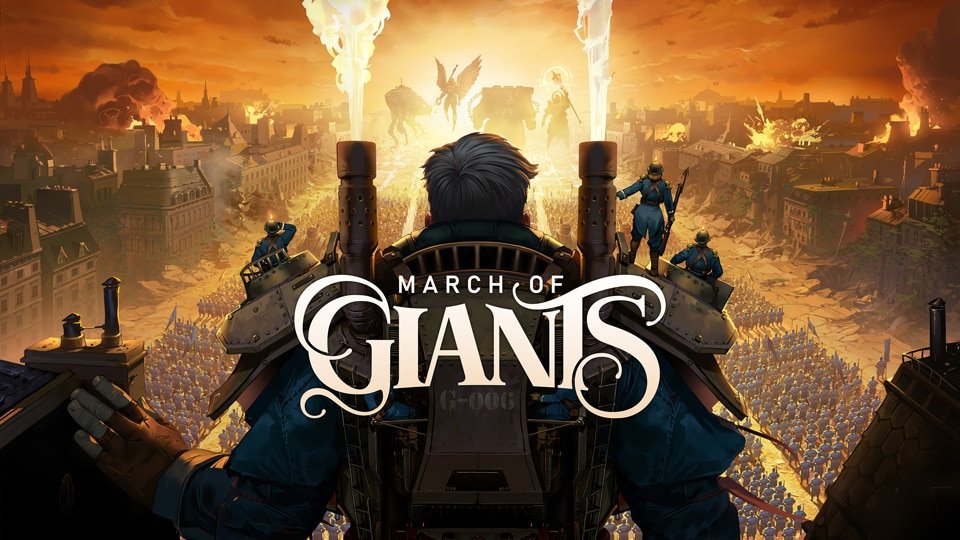
March of Giants is the proof of concept
The clearest sign of what Hartmann wants is March of Giants. It is a free to play 4v4 MOBA that started life at Amazon’s Montreal studio, built by a team Hartmann describes as “all Rainbow Six Siege people, some of the biggest best talents they had there.” Ubisoft bought the game and its team in December 2025, months before Hartmann himself arrived.
He says he had nothing to do with that deal, and that Amazon simply wanted to focus more on third party publishing and AI than on internal studios. But when talks with Ubisoft started, inheriting the team again was “a huge plus.” His reason is very human: “There’s nothing I hate more than not to finish what we started.”
Strategically, it matters because it is the one game that breaks the “Tom Clancy shooters” mold. A MOBA from a Ubisoft label is a statement that Massive is meant to be a home for talent, not just a factory for military sequels. Hartmann also teased a second new IP “in development with some great people,” but would not say more.
Where the big franchises stand right now
The A24 dream is nice, but Massive will be judged on three brands with a lot of history and a lot of fans waiting. Here is what we actually know about each one.
| Project | What is confirmed | Release window |
|---|---|---|
| The Division 3 | In production. Creative directors Yannick Banchereau and Mathias Karlson took over after Julian Gerighty left for EA’s Battlefield Studios in January | None announced |
| Splinter Cell remake | Ground up remake on Snowdrop at Ubisoft Toronto, first announced in December 2021. Ubisoft says it survived 40 job cuts in February, and new roles were posted in October | None announced |
| Ghost Recon | Listed as an active Massive project, with about a dozen open jobs on the studio site. No new game officially revealed | None announced |
| March of Giants | Free to play 4v4 MOBA, still in development, team working on its next major update | None announced |
| Unannounced new IP | Teased by Hartmann, no details | Unknown |
Notice the pattern. Not a single Massive project has a release date. That is not unusual for a label that was reorganized twice this year, but it does mean the A24 comparison is a promise about the future rather than a description of the present.
“I want us to be a label which really looks after the core gamer. And what I mean by that, it’s almost easier to describe what we’re not going to do.”
Christoph Hartmann, general manager of Massive Entertainment, to Variety
Why this matters beyond Ubisoft
The wider industry has been moving in the opposite direction all year. Big publishers are consolidating, cutting and closing, and the news that EA is shutting down BioWare after 30 years showed that even a legendary name is no protection. Creator led studios are struggling too, as the collapse of Yakuza creator Toshihiro Nagoshi’s studio made painfully clear.
Hartmann’s pitch is a bet that a smaller, focused label with a strong identity can do better than a giant catalog. It is the same reasoning that made A24 work in film: fewer projects, clear taste, and the patience to let creators take risks. Ubisoft badly needs some of that. Its biggest games have often been accused of feeling interchangeable, and the Creative House structure was designed precisely to break that habit.
What to watch next
- The Game Awards in December: The most likely stage for a first real look at The Division 3 or the Splinter Cell remake
- The mystery IP: Hartmann’s unannounced game is the best test of whether “not just a shooter house” is real
- March of Giants testing: How Ubisoft positions its first MOBA in a genre dominated by League of Legends and Dota 2
- Ubisoft’s next earnings call: Any budget or headcount changes at Massive would show how much room the A24 plan really has
Our take
“The A24 of video games” is a great sound bite, and Hartmann has more right to say it than most. He helped build 2K into a label that published BioShock, which is about as close as a big publisher has come to prestige and blockbuster sales in one package. His honesty about Amazon and his willingness to rule genres out make this feel like a real plan rather than a press release.
But A24 earned its reputation one film at a time, and it took years. Massive Entertainment has no release dates, a Division sequel that lost its longtime leader, and a Splinter Cell remake that has been in development for nearly five years. The vision is the easy part. The hard part is shipping a game that makes players say “I’ll buy the next Massive game, whatever it is.” When that happens, the comparison will make sense. Until then, it is a very good ambition.
Sources: Variety interview with Christoph Hartmann, Variety on the Massive Entertainment name, GameSpot, Massive Entertainment, Ubisoft News, Game Developer, GamesRadar+, GamesRadar+ on the Splinter Cell remake.
About this article: GeekBlog covers U.S. technology news, AI, phones, smartwatches and gaming. Every story is written and checked under our Editorial Policy. Spotted a mistake or have a story tip? Contact our editors.
