

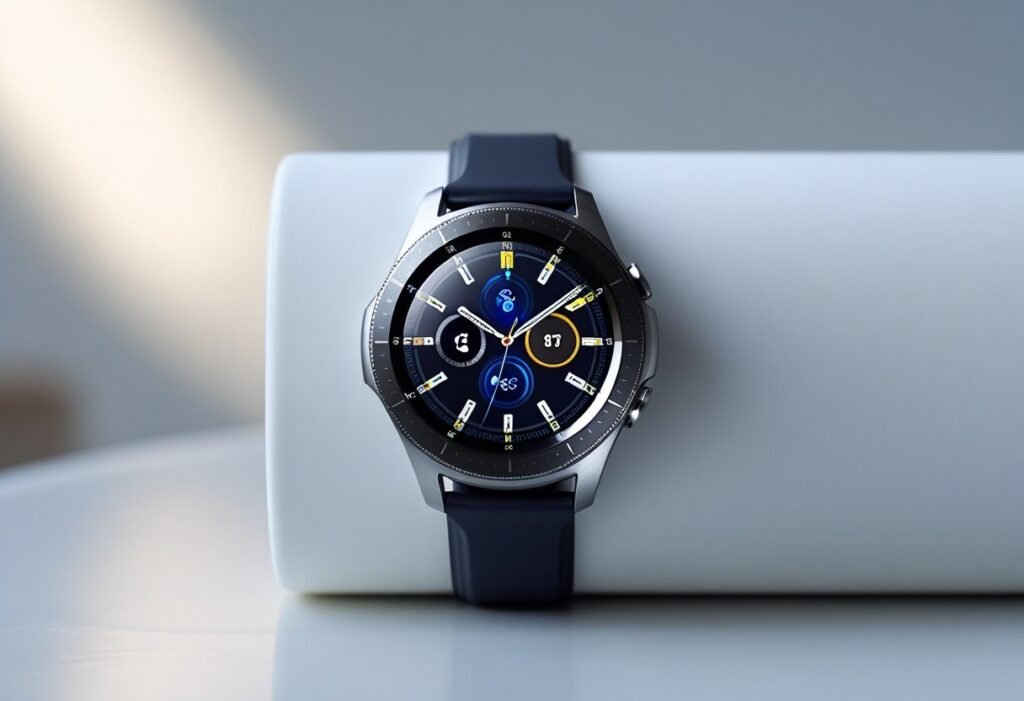
Wondering whether the Galaxy Watch 6 fits your daily life and fitness goals? The Galaxy Watch 6 gives you a sharper display, improved health sensors, and tighter Samsung ecosystem integration so you can track workouts, monitor health, and stay connected with minimal fuss.
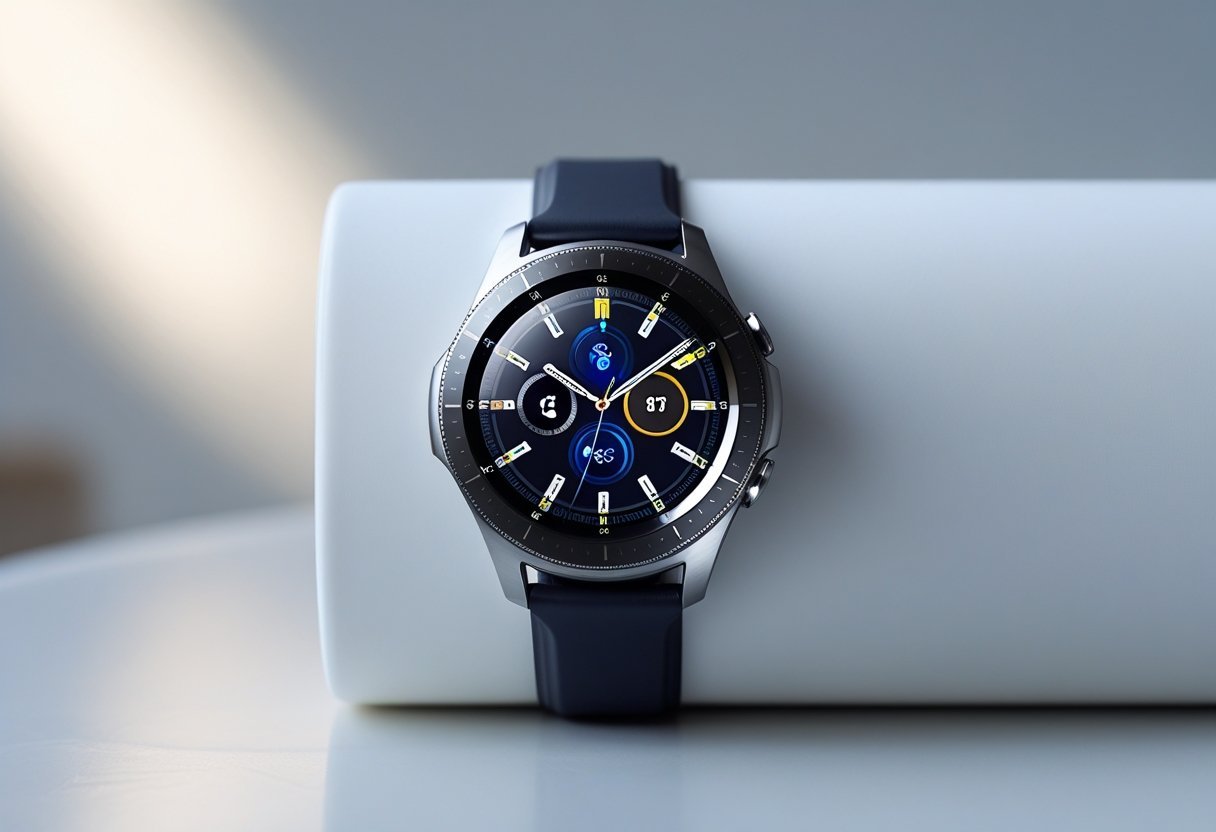
You’ll get a clear look at the watch’s standout features, health and fitness capabilities, connectivity and durability, model differences and availability, and answers to common questions so you can decide quickly which version suits your needs.
Keep an eye out for practical comparisons and real-world details that show how the Watch 6 performs day-to-day, not just on paper.
Key Features of the Galaxy Watch 6
You get a brighter, more durable display, faster internal hardware, and a refreshed Wear OS experience with One UI Watch 5 refinements. Each area balances daily usability, fitness tracking, and smartwatch functionality.
Display and Design
The Galaxy Watch 6 uses a Super AMOLED panel with high pixel density: the 40mm model is 368 x 448 (note: Samsung’s nominal 480 x 480 figure applies to larger variants and marketing rounds), and the 44mm/43mm variants approach 432 x 432 to 480 x 480 depending on model and region. You see deep blacks and strong outdoor legibility, plus an Always On Display option for glanceable information.
Samsung fits the display beneath a scratch-resistant sapphire crystal on selected models, increasing durability against everyday wear. You choose between an Armor Aluminum case or standard aluminum case finishes, both keeping weight low while remaining sturdy for active use.
Watch faces and straps are customizable; quick-release bands let you swap styles without tools. The touchscreen and a single multi-function button give simple navigation, while improved haptics make notifications feel more precise.
Performance and Hardware
Samsung powers the Galaxy Watch 6 with the Exynos W930 chipset, a dual-core 1.4 GHz Cortex‑A55 design. That combination yields speedier app launches, smoother animations, and more responsive fitness tracking compared with prior generations.
You get 1.5–2 GB of RAM depending on the SKU and 16–32 GB of onboard storage for apps and music. Battery life varies by use: typical mixed use covers a day to a day and a half; heavy GPS or continuous health monitoring reduces runtime. Charging uses a magnetic wireless puck for convenient top-ups.
Sensors include optical heart rate, ECG, SpO2, and an improved accelerometer and gyroscope for step counting and fall detection. GPS and LTE options are available on certain models so you can leave your phone at home during a run.
Operating System and Software
The Galaxy Watch 6 runs Wear OS 4 with Samsung’s One UI Watch 5 layer. You interact with familiar Google services alongside Samsung apps, giving you access to Google Play apps plus Samsung Health and Samsung Wallet functions.
The software emphasizes watch-face customization, faster notifications, and smoother third-party app support. Health features include automatic workout detection, detailed sleep stages, continuous heart rate logging, and on-demand ECG and blood oxygen readings where local regulations allow.
You control privacy and permissions directly from the watch or the paired phone. Regular updates from Samsung and Google promise security patches and incremental feature improvements over the watch’s supported lifetime.
Health and Fitness Tracking Capabilities
You get a comprehensive suite of sensors and workout metrics designed for daily activity, clinical-style readings, and guided recovery. The watch collects continuous data from multiple sensors and surfaces it in actionable stats and alerts.
Health Monitoring Sensors
The Galaxy Watch 6 uses Samsung’s bioactive sensor that combines optical heart rate, electrical (ECG), and bioelectrical impedance analysis (BIA) elements in one module. The optical photoplethysmography (PPG) measures heart rate continuously and during workouts, while the ECG records single-lead waveforms for atrial fibrillation screening where supported.
A dedicated electrical contact lets you take on-wrist ECGs by touching the bezel or case, producing readings you can export as PDFs. BIA measures body composition—body fat percentage and skeletal muscle mass—via low-current electrical signals; expect on-wrist BIA readings that require brief hand contact for accuracy. The watch also includes a skin temperature sensor for trend tracking and an accelerometer, gyroscope, and barometer for motion and altitude data used in activity detection and fall alerts.
Fitness Tracking Features
The Watch 6 tracks steps, active minutes, calories, floors climbed, and a wide range of exercise types with GPS for pace and route mapping. You can choose automatic activity detection for common workouts or select from specialized modes (running, cycling, rowing, HIIT) for sport-specific metrics like cadence, split times, and stroke rate.
Built-in GPS, the accelerometer, and gyroscope combine to deliver pace, distance, and cadence with good on-wrist accuracy. The barometer helps calculate elevation gain during hikes. Workout summaries sync to Samsung Health and third-party apps; you can set custom goals, intervals, and auto-laps. Real-time heart rate zones and alerts help you train at target intensities, and VO2max estimates appear for runs and rides when sufficient GPS and HR data exist.
Sleep Tracking and Coaching
Sleep tracking uses the PPG heart-rate sensor, accelerometer, and temperature trends to detect sleep stages, duration, and awakenings. The watch records REM, light, and deep sleep estimates plus respiratory rate and heart rate variability during sleep, then presents a nightly score to gauge sleep quality.
Samsung Health pairs sleep data with guided coaching programs and personalized tips to improve sleep habits. Coaching includes multi-night trend analysis, suggested bedtimes, and sleep efficiency targets. You can enable detailed logs for naps and see correlations between late-night heart rate or temperature changes and sleep disruption.
Connectivity, Durability and Ecosystem Integration
This section explains how the Galaxy Watch 6 connects to devices, withstands daily wear and outdoor use, and integrates with Samsung’s products and services to extend functionality.
Connectivity Options
You get Bluetooth 5.3 for faster pairing, lower power draw, and more stable audio streaming to earbuds or car systems. The Watch 6 supports Wi‑Fi (802.11ac on LTE variants), so apps and notifications stay updated when your phone is out of range.
Select models offer eSIM (embedded SIM) for standalone cellular service; you can make calls, send messages, and stream music without your phone present. NFC enables contactless payments through Samsung Wallet and quick pairing with other NFC devices.
The device also supports GPS (multi‑band on higher trims) for accurate route and pace tracking during runs or bike rides. When you pair with Android phones, app handoffs and notification actions work reliably; compatibility with iOS is limited and feature sets differ.
Durability Features
The watch carries an IP68 rating for water and dust resistance, letting you swim in pools and wear it in rain without worry. Samsung builds the case with hardened glass and metal options; higher trims may use Sapphire Crystal for greater scratch resistance.
MIL‑STD‑810H certification covers shock, vibration, temperature, and humidity tests that mirror real‑world conditions. That standard doesn’t guarantee indestructibility, but it indicates the watch survives drops, heat exposure, and outdoor use better than consumer wearables without the rating.
Band choices affect durability and comfort. The sport band resists sweat and dries quickly for fitness use. The hybrid eco‑leather band offers a dressier look while tolerating occasional moisture, though you should avoid prolonged exposure to saltwater to preserve finish and stitching.
Galaxy Ecosystem Compatibility
The watch integrates tightly with the Galaxy Ecosystem for seamless device interactions. You can unlock a Galaxy phone, control SmartThings devices, and transfer media between your watch and Galaxy Buds or tablets using quick pairing and device continuity features.
Health and fitness data sync directly to Samsung Health, and workout sessions can auto‑transfer to a paired Galaxy phone for deeper analysis. Samsung Pay (via NFC) and Samsung Wallet work natively, and eSIM plans often come through carrier partners linked to your Samsung account.
Developers can extend features through the Galaxy Store; third‑party apps integrate with Samsung APIs for media controls and notifications. If you use multiple Samsung devices, the Watch 6 acts as an extension of phone, tablet, and audio ecosystems, but some cross‑platform features require matching device software versions and account sign‑ins.
Models, Comparisons, and Availability
You’ll find two main Galaxy Watch 6 family members, distinct design choices, and clear differences against rivals. Pricing, carrier availability, and regional model names vary across the US, UK, Canada, and Australia.
Galaxy Watch 6 vs. Galaxy Watch 6 Classic
The Galaxy Watch 6 keeps a slim aluminum case and touchscreen-only input, while the Samsung Galaxy Watch 6 Classic adds a physical rotating bezel and stainless steel construction for a more traditional watch feel. You get the same Exynos W930 chipset, improved BioActive sensors for ECG and blood pressure (where supported), and Wear OS 4 with One UI Watch 5 on both models.
Battery life differs modestly: the Classic’s larger case can house a slightly bigger battery in larger sizes, but typical daily use yields similar all-day endurance. Strap compatibility also changes; the Classic uses standard 20mm/22mm lug widths for easy third-party bands, while the regular Watch 6 uses slimmer, proprietary-style straps on some sizes. If you prioritize tactile navigation and a premium metal finish, pick the Classic; if you prefer lighter weight and a lower price, choose the regular Watch 6.
Comparison With Competing Smartwatches
Against the Apple Watch Series 9, the Galaxy Watch 6 gives you broader app flexibility via Google Play and deeper integration with Samsung phones, but you lose some Apple-only features like Continuity and iMessage functionality. Compared with Garmin Venu 3, Samsung focuses more on smartwatch apps and a brighter AMOLED screen; Garmin beats Samsung on multi-day GPS battery life and advanced training metrics for endurance athletes.
Samsung’s Wear OS offers strong third-party apps, sleep tracking, and advanced health sensors that match many Android rivals. If you use an iPhone, the Apple Watch Series 9 typically remains the smoother choice. For Android users who want a balance of lifestyle features and fitness tracking, the Galaxy Watch 6 family competes well with Garmin and earlier Samsung models like the Galaxy Watch 7, which mainly refines hardware and battery management.
Availability and Regional Models
In the US, Galaxy Watch 6 models launched through Samsung.com, major retailers, and carriers like Verizon with LTE-enabled variants for on-watch calling. Canadian and UK releases followed closely, with identical model numbers but localized software features and regulatory sensor approvals (ECG, blood pressure) dependent on each country’s medical clearance. Australia received both aluminum and Classic stainless steel SKUs, though LTE availability varies by carrier.
You’ll find multiple size options (40mm/44mm or similar), GPS-only and LTE models, and limited edition colorways at launch. Prices and in-store stock fluctuate by region; check Samsung’s regional store pages or carrier sites (Verizon in the US) for current inventory, trade-in promotions, and warranty differences between the UK, Canada, Australia, and US.
Frequently Asked Questions
This section answers practical questions about model differences, price ranges, the 44mm specs, Pro vs. standard upgrades, release timing, and call capability. Expect concise facts about hardware, battery, software, and connectivity.
What features distinguish the Galaxy Watch 6 Classic from other models?
The Classic adds a physical rotating bezel for tactile navigation, which the standard Watch 6 lacks.
It typically uses a stainless-steel case and slightly larger dimensions, giving a more traditional watch look and heavier feel.
How much does the Galaxy Watch 6 typically cost?
Retail prices at launch ranged from about $299 for the smaller standard model to $449 for larger or LTE variants.
Carrier or cellular-enabled versions often add $50–$150, and case/strap materials (stainless steel vs. aluminum) affect final MSRP.
What are the specifications of the 44mm version of the Galaxy Watch 6?
The 44mm model features a 1.4-inch Super AMOLED display with 450 x 450 (approx.) resolution and 60 Hz refresh.
It includes Exynos W930 (or equivalent), 2GB RAM, 16GB storage, Bluetooth 5.3, Wi‑Fi, NFC, GPS, heart-rate and SpO2 sensors, and a battery around 425–430 mAh.
Is there a significant upgrade in the Galaxy Watch 6 Pro compared to the standard model?
The Pro focuses on larger battery capacity, more durable materials (titanium or reinforced glass), and enhanced GPS accuracy for long outdoor activities.
Software features for navigation and extended battery modes may be present, but core health sensors and chipset are often similar to the standard model.
When was the Galaxy Watch 6 officially released?
Samsung announced and released the Galaxy Watch 6 series in July 2023.
Availability varied by region, with some markets receiving units within days of the global launch.
Can the Galaxy Watch 6 support taking calls directly from the wrist?
Yes, LTE and Bluetooth models let you take and make calls directly from the watch using the built-in speaker and microphone.
You can also route calls through a paired phone via Bluetooth if you prefer not to use a cellular plan on the watch.
