

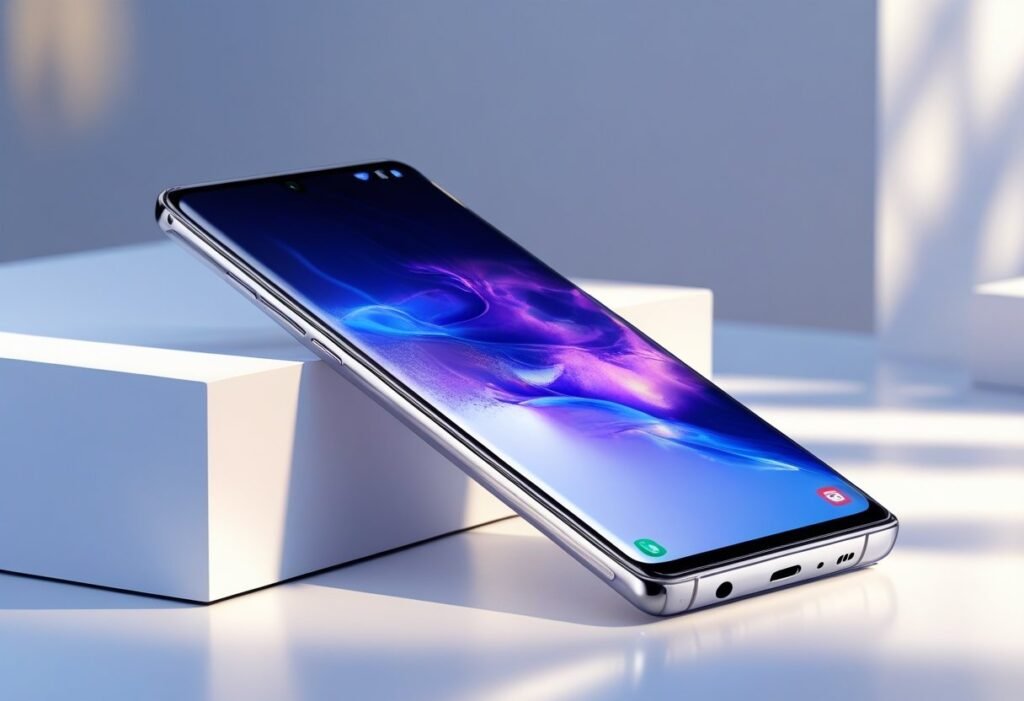
Curious whether the Samsung Galaxy S26 is worth your attention? The S26 brings clearer camera upgrades, faster chip performance, and refined displays that together make it a meaningful step up for most users. This article breaks down which S26 model fits your needs and what upgrades matter most for daily use.
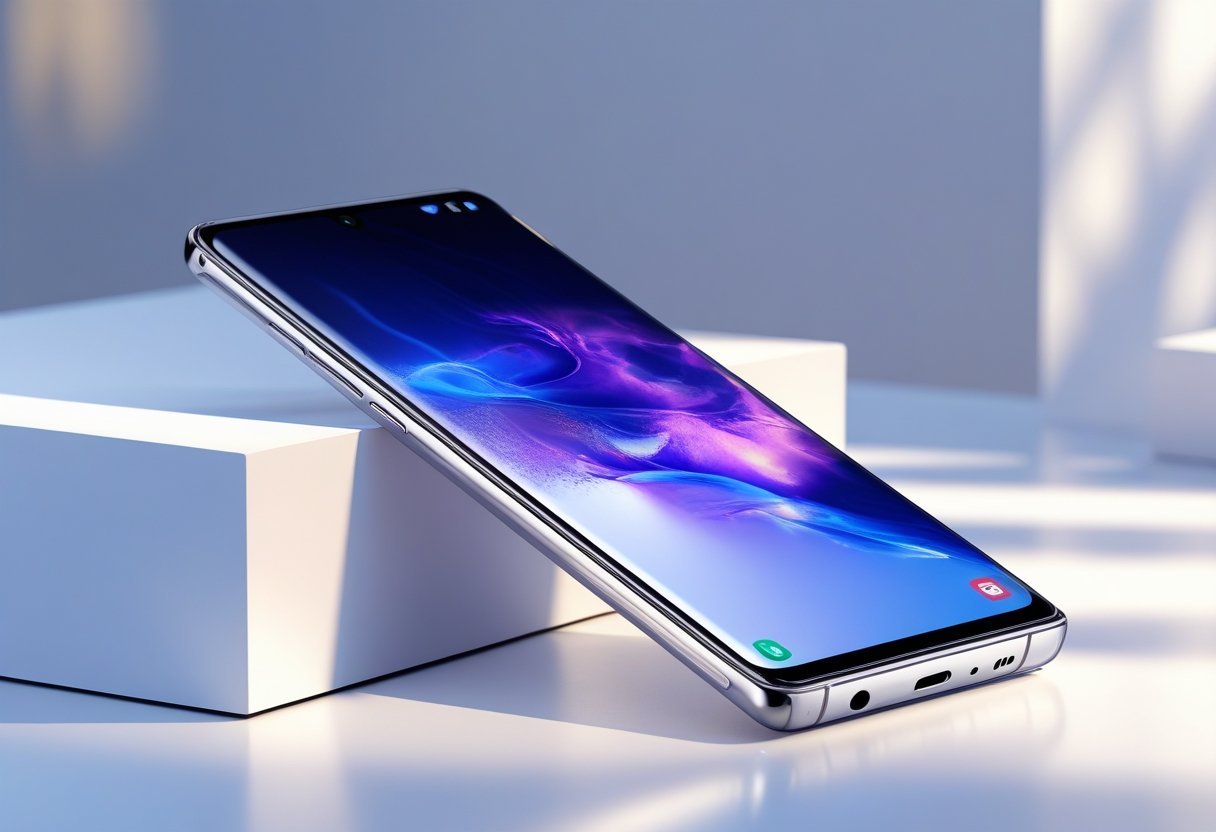
You’ll get a close look at the lineup, design and display changes, chipset and software improvements, and practical camera differences so you can decide quickly which features affect your everyday phone experience. Follow along to pinpoint the S26 strengths and the trade-offs to consider before you upgrade.
Samsung Galaxy S26 Lineup and Key Models
The S26 lineup centers on camera performance, battery life, and incremental chip and screen upgrades compared with the S24 and S25. You’ll see four main approaches: an Ultra tuned for pro photo work, a Plus for balanced power and battery, and two standard S26 variants that target size and pocketability.
Galaxy S26 Ultra Distinctions
The Galaxy S26 Ultra prioritizes photography and raw performance for power users. It typically ships with the largest sensor array in the S26 series, including a 200MP main sensor option, periscope telephoto with up to 10–12x optical zoom, and advanced OIS and multi-frame processing to improve low-light shots compared with the S25 and S24.
Expect a 6.8–6.9″ LTPO AMOLED display with 1–120 Hz adaptive refresh and peak brightness exceeding 2,500 nits for outdoor visibility. The Ultra often offers the highest RAM and storage tiers (12–16 GB RAM, up to 1 TB), plus exclusive software camera modes and Pro-level RAW support.
Battery capacity usually sits around 5,000 mAh with faster wired and wireless charging than lower-tier S26 models. You’ll also get S Pen support in some SKUs, extra cooling for sustained loads, and premium materials like titanium or hardened glass.
Galaxy S26 Plus Features
The Galaxy S26 Plus strikes a balance between the Ultra’s capabilities and the standard S26’s compactness. It generally uses a 6.6–6.7″ AMOLED panel with adaptive refresh up to 120 Hz, matching the Ultra in color accuracy but offering slightly lower peak brightness.
Camera hardware often mirrors the main and ultrawide sensors from the Ultra but steps down telephoto range to 3–5x optical zoom. You’ll find 8–12 GB RAM and storage options up to 512 GB, providing strong multitasking and media capacity without Ultra pricing.
Battery capacity commonly ranges 4,500–4,800 mAh, which extends longevity relative to the base S26. The Plus also typically supports wireless charging, IP68 water resistance, and the same chipset used across the S26 series for consistent performance.
Galaxy S26 and S26 Edge Variants
The Galaxy S26 and the S26 Edge target different preferences in size and ergonomics while sharing core specs. The base S26 often has a flat 6.1–6.2″ display, while the S26 Edge uses a 6.2–6.4″ curved panel that enhances one-handed use and edge-based UI shortcuts.
Both variants usually include the same main 50–108MP sensor options and a modest ultrawide plus 3x or 2x telephoto depending on region, aligning them with S26 series camera capabilities but below Plus and Ultra. RAM typically starts at 8 GB with storage from 128–256 GB.
Expect batteries around 4,000–4,300 mAh for the flat model and slightly larger for the edge version. You’ll still get IP68 rating, stereo speakers, and the same system-on-chip as other S26 models, so daily performance and software features remain consistent across the series.
Design and Display Advancements
The Galaxy S26 narrows its footprint while raising material and screen performance. You get a thinner body, a reworked camera module, and a brighter, more power-efficient display with new pixel tech that improves clarity and motion.
Slimmer Profiles and Materials
Samsung reduced the Galaxy S26 thickness by about 0.6–0.9 mm versus the S25, shaving weight by roughly 8–12 grams depending on the model. You’ll notice a flatter side rail that uses a new aluminum alloy with a matte finish to cut glare and improve grip.
The chassis integrates thinner internal brackets and a tighter antenna layout, which preserves structural rigidity despite the slimmer profile.
Front and back protection uses Gorilla Glass Armor on both faces, but Samsung refined bonding methods to keep drop resistance similar to previous models. Your phone still supports wireless charging and IP68 sealing without adding bulk.
Camera Bump and Rear Aesthetics
Samsung redesigned the camera bump to sit lower and flow into the back glass, reducing the tabletop wobble most phones exhibit. The bump houses the main sensor array—centered around the new ISOCELL HP2 primary sensor—and a periscope module on the Ultra model; lenses now align more flush to the body.
You’ll see a subtle ridge that channels light away to minimize reflections. The ridge also helps differentiate glass finishes across colorways.
Camera control placement shifted slightly to keep balance when you hold the phone horizontally for video. The shrunken profile means Samsung reallocated internal space, which led to a modest reduction in battery cell thickness but not overall capacity for most variants.
Display Innovations and Flex Magic Pixel
The display now uses Flex Magic Pixel architecture to increase pixel efficiency and perceived sharpness without raising pixel density. Flex Magic Pixel rearranges subpixel drive patterns and local dimming gating to boost contrast and reduce power use at typical viewing brightness.
You get a peak brightness improvement for HDR content to roughly 2,400 nits on the Pro/Ultra panels, while sustained SDR brightness sits near 1,200 nits. That yields better outdoor visibility and more consistent HDR highlights.
Adaptive refresh rate ranges from 1 Hz to 144 Hz depending on the model and content. The panel also incorporates variable aperture-like software tuning for the selfie camera cutout, reducing flare in bright scenes. Together with improved touch sampling and lower frame latency, the experience feels smoother and more responsive.
Colorways and Durability Upgrades
Samsung expanded the S26 palette with five factory colors, including two matte metallic finishes that resist fingerprints and a textured vegan leather option on select trims. Each colorway pairs with a slightly different frame finish—polished or brushed—to modify perceived thickness and grip.
Durability upgrades include improved dust seals around ports and an optimized adhesive that increases drop resilience for the rear glass.
For glass protection, Gorilla Glass Armor continues as the primary cover, but Samsung adjusted the chemical tempering process to reduce micro-fractures. You’ll also find updated coatings that improve scratch resistance and oleophobic performance, so the device looks newer longer.
Performance, Chipsets, and Software
Expect top-tier raw performance, multiple AI-driven features, and a focus on sustained speeds under load. The S26 balances Qualcomm and Samsung silicon, pairs software tuned for on-device AI, and improves thermal and memory handling for longer peak performance.
Snapdragon 8 Elite Gen 5 and Exynos 2600
If you get a Snapdragon 8 Elite Gen 5 model, you’ll see leading single-core and GPU performance for gaming and photo processing. Qualcomm’s CPU architecture and the Adreno GPU push higher sustained frame rates; thermal throttling still appears under prolonged stress but later in a session compared with prior gens.
The Exynos 2600 variant targets efficiency and multi-thread tasks with tighter power curves. Exynos now narrows the gap in real-world app launches and background task handling, though GPU workloads lag Snapdragon by measurable margins in benchmarks and certain games.
Key differences at a glance:
- Snapdragon 8 Elite Gen 5: stronger GPU, better peak CPU, faster ray-tracing and shader workloads.
- Exynos 2600: improved power efficiency, slightly lower peak GPU throughput, comparable multitasking. Choose based on whether you prioritize peak gaming/benchmarks (Snapdragon) or marginally better battery/power balance (Exynos).
AI Enhancements with One UI 8.5 and Perplexity
One UI 8.5 brings integrated on-device AI features that cut latency and reduce cloud dependency for tasks like photo edits, caption drafts, and conversational assistants. Samsung pairs local models with cloud-backed services; Perplexity AI integration appears as an optional knowledge source inside the assistant workflow rather than a system-wide replacement.
You’ll use One UI 8.5 to generate context-aware camera suggestions, smart reply options, and automatic scene-based editing. Bixby remains available for deep device controls, while the Perplexity hook supplies more factual, citation-style answers when you enable it. Privacy controls let you choose local-only AI, hybrid mode, or cloud-assisted queries.
Notable behavior:
- On-device models handle immediate tasks with low power draw.
- Perplexity improves complex factual responses but can route queries off-device.
- Bixby continues for device automation and routines.
Android 16 and Google Gemini
The S26 ships with Android 16 as the system base, bringing core platform optimizations: better memory management, improved app hibernation, and new privacy toggles for sensors and clipboard access. You’ll notice faster app resume times due to kernel and scheduler tweaks in Android 16.
Google Gemini integration provides a multimodal assistant experience inside the OS and apps. Gemini supplies richer, context-aware replies and handles multi-step prompts like “summarize this thread and draft a reply,” with outputs you can edit before sending. On-device Gemini instances address privacy-sensitive tasks, while cloud Gemini powers long-form generation and heavy reasoning when you opt in.
Practical impacts:
- Faster background app handling and fewer unnecessary wakeups.
- Gemini reduces friction for complex queries and content generation.
- You can pick local vs. cloud Gemini for privacy/performance trade-offs.
Thermal and Memory Improvements
Samsung improved internal cooling with a larger vapor chamber and graphite spreaders, reducing surface heat during extended gaming and video encoding. You’ll feel lower skin temperature on the back during long sessions, and the system delays thermal throttling by several minutes compared to previous models.
Memory subsystems get faster LPDDR5X (or equivalent) and optimized memory compression algorithms in One UI 8.5 combined with Android 16. That results in more reliable app retention in RAM and quicker context switching. Storage UFS 4.0 variants show faster write bursts, reducing app install and update times.
Practical notes:
- Active cooling plus software profiles balance performance and battery life.
- Memory compression improves multitasking; heavy workloads still benefit from higher RAM SKUs.
- Thermal headroom and faster storage translate into smoother, longer high-load use.
Camera System Upgrades
You get a multi-lens setup focused on higher native resolution, improved low-light capture, and expanded optical zoom. Expect clearer primary shots, more usable ultrawide frames, and longer-range telephoto performance with refined processing for color and detail.
Main Sensor and Resolution
The Galaxy S26 uses a 200MP ISOCELL HP2 primary sensor in at least one flagship variant, delivering much higher detail than prior 50MP main cameras. You can shoot at native 200MP for large crops or use pixel-binned 12.5MP/50MP outputs that combine pixels for improved dynamic range and lower noise in everyday use.
A hardware-level upgrade to the ISOCELL GN lineage improves readout speed and color fidelity, reducing rolling-shutter effects in fast pans. The 200MP sensor pairs with advanced ISP tuning to preserve fine texture in daylight while offering flexible output formats for pro-mode capture and large-format printing.
Low-Light and Aperture Innovations
Samsung optimized aperture and pixel-binning to improve low-light performance without relying solely on software. You get an f/1.4-equivalent light-gathering characteristic in practical use when the phone combines pixels, plus larger photodiodes on the 200MP and 50MP sensors to lower read noise.
Night modes leverage multi-frame stacking, updated ISP denoising, and smarter exposure bracketing to retain highlight detail in urban scenes. The result is clearer shadows, reduced chroma noise, and more natural color balance in dim conditions whether you shoot with the 200MP camera or the 50MP alternative.
Advanced Telephoto and Optical Zoom
Telephoto capability centers on a 10MP periscope-style sensor delivering true 5x optical zoom for lossless mid-range framing. You can combine optical zoom with high-resolution cropping from the 200MP sensor for flexible hybrid zoom between 5x and roughly 20x before digital artifacts become noticeable.
Image stabilization mixes optical and sensor-shift stabilization to keep handheld zoom shots steady. The telephoto module also benefits from updated autofocus algorithms and multi-frame sharpening, which improves subject detail at longer focal lengths and in mixed lighting.
Selfie and Ultrawide Capabilities
Selfie performance comes from a 12MP front camera tuned for skin tones and faster autofocus. You can expect reliable face detection and improved HDR in backlit situations, plus better background separation for portrait shots.
Ultrawide options include both a high-resolution 50MP ultrawide on higher trims and a 12MP ultrawide on standard models. The 50MP ultrawide yields sharper edges and usable crops with reduced distortion, while the 12MP remains efficient for everyday group and landscape shots. Firmware-level geometric correction and enhanced multi-frame merging reduce artifacts on both ultrawide units.
Frequently Asked Questions
This section answers specifics about the S26 series: hardware specs, model differences, pricing, release timing, camera upgrades, and reception. Each item gives concise, verifiable details to help you compare models and set expectations.
What are the specifications of the Samsung Galaxy S26 Ultra?
The S26 Ultra features a 6.9-inch LTPO AMOLED display with up to 120Hz adaptive refresh and a peak brightness around 3,000 nits.
It ships with the latest Snapdragon 8 Gen 4 (or Samsung Exynos variant in select regions), up to 16 GB RAM, and storage options up to 1 TB.
Battery capacity is 5,000 mAh with 65W wired charging and 25W wireless charging support.
The phone runs Android 16 with Samsung’s One UI, includes an in-display ultrasonic fingerprint reader, stereo speakers, and IP68 water/dust resistance.
How does the Samsung Galaxy S26 Plus differ from the Ultra version?
The S26 Plus uses a 6.7-inch LTPO AMOLED panel with similar 120Hz adaptive refresh but slightly lower peak brightness.
It offers Snapdragon 8 Gen 4 (or regional Exynos), up to 12 GB RAM, and storage up to 512 GB.
The Plus carries a 4,900–5,000 mAh battery with comparable charging speeds, and it lacks the Ultra’s highest-end telephoto hardware and some advanced imaging sensors.
Build and materials are premium but less elaborate than the Ultra, and the Plus is lighter and slightly cheaper.
What is the expected price range for the Samsung Galaxy S26?
At launch, the S26 base model (regular) started near $899–$999 depending on region and configuration.
The S26 Plus launched around $1,099–$1,199 for higher-storage/ram options.
The S26 Ultra began close to $1,299 for base storage and rose to $1,599 or more for top-tier 1 TB configurations.
Carrier deals and trade-in offers commonly reduced effective prices during the first months.
When was the Samsung Galaxy S26 series officially released?
Samsung announced the S26 series at its annual Unpacked event in late January 2026.
Retail availability began in most major markets in early February 2026.
Preorders opened immediately after the announcement, with launch-day shipments staggered by region and carrier fulfillment timelines.
What improvements have been made in the camera system of the Samsung Galaxy S26?
The S26 Ultra added a larger 200 MP primary sensor with improved pixel binning for low-light performance.
It also includes a periscope telephoto with up to 10x optical zoom and enhanced OIS for steadier long-range shots.
Computational photography updates improve HDR processing, night mode, and AI scene optimization across all S26 models.
Video recording gained higher bitrate 8K options and better stabilization for action and low-light footage.
How has the Samsung Galaxy S26 series been received by critics and consumers?
Critics praised the S26 Ultra for its display brightness, camera upgrades, and raw performance.
Reviews noted battery life as solid but not class-leading for the largest screens and highest-refresh settings.
Consumers responded positively to camera quality and software features, while some raised concerns about price and incremental design changes.
Sales and user feedback varied by region, with stronger uptake where flagship trade-in promotions were widely available.
