

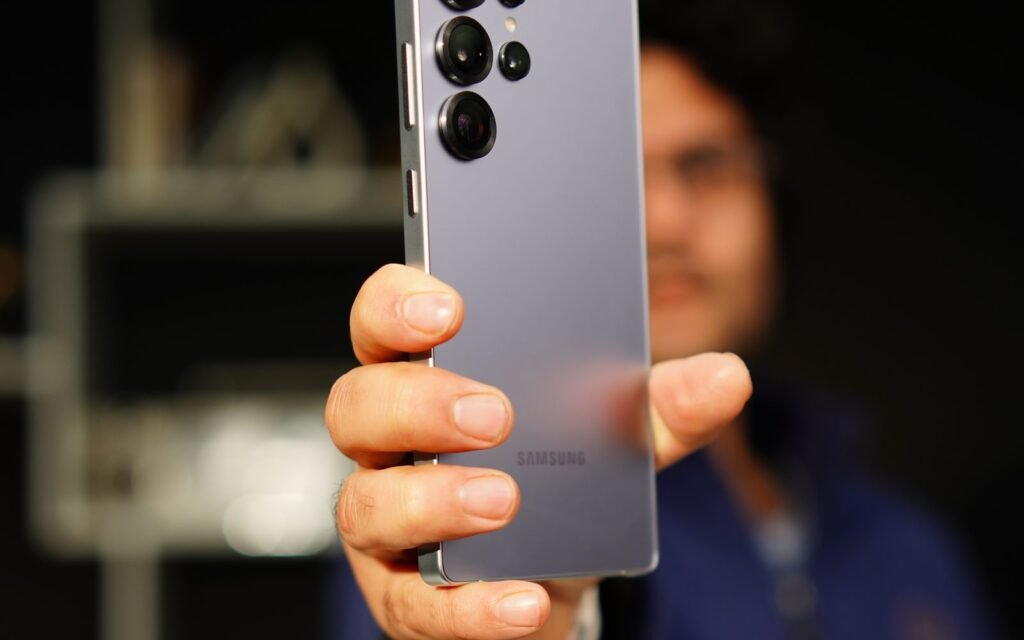
For most of this year, the choice between Samsung’s two cheapest Galaxy S26 phones was a close call. Then on October 1, Samsung raised US prices across the flagship line by $100, blaming the same memory shortage that’s pushing up prices on everything from laptops to graphics cards. The regular Galaxy S26 now starts at $999.99. The Galaxy S26 FE, which only arrived in early fall, stayed at $699.99.
That changes the math. If you compare like for like at 256GB, the gap between the two phones used to be $100. Now it’s $200. TechRadar’s head-to-head this month still names the S26 the better phone, and on paper it is. But “better” and “better value” have drifted further apart, so we went through every spec, review verdict and pricing change to work out who should buy which.
Price: how the October hike reshaped the lineup
The Galaxy S26 went on sale in March at $899.99 with 256GB of storage as the base model. Samsung didn’t offer a 128GB version. The October increase pushed that to $999.99, and the 512GB model to $1,199.99. Samsung’s mobile leadership has pointed to the global RAM shortage and rising component costs, and the whole S26 family moved together, with the S26 Plus climbing to $1,199.99 and the Ultra to $1,399.99.
The S26 FE was announced on August 27 and priced at $699.99 for 128GB and $799.99 for 256GB. A 512GB model exists in the UK and Australia, but not in the US.
A quick note on that 128GB FE. It’s the cheapest way into the S26 family, but 128GB fills up fast once you shoot 4K video and keep a few big games installed, and there’s no microSD slot on either phone. For most people, the $799.99 model is the realistic comparison, which is why we keep coming back to that $200 number.
Specs side by side
| Spec | Galaxy S26 FE | Galaxy S26 |
|---|---|---|
| US price | $699.99 (128GB), $799.99 (256GB) | $999.99 (256GB), $1,199.99 (512GB) |
| Display | 6.7-inch AMOLED, 1080 x 2340, about 385ppi | 6.3-inch LTPO AMOLED, 1080 x 2340, about 411ppi |
| Refresh rate | 60Hz or 120Hz | 1Hz to 120Hz adaptive |
| Peak brightness | 1,900 nits | 2,600 nits |
| Chip | Exynos 2500 (3nm) | Snapdragon 8 Elite Gen 5 (US), Exynos 2600 (most other markets) |
| RAM | 8GB | 12GB |
| Rear cameras | 50MP main, 12MP ultra-wide (123°), 8MP 3x telephoto | 50MP main, 12MP ultra-wide (120°), 10MP 3x telephoto |
| Selfie camera | 12MP | 12MP |
| Battery | 4,900mAh | 4,300mAh |
| Charging | 45W wired, 15W wireless | 25W wired, 15W wireless |
| Size and weight | 161.6 x 76.9 x 7.4mm, 193g | 149.6 x 71.7 x 7.2mm, 167g |
| Durability | IP68, Gorilla Glass+ | IP68, tougher Gorilla Glass |
| Software at launch | Android 17, One UI 9 | Android 16 (now updated to Android 17) |
| Colors | Blueberry, Graphite, Pistachio | Cobalt Violet, Sky Blue, Black, White, Silver Shadow, Pink Gold |
Green cells mark the winner in each row. The pattern is pretty clear: the S26 wins on screen quality, power, cameras and size, while the FE wins on screen size, battery, charging and price.
Design: the big one and the pocketable one
From the front and back, these two look like siblings. Both have flat screens, a centered punch-hole selfie camera, three vertically stacked rear lenses, aluminum frames, glass backs and IP68 water resistance. TechRadar called the FE “worthy of the Galaxy S name in terms of looks and durability,” and that’s fair.
The real difference is how they feel. The S26 is one of the last genuinely compact flagships you can buy. At 167g and 71.7mm wide, it’s easy to use one-handed. The FE is 26g heavier and over 5mm wider. That doesn’t sound like much on a spec sheet, but you notice it in a jeans pocket and when you’re stretching a thumb to the far corner of the screen. If you’ve been holding out for a small Android phone, that alone may decide it.
Display: bigger vs better
Both phones use 1080p AMOLED panels at 120Hz, so neither looks cheap. The S26 has three advantages, though. It’s brighter at 2,600 nits versus 1,900, which helps a lot outdoors at noon. It’s a bit sharper because it packs the same resolution into a smaller screen. And it uses an LTPO panel that can drop to 1Hz when nothing is moving, which saves battery and makes the always-on display cheaper to run.
The FE switches between 60Hz and 120Hz, with nothing in between. TechRadar described it as “big and colorful, but lacking detail.” If you mostly watch video, read and game, the extra 0.4 inches is a real benefit. If you care about how a screen looks rather than how big it is, the S26 wins.
Performance: Exynos 2500 and the 8GB question
The FE runs Samsung’s own Exynos 2500, a 3nm chip. Samsung says it delivers about 15% more big-core CPU performance and 39% better on-device AI performance than the Exynos 2400 in last year’s S25 FE. That’s a meaningful jump, and TechRadar found it “a good performer, especially for graphics.”
The US Galaxy S26 uses Qualcomm’s Snapdragon 8 Elite Gen 5, which is in a different league for sustained gaming and heavy multitasking. It does run warm under load; TechRadar noted it “does get hot during intense tasks.”
The spec we’d worry about most isn’t the chip. It’s the 8GB of RAM. TechRadar flagged it as “limiting for a premium phone in 2026,” and we agree. More of Galaxy AI now runs on the device, and Samsung is moving some features behind a paid tier, as we covered in our look at Samsung’s $4.99 Galaxy AI plan. On-device AI models are memory hungry. A phone you plan to keep for five or six years will feel that 8GB ceiling long before the S26’s 12GB.
Cameras: similar hardware, different results
The camera specs look almost identical. Both have a 50MP f/1.8 main camera, a 12MP ultra-wide and a 3x telephoto, plus a 12MP selfie camera. The only paper difference is the telephoto: 8MP on the FE, 10MP on the S26.
In testing, the gap was bigger than the numbers suggest. TechRadar found the FE’s main and selfie cameras “produce strong photos,” but said the phone was “let down by its ultra-wide and telephoto lenses.” The S26’s three cameras all took “solid pics,” with the warning not to push zoom past 3x. If you shoot a lot of portraits with the 3x lens or landscapes with the ultra-wide, the S26 is the safer bet. If 90% of your photos come from the main camera, you’ll struggle to tell them apart.
Battery and charging: the FE’s best argument
This is where the cheaper phone pulls ahead. The FE has a 4,900mAh battery against the S26’s 4,300mAh, about 14% more capacity, and it charges at 45W wired against 25W. TechRadar called the FE’s battery “long-lasting and fairly fast-charging.” The S26 still delivered “all-day battery life,” but its slow charging was one of the review’s main complaints.
One caveat: the S26’s LTPO screen claws back some efficiency, and the FE has a bigger panel to light up. So the real-world gap is smaller than the raw capacity suggests. But if you’re the person who’s at 15% by dinner, or you hate waiting by an outlet, the FE is the clear choice. Just remember that Samsung doesn’t put a charger in the box, and you’ll need a 45W PPS charger to get the top speed.
Software and updates: a quiet FE advantage
Both phones run Android 17 with One UI 9 today, and both get Samsung’s promise of seven major Android upgrades. Here’s the detail most comparisons skip. The S26 launched on Android 16 and has already used one of those seven upgrades. The FE launched on Android 17. If Samsung counts the way it has with past phones, the FE should keep getting new Android versions roughly a year longer than the S26.
Galaxy S26 FE: $799.99 over 7 upgrades from Android 17 = about $114 per Android version
Galaxy S26: $999.99 over the 6 upgrades left after Android 17 = about $167 per Android version
Rough math, assuming Samsung’s seven-upgrade policy holds and you keep the phone for its full support window.
Few people keep a phone for seven years. But resale value, hand-me-downs to family and the general “it still gets updates” factor all lean slightly toward the FE here, even if the RAM question pulls the other way.
Who should buy which
| If you… | Get this | Why |
|---|---|---|
| Want a small phone you can use one-handed | Galaxy S26 | 6.3 inches, 167g, still rare in 2026 |
| Watch a lot of video or read on your phone | Galaxy S26 FE | 6.7-inch screen for $200 less |
| Play demanding games | Galaxy S26 | Snapdragon 8 Elite Gen 5 and 12GB RAM |
| Always run out of battery | Galaxy S26 FE | Bigger battery, 45W charging |
| Use zoom and ultra-wide often | Galaxy S26 | More consistent secondary cameras |
| Lean heavily on Galaxy AI features | Galaxy S26 | The extra 4GB RAM ages better |
| Have a firm $800 budget | Galaxy S26 FE (256GB) | The S26 is now $200 out of reach |
The verdict
The Galaxy S26 is the better phone. TechRadar gave it four stars to the FE’s three and a half, and after going through the details, we’d land in the same place. Its screen is brighter and smoother, its chip is faster, its cameras are more reliable and its size is something you can’t get elsewhere in Samsung’s lineup.
But Samsung’s price hike made the S26 a harder sell than it was in the spring. At $999.99, it’s asking flagship money for a phone with slow charging and a smaller battery. The S26 FE, which we said back in August had only one real upgrade over last year’s model, has become a better deal by standing still while everything around it got pricier.
Our advice: if you want compact and fast, the S26 is still worth it, ideally with a holiday discount. If you want big, long-lasting and $200 cheaper, the FE is the smarter buy, as long as you skip the 128GB model and can live with 8GB of RAM.
About this article: GeekBlog covers U.S. technology news, AI, phones, smartwatches and gaming. Every story is written and checked under our Editorial Policy. Spotted a mistake or have a story tip? Contact our editors.
