

You probably remember the clamshell flip phone that defined the early 2000s — and if you’re asking when it came out, the original Motorola Razr V3 launched in 2004. The Razr V3 debuted in 2004 and quickly became one of the most recognizable and best-selling phones of its era.
You’ll follow the Razr’s release timeline, spot the design and tech choices that made it iconic, and compare major variants that followed. This piece will also trace the Razr’s cultural impact and answer the common questions you might have about its comeback attempts and legacy.
Release Timeline of the Motorola Razr
The Razr name spans early-2000s flip phones, mid-2010s smartphones, and a 2019/2020 foldable revival. Dates, model names, and carrier partnerships shaped each phase and influenced design and market impact.
Launch of the Original Razr V3
You first saw the Motorola Razr V3 announced in November 2003 and released to consumers in 2004. Motorola marketed the Razr V3 as a thin, aluminum-clad clamshell with a distinctive keypad and external display, and it rapidly became a fashion-forward bestseller.
Carriers and retailers rolled stock through 2004 and 2005, driving massive sales worldwide. The original Razr V3’s combination of design, price, and broad carrier distribution made it one of the best-selling phones of its era. You likely encountered multiple color and limited editions after the initial release as Motorola extended the model’s lifecycle.
Evolution of the Razr Series
Motorola iterated on the original with the Razr V3i, V3x, and later the Razr2 in 2007–2008. Each model added incremental upgrades: better cameras, microSD support, enhanced multimedia, and slimmer hinges on the Razr2 models.
The Razr2 family aimed at business and multimedia users, but sales never matched the original V3’s peak. You saw carrier-branded variants, notably the Motorola DROID RAZR and DROID RAZR MAXX in 2011 for Verizon Wireless, which shifted the Razr name onto Android smartphones with larger screens and LTE connectivity.
Transition to Smartphones
In 2011 Motorola repositioned the brand with the Motorola DROID RAZR and DROID RAZR MAXX, produced by Motorola Mobility under Google ownership and later Lenovo. The DROID RAZR series featured Kevlar-backed shells, 4G LTE support, and battery-focused models, targeting the Android market and Verizon Wireless exclusivity.
You noticed the Razr name aligning with smartphone trends: thinner profiles, stronger materials, and longer battery life rather than flip mechanics. These Android-era Razr phones kept the brand visible until Motorola paused the lineage as touchscreen slabs dominated and foldable prototypes emerged.
Revival with Foldable Razr
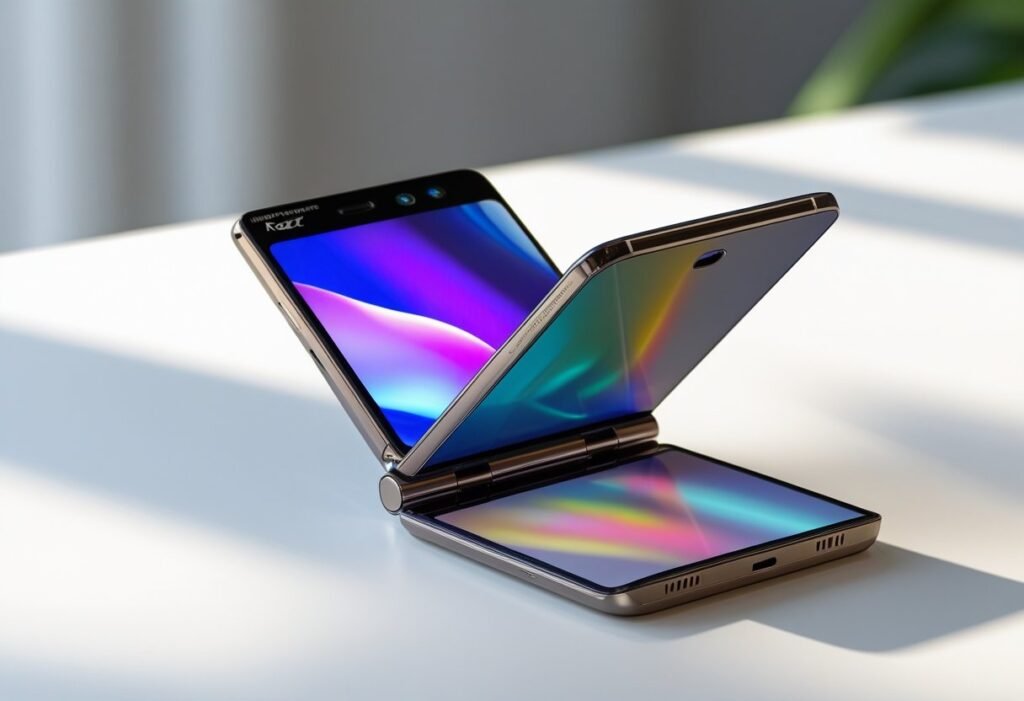
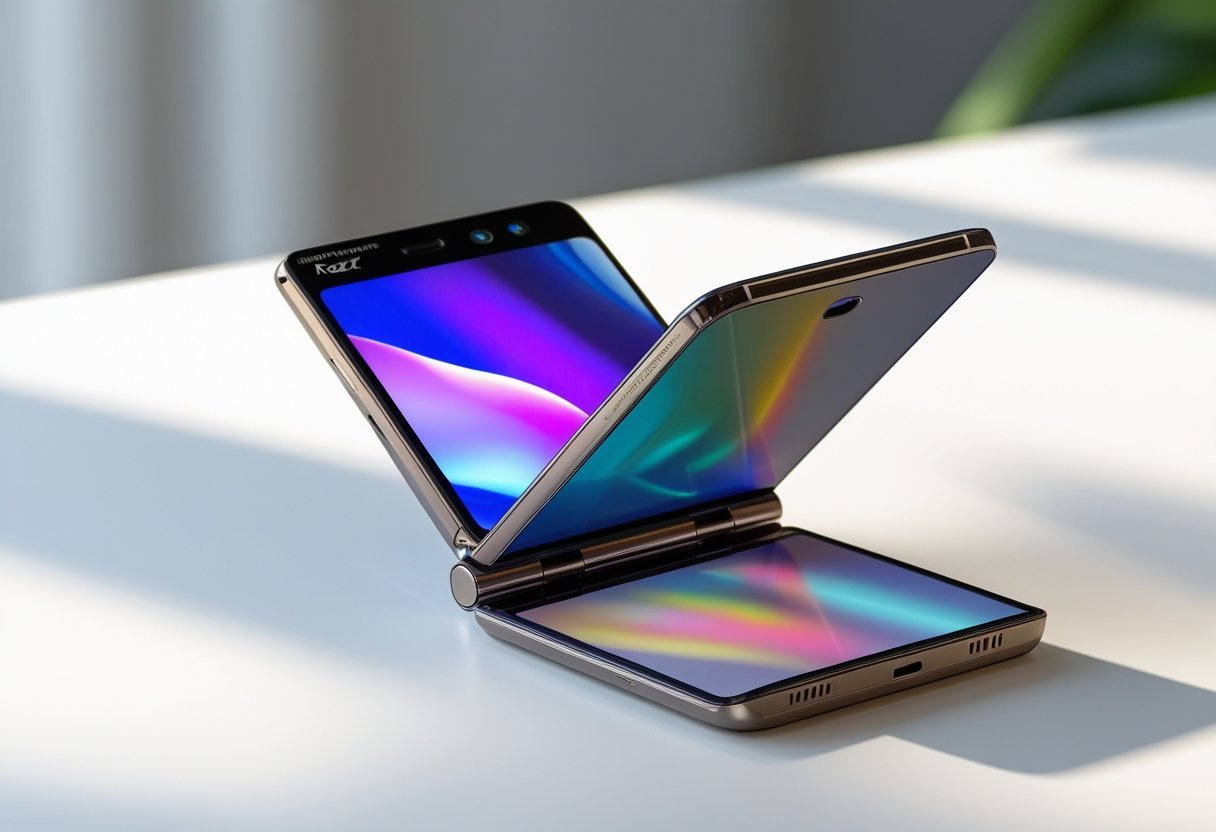
Motorola revived the Razr brand as a foldable smartphone announced in November 2019 and released in early 2020 as the Motorola razr (marketed often as razr 2019). You held a clamshell foldable with a 6.2-inch inner OLED and a 2.7-inch external Quick View display, aiming for nostalgia and modern folding tech.
A 2020 refresh, the razr (2020) or razr 5G launched in 2020–2021 brought 5G support and improved hinges. Motorola released carrier-specific models and partnerships again, but early hinge durability and software polishing influenced reviews. You can trace the Razr name from the V3’s aluminum clamshell to today’s foldable smartphone, with each major release tied to distinct design and network-era shifts.
Iconic Features and Innovations
You get a concise list of what made the Razr stand out: a razor-thin clamshell body, an early external color display, basic camera and expandable storage options, and new wireless connectivity that fit 2000s mobile networks.
Ultra-Thin and Clamshell Design
The Razr V3 introduced an ultra-thin, iconic clamshell design with a slim profile that measured about 13.9 mm at its thickest point and tapered thinner along the hinge. You can feel the metal keypad and brushed-finish aluminum shell that differentiated it from bulkier plastic phones of the era.
Its clamshell design protected the internal screen and keypad while making the phone pocket-friendly. The thin profile and lightweight body shifted expectations for mobile phone design toward sleeker, more fashion-forward devices.
Motorola marketed the form factor as both stylish and functional, emphasizing the precision hinge and compact folded dimensions. That emphasis on thinness and metal construction became a reference point for subsequent slim phones.
Key Technical Specifications
The Razr V3 ran on a proprietary Motorola OS and used GSM networks with GPRS and EDGE support; later variants added 3G/HSDPA in updated models. You get a 176×220 internal TFT display and a 1.3-megapixel camera on the external shell in the original V3, which was modest but typical for its release period.
Memory was limited onboard but the platform supported expandable memory via microSD on some later Razr-branded models, enabling more photos and ringtones. Battery life balanced lightweight design and daily use, offering several hours of talk time and multi-day standby under normal conditions.
The phone included standard sensors of its time and a responsive physical keypad that many users preferred for typing accuracy over early touchscreen alternatives.
External and Vibrant Color Displays
The Razr featured an external display that let you view caller ID, time, and simple notifications without opening the phone. Early external screens were monochrome or limited-color, while later V3 variants and later Razr-branded models upgraded to a vibrant color display capable of richer graphics and basic wallpapers.
This external display improved convenience: you could check messages, control music playback, and preview photos at a glance. The contrast between the external panel and the larger internal 176×220 TFT screen made the device feel more modern.
Motorola also used color choices and finishes as part of the visual package, releasing models in aluminum, black, and bright accent colors to underline the phone’s fashion-forward intent.
Bluetooth and Connectivity Advances
The Razr supported Bluetooth for wireless headsets and basic file transfers, which became a key convenience for hands-free calls and syncing contacts. You could pair the phone with Bluetooth headsets or car kits, reducing dependence on wired accessories.
Network connectivity centered on GSM/GPRS and EDGE; some later variants and carrier-specific models added 3G/HSDPA support to enable faster mobile data for web browsing and email. Crystaltalk and other Motorola voice-clarity features improved call audio quality over standard GSM on certain carriers.
These connectivity steps—Bluetooth and incremental upgrades to mobile network support—helped the Razr remain usable across evolving telecom standards while matching user expectations for hands-free and basic mobile internet functions.
Major Motorola Razr Variants
You’ll find variants that evolve from the original clamshell design to modern foldables and 5G handsets. Each line reflects Motorola’s response to carrier needs, multimedia demands, and later, foldable-display challenges.
Razr V3i, V3x, and V3xx
The V3i upgraded the original V3 with a 1.23MP camera, microSD slot, and improved software; it targeted users who wanted better media features without changing the classic slim clamshell. You’ll notice models labeled V3c and V3m were carrier-customized V3i derivatives, with different color options and preloaded apps.
The V3x pushed multimedia further: it added a stereo music player, 3.2MP camera, and a larger screen but was thicker. The V3xx (V3xx / V3xx WCDMA variants) focused on global 3G/HSDPA support for international use, keeping the V3x’s multimedia strengths while adding broader network compatibility.
Razr2 and Its Models
Razr2 introduced a wider external display, sleeker hinge, and improved materials; you’ll see model numbers like V8 and V9. The Razr2 V9 offered a larger internal display, 2MP camera, and more responsive UI compared with earlier V3-family phones.
Motorola released the Razr2 V8 as a more compact alternative with similar design language but different regional radios. The Razr2 line emphasized design refinement and multimedia performance rather than radical feature leaps, so you experienced incremental but noticeable improvements in screen size, call quality, and build.
Droid Razr Series
The Droid Razr series shifted the brand toward thin Android smartphones optimized for Verizon and other carriers. The original Motorola DROID RAZR combined a 4.3-inch Super AMOLED display, dual-core processor, and Kevlar-backed shell to advertise durability and speed.
You’ll find follow-ups like the Droid Razr Maxx, which traded ultra-thin profile for a much larger battery (3300 mAh in later Maxx versions) to extend runtime. The Razr M and Droid Razr HD focused on screen-size and battery life balance: the Razr M offered compact performance, while the Droid Razr HD increased resolution and LTE radios for better media and network performance.
Foldable and 5G Editions
Motorola reintroduced the Razr name with a foldable OLED in 2019–2020, branded Motorola Razr (2020). You get a vertical foldable with a small external Quick View display and a flexible internal 6.2-inch pOLED; early units emphasized design over camera or battery capacity. The Motorola Razr 5G followed, adding a Snapdragon 765G, improved camera tuning, and 5G connectivity while refining hinge durability.
If you need more battery life, later limited editions and carrier variants adjusted storage and RAM, but foldable models trade battery and camera performance for compact folding design. The ongoing Razr 5G lineage shows Motorola’s focus on bringing classic flip ergonomics to a modern 5G experience.
Impact and Legacy of the Motorola Razr
The Razr reshaped expectations for phone design, sales performance, and later foldable innovations. You will see how it became a cultural icon, how it affected market dynamics and sales records, and how its design language reappeared in modern foldable devices.
Cultural Phenomenon and Pop Culture
The original Motorola Razr (V3) launched in 2004 and became a fashion statement you could carry. Celebrities, music videos, and TV shows featured the Razr repeatedly, which boosted its desirability beyond technical specs.
Its thin metallic clamshell profile and distinctive keypad made it instantly recognizable; you could spot a Razr in candid photos and magazine ads throughout the mid-2000s.
You may recall marketing tie-ins and limited-edition colorways that sold out quickly. Motorola Mobility capitalized on scarcity and style, reinforcing the Razr as a status symbol. The phone’s cultural reach also influenced accessories and merchandising, from branded cases to ringtone sales.
Market Influence and Sales Milestones
Motorola sold over 50 million units of the original Razr family, making it one of the best-selling clamshell phones of its era. Those sales helped Motorola regain market momentum after earlier models like the Krzr and Pebl, and before the company’s smartphone transition.
The Razr’s commercial success demonstrated that design-led devices could command premium pricing and large volumes simultaneously.
You should note that the Razr era predates Motorola’s acquisition by Google and later Lenovo ownership. Years later, Motorola and Lenovo revived the Razr name for foldable models—the new Motorola Razr and Moto Razr—aiming to blend nostalgia with flexible display technology. Those foldables compete with Samsung’s Galaxy Z Flip series and influenced other manufacturers exploring clamshell foldable phones.
Design Inspiration for Modern Phones
The Razr’s clamshell silhouette directly inspired the modern foldable phone resurgence. When Motorola released the new Motorola Razr with a folding screen, you could trace its lineage to the original’s compact flip form. Designers borrowed the Razr’s emphasis on thinness, hinge engineering, and exterior aesthetics when developing flexible-display devices.
Manufacturers such as Samsung refined the concept with improved hinges, ultra-thin glass, and more durable flexible displays; Motorola’s foldable iterations targeted a nostalgic audience while pushing hinge and screen durability forward.
You can see Razr influences in current devices named Edge, Moto Razr, and in broader foldable design decisions—shorter aspect ratios, external coverscreens, and clamshell ergonomics. Those choices show how a design icon from the mid-2000s informed the technical and stylistic direction of modern folding phones.
Frequently Asked Questions
This section gives exact dates, model differences, feature highlights, price at launch, and the timeline for later Razr releases. You’ll find concise, factual answers for each specific question.
What is the release date of the original Motorola RAZR V3?
The Motorola RAZR V3 was released in the United States in June 2004. It reached other markets worldwide through mid to late 2004.
How does the Motorola RAZR V3 differ from the RAZR V3i?
The V3i added a 1.23 MP camera with autofocus, expanded memory via microSD, and improved software for music playback. The V3 used a proprietary miniSD slot (or no external slot on early units), had a fixed-focus 0.3–0.35 MP camera, and lacked the V3i’s enhanced multimedia features.
What are the main features of the Motorola Razr 2?
The Razr2 (models V9, V9m, V9x, etc.) introduced a slimmer metal-lined body, larger internal displays (up to 2.2 inches), and improved processors for faster performance. Some Razr2 variants added 3G support, better cameras (2–5 MP depending on model), and expanded multimedia and web capabilities.
Can you explain the evolution of the Motorola Razr models over time?
Motorola launched the original V3 in 2004, focusing on design and clamshell thinness. Subsequent models like the V3i refined multimedia and storage; the Razr2 series (mid-late 2000s) upgraded materials, screens, and network support; later revivals (2019 onward) reintroduced the Razr name with foldable OLED displays and modern Android hardware.
When was the Motorola Razr V3 4G version launched?
A 4G-branded razr (a modern remake) launched in the U.S. in November 2020 as the Motorola razr (also called razr 5G in some markets for later models). That modern series combined a foldable OLED inner display with LTE/5G modems, not the original V3 hardware.
What was the retail price of the Motorola Razr at its initial release?
The original RAZR V3 carried a suggested retail price around $499 unsubsidized in the U.S. at launch in 2004. Actual street prices varied by carrier subsidies and contract promotions.
