

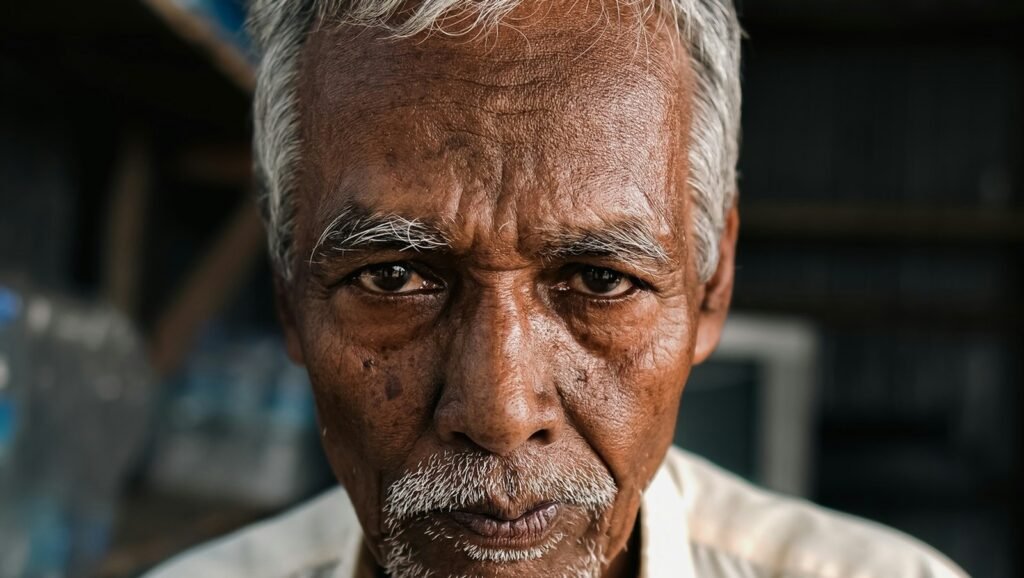
Doctors have always judged patients partly by how they look. Walk into an exam room, glance at someone’s face, and an experienced oncologist forms a quick impression of how frail or robust that person is. A team at Mass General Brigham in Boston has now taught an AI to do the same thing, only with numbers attached. Their new system looks at one ordinary photo of a cancer patient’s face and estimates how likely that person is to survive.
The study, which UNILAD Tech covered on October 20, appeared in The Lancet Digital Health on Monday, October 19, 2026. It describes a foundation model called FAHR-Face, trained on more than 40 million facial photos, and two tools built on top of it: one that guesses your biological age and one that directly predicts survival. The headline finding is unsettling and fascinating in equal measure. Among radiotherapy patients, looking five or more years older than your real age went hand in hand with a 21% higher risk of death over roughly four years.
The short version
- Mass General Brigham’s FAHR-Face model learned what faces look like from 40+ million photos, then was fine-tuned into two tools: FAHR-FaceAge and FAHR-FaceSurvival.
- FAHR-FaceSurvival was trained on 34,363 photos of cancer patients. Patients in its highest-risk quarter had more than triple the mortality of the lowest (adjusted hazard ratio 3.23).
- Radiotherapy patients who looked 5+ years older had a 21% higher risk of death over about four years; those who looked 5+ years younger had a 17% lower risk.
- The two tools look at different parts of the face: under the eyes and the nasal bridge for survival, nasolabial folds and temples for age.
- It is a research tool, not a clinical product. The survival model was trained mostly on white, Boston-area patients.
One model, two very different jobs
FAHR-Face stands for Foundation Artificial Intelligence for Health Recognition. The idea borrows from how large language models work. Rather than training a narrow model from scratch for each medical question, the team first let the AI learn a general representation of human faces from the WebFace42M dataset, a cleaned collection of more than 40 million face images. Only then did they fine-tune it for specific health tasks.
“The key technical advance is that FAHR-Face learns a general representation of the face from more than 40 million images, which can then be adapted to distinct health outcomes such as biological age and survival,” said Hugo Aerts, co-senior author and director of the Artificial Intelligence in Medicine (AIM) program at Mass General Brigham, in the hospital’s press release. “This foundation-model approach gives us a scalable way to develop multiple facial health biomarkers rather than training each model from scratch.”
The first tool, FAHR-FaceAge, estimates biological age: how old your body appears to be, as opposed to the number on your birth certificate. It was tuned on hundreds of thousands of public, age-labeled photos and, according to the paper’s abstract, achieved the lowest mean absolute error of any model tested on public datasets, 5.1 years, while staying accurate across the whole human lifespan.
The second tool, FAHR-FaceSurvival, skips age entirely. It was fine-tuned on 34,363 photographs of patients with cancer and learned to predict mortality risk straight from the face. The researchers say that is a first. “To our knowledge, this is the first demonstration that an AI model can directly predict cancer survival from a simple photograph,” Aerts said.
What the numbers actually show
The clinical testing used two large radiotherapy cohorts. According to the team’s GitHub repository, those were Harvard-RT, with 38,183 patients, and an independent Dutch cohort, Maastro-RT, with 4,892 patients. Survival was analyzed with Cox models adjusted for standard clinical risk factors.
For FAHR-FaceSurvival, patients the model placed in the highest-risk quarter had more than triple the mortality of those in the lowest quarter (adjusted hazard ratio 3.23, p<0.0001). Scientific American reported an even starker detail: in a test group of 3,820 cancer patients, 64 of the 122 people with the highest risk scores died within 90 days of their photo being taken.
FAHR-FaceAge told a parallel story. In the US radiotherapy group, patients who looked five or more years older than their chronological age had a 21% higher risk of dying during the average four-year follow-up than everyone else. Patients who looked five or more years younger had a 17% lower risk.
The most interesting result may be that the two tools do not simply repeat each other. Even though they share the same backbone, their predictions were only weakly correlated, and both stayed independently linked to survival when analyzed together. Combining them improved survival model fit in an external validation cohort. “When we put both the face age and face survival scores into a clinical prognostic model, we do better at survival prediction than either one alone,” Raymond Mak, the corresponding author and a radiation oncologist at Mass General Brigham Cancer Institute, told Scientific American.
Under the eyes vs. the smile lines
To see what the AI was paying attention to, the team generated attention maps. The two models lit up different parts of the face, which is part of why the researchers believe they capture different biology.
| FAHR-FaceAge | FAHR-FaceSurvival | |
|---|---|---|
| What it predicts | Biological age, in years | Mortality risk in cancer patients |
| Fine-tuning data | 740,000+ public age-labeled photos | 34,363 photos of cancer patients |
| Facial regions it focuses on | Nasolabial folds, forehead just above the eye sockets, temples | Area below the eyes, around the nasal bridge |
| Headline result | 5.1-year mean error; looking 5+ years older linked to 21% higher death risk | Top risk quartile had 3.23x the adjusted hazard of the bottom quartile |
| Best suited for | Tracking aging, adding to risk scores | Near-term mortality prediction |
| Public weights | Yes, on Hugging Face (non-commercial license) | No, not released |
The paper describes the regions FAHR-FaceSurvival relies on as areas “linked with dying,” while FAHR-FaceAge maps to regions associated with aging. Why the under-eye area carries so much signal remains unclear, and the authors stress that a photo cannot reveal the cause of a poor prognosis.
The model also proved surprisingly hard to fool. FAHR-FaceAge stayed consistent across pose, lighting, facial expression and makeup. “It was also stable across most tested plastic surgery procedures, with only a small shift observed after rhinoplasty,” Mak said. Lifestyle showed up clearly, too: heavy drinking, drug use and smoking were all associated with looking biologically older, and current smokers looked older than former smokers, who in turn looked older than people who never smoked.
Building on last year’s FaceAge
This is the second act for the Boston group. In May 2025 the same AIM program published the original FaceAge study, also in The Lancet Digital Health. That model was trained on 58,851 presumed-healthy people aged 60 or older and tested on 6,196 cancer patients from the US and the Netherlands. On average, patients with cancer looked 4.79 years older than their chronological age. When doctors predicting six-month survival for patients on palliative radiotherapy were given the FaceAge risk model, their accuracy (measured as AUC) rose from 0.74 to 0.80, according to The ASCO Post.
The new FAHR-FaceAge outperformed that earlier model at survival prognostication, and the survival tool is entirely new. Both point in the same direction as the wave of consumer health tech that already estimates things like “cardio age” from your wrist. If you are curious about that side of things, our guide to the best smartwatch for health monitoring covers what wearables can and cannot tell you today.
The uncomfortable questions
None of this is ready for the clinic, and the researchers say so. The survival model was trained on a Boston-area cancer population that was majority white, and the team is working to add more diverse faces. The paper itself concludes that the tools need prospective trials “that test their use alongside standard prognostic models.” Mak frames the goal carefully: “Our goal is to make face photograph-based health assessment more quantitative, consistent and scalable so it can support personalized treatment decisions rather than replace physician judgment.”
Outside experts see both promise and risk. Matthew Liao, director of the Center for Bioethics at New York University, who was not involved in the work, told Scientific American the tool could help flag people who need extra care, but a wrong call could cut the other way. “If it gets it wrong, we might be sort of not providing care to someone who actually needs it,” he said. Liao also raised the prospect of insurers using similar technology to grant or deny coverage, or employers using it to pick candidates who look “healthier.” “We really need to think through the societal implications of this thing,” he said.
That worry is not abstract. Billions of face photos already sit on social media, and face recognition is creeping into everyday products, from phones to Apple’s rumored home camera with facial recognition. A model that can infer mortality risk from a casual picture raises consent questions that existing health privacy rules were not written for. It is also worth noting that Mass General Brigham has filed a US provisional patent application on next-generation facial health algorithms, and several authors report industry consulting ties, all disclosed in the paper.
Still, the clinical case is easy to understand. Oncologists already make “eyeball” judgments about frailty before recommending surgery, chemotherapy or radiation. “We’re trained in medical school to walk into a room, look at the patient and make an assessment,” Mak told Scientific American, adding that the problem is that “that’s really a subjective assessment.” If a photo-based score can make that gut call more consistent, it could help patients avoid treatments they are unlikely to tolerate, or get aggressive care they would otherwise be denied. “There’s still a lot of development ahead and clinical testing,” Mak said. “But we’re really excited that we’re launching a completely new field in medicine.”
Sources and further reading
- UNILAD Tech: AI tool predicts how long you have left to live from one photo of your face
- Haugg et al., FAHR-Face: a model development and validation study, The Lancet Digital Health (2026)
- Mass General Brigham press release: AI facial health recognition tools help physicians assess age and survival risk
- Scientific American: Can AI predict whether you’ll die from cancer from just an image of your face?
- AIM-Harvard FAHR-Face code repository on GitHub
- FAHR-Face preprint on arXiv (June 2025)
- Bontempi et al., FaceAge, The Lancet Digital Health (May 2025)
- The ASCO Post: AI model estimates biological age and predicts survival in patients with cancer
About this article: GeekBlog covers U.S. technology news, AI, phones, smartwatches and gaming. Every story is written and checked under our Editorial Policy. Spotted a mistake or have a story tip? Contact our editors.
