

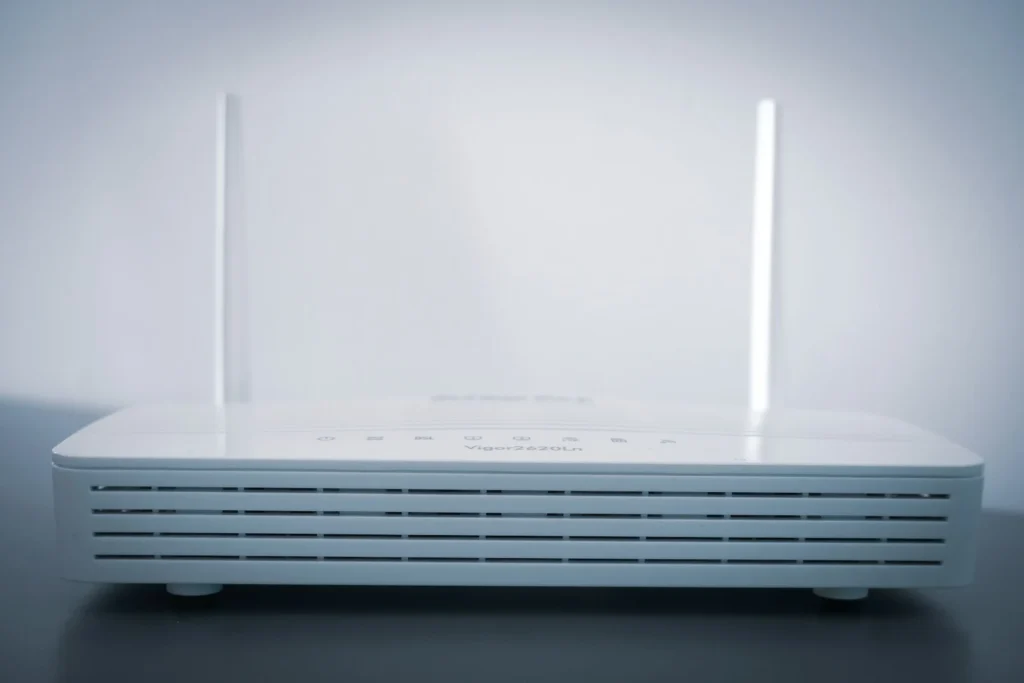
WiFi 6 is no longer the newest standard, but it is still the sweet spot for a lot of homes in 2026. If your internet plan is 1 Gbps or slower and you want a reliable router without paying for features you will not use, a good WiFi 6 model or mesh kit still makes sense. Below we explain how WiFi 6 compares with 6E and 7, which current models are worth a look, and what the new US rules on foreign made routers mean for your purchase.
WiFi 6 vs 6E vs 7 in plain English
WiFi 6 (802.11ax) works on the familiar 2.4 GHz and 5 GHz bands. Its real gains are about efficiency rather than raw speed: OFDMA lets the router serve several devices in one transmission, MU MIMO talks to multiple devices at once, 1024 QAM packs more data into each signal, and Target Wake Time helps battery powered gadgets sleep longer. WPA3 security is part of certification, too.
WiFi 6E is the same technology with access to the 6 GHz band, which the FCC opened for unlicensed use in 2020. That band is wide and uncrowded, but its signal fades quickly through walls. WiFi 7 (802.11be) adds 320 MHz channels, 4096 QAM and Multi Link Operation, which lets a device use more than one band at the same time for lower lag and higher throughput.
| Standard | Bands | Best for |
|---|---|---|
| WiFi 6 | 2.4 and 5 GHz | Plans up to about 1 Gbps, budget builds, smart homes |
| WiFi 6E | 2.4, 5 and 6 GHz | Crowded apartments, newer phones and laptops |
| WiFi 7 | 2.4, 5 and 6 GHz with Multi Link Operation | Multigigabit plans, gaming, heavy local file transfers |
Who should still buy a WiFi 6 router
Most households do not saturate even a midrange WiFi 6 router. Streaming 4K video, video calls and console downloads all fit comfortably inside what an AX3000 class router delivers on a typical plan. WiFi 6 is the right call if:
- Your internet plan tops out at 1 Gbps or below, and your router has gigabit Ethernet ports.
- Many of your devices are older and cannot use 6 GHz anyway.
- You want to cover a small apartment or a single floor and keep the budget low.
- You are adding mesh coverage to a larger home and price per node matters more than peak speed.
WiFi 6 routers have been on sale for years, so they are often discounted and widely stocked. The tradeoff is that you are buying a standard that is now two generations old, which shortens how long the router will feel current.
Current WiFi 6 routers worth a look
These models are listed on the makers’ own US sites as of October 2026. Specs below are the manufacturers’ claims.
AX3000 dual band router, a popular starter pick for apartments and smaller homes.
AX5400 gaming focused model and a simpler AX3000 router, both managed through the ASUS router app.
AX4200 dual band router, the WiFi 6 option in Netgear’s current Nighthawk lineup.
Mesh system rated for wireless speeds up to 940 Mbps and about 1,500 square feet per unit.
AX3000 mesh kit, claimed coverage up to 6,500 square feet with three units.
Google’s current router, the Nest WiFi Pro, uses WiFi 6E rather than plain WiFi 6, so treat it as a step up if you like Google’s simple app driven setup.
Mesh or single router?
A single router placed centrally is enough for most apartments and many single story homes. Pick mesh if you have dead zones upstairs, thick walls or a long floor plan. Mesh systems hand your devices between nodes automatically, and if your home has Ethernet runs, wiring the nodes together (wired backhaul) gives the best results. With WiFi 6 mesh, the wireless link between nodes shares bandwidth with your devices, so expect lower speeds at the far node than you would get with 6E or 7 mesh that uses a dedicated band.
The TP Link question and the new FCC router rules
On March 23, 2026, the FCC added routers produced in a foreign country to its Covered List, unless a model has received a Conditional Approval from the Department of War or the Department of Homeland Security. In practice, new foreign made router models need that approval before they can be authorized for sale. Routers already authorized before that date were not banned, and an FCC waiver lets them keep getting security and firmware updates until at least March 1, 2027, with a review promised before then.
Netgear and Amazon’s eero obtained conditional approvals, and ASUS received one in September 2026 covering its wireless networking lineup. TP Link had not announced an approval as of early October 2026. Texas sued the company in February 2026, and Florida, Iowa, Montana and Nebraska filed suits in October 2026 over its security marketing and alleged China ties. TP Link denies the claims and says its US devices are made in Vietnam.
FAQ
Is WiFi 6 fast enough in 2026?
Yes, for most homes. If your plan is 1 Gbps or slower, a good WiFi 6 router will not be the bottleneck for streaming, gaming or video calls.
Will my older devices work with a WiFi 6 router?
Yes. WiFi 6 is backward compatible, so WiFi 5 and older devices connect normally. They just do not gain the newer efficiency features.
Should I buy WiFi 6E instead?
Consider 6E if you live in a crowded building where neighboring networks clog the 5 GHz band and your phone or laptop supports 6 GHz. Otherwise WiFi 6 or WiFi 7 usually makes more sense.
Can I still buy a TP Link router?
Yes. Previously authorized TP Link models remain on sale and usable. New models that need FCC authorization depend on whether the company receives a conditional approval.
The verdict
WiFi 6 remains a smart, affordable choice for gigabit and slower plans. Pick a single router like the Archer AX55, RT AX82U or Nighthawk RAX43 for smaller spaces, or an eero 6+ or Deco X55 kit for bigger homes. If you are paying for multigigabit internet, skip WiFi 6 and buy WiFi 7 instead.
Updated October 2026: rewritten as a current buying guide covering WiFi 6 vs 6E vs 7, models still sold in the US and the 2026 FCC rules on foreign made routers.
Featured photo: Compare Fibre on Unsplash.
About this article: GeekBlog covers U.S. technology news, AI, phones, smartwatches and gaming. Every story is written and checked under our Editorial Policy. Spotted a mistake or have a story tip? Contact our editors.
