

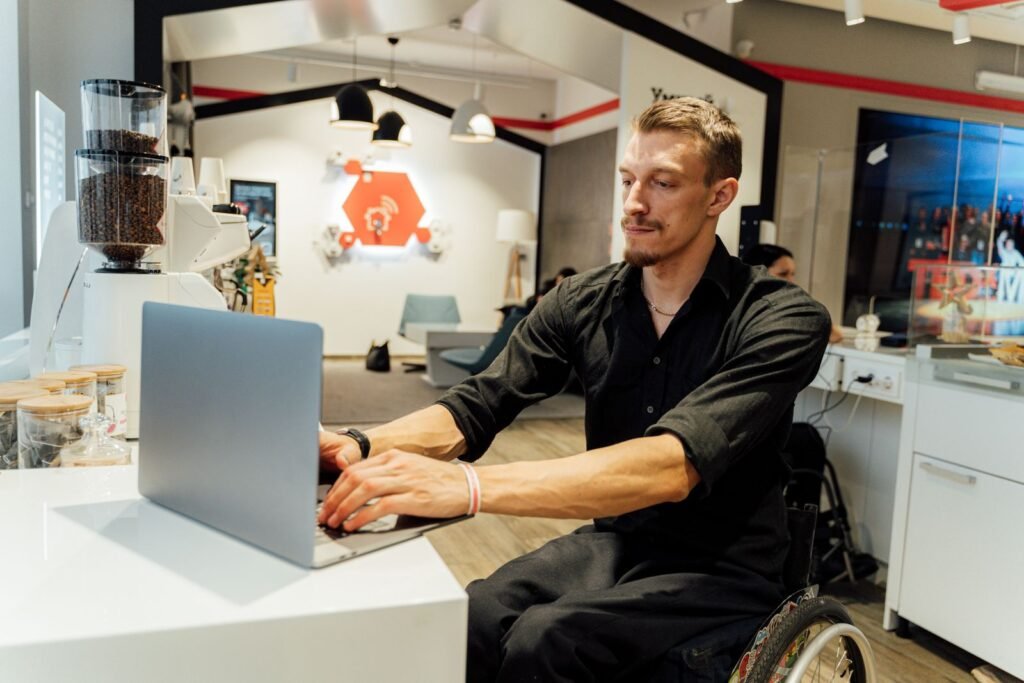
Neuralink wants more volunteers. The company behind the coin-sized brain implant is actively recruiting people with paralysis for its Telepathy trials, which let participants move a computer cursor just by thinking about moving their hand. UNILAD Tech highlighted the call for applicants this week.
The timing isn’t random. On November 25, Neuralink announced that the FDA had approved LINK, which the company calls the first pivotal trial of an implantable brain-computer interface in the US. That’s the kind of study regulators use to decide whether a medical device can be sold. Here’s what the implant does, who can apply and what’s changed.
The short version
- Neuralink’s Telepathy implant lets people with paralysis control a computer with their thoughts.
- You need little or no use of both hands and arms from ALS, a spinal cord injury or a brainstem stroke, plus a reliable caregiver.
- The new LINK trial for ALS will enroll 20 people with results measured at 90 days.
- Neuralink plans to file for FDA market approval once the 20th participant hits that mark.
- Participation costs nothing, and travel for you and a caregiver is covered. It’s not a paid gig.
How the Telepathy implant works
Neuralink’s device, called the N1, “listens to the part of the brain that controls the hand,” according to the company. Participants imagine moving their hand, and those imagined movements are “calibrated into computer mouse actions.” Once that’s set up, people can message friends, watch videos, write code and play games.
The surgery itself is done partly by a machine. A neurosurgeon makes a small opening in the skull, and Neuralink’s R1 robot threads the implant’s ultra-thin, flexible wires into the surface of the motor cortex. The implant then fills the opening and the incision is closed.
From thought to cursor
STEP 1
You imagine moving your hand
STEP 2
Threads in the motor cortex pick up neuron activity
STEP 3
The N1 sends signals wirelessly to a computer
STEP 4
Software turns them into cursor moves and clicks
The implant sits under the scalp with nothing visible, and it charges wirelessly through the skin.
Neuralink’s first patient, Noland Arbaugh, got his implant in January 2024 after a diving accident left him paralyzed from the shoulders down. He has since used it to play video games, control a robotic arm and write. It wasn’t flawless at the start. In the first weeks, some of the threads pulled back from his brain, and Neuralink had to tweak its software to recover performance. Since then, the company has said it hasn’t seen any serious device-related adverse events across its trials.
How many people have one now
Growth has picked up quickly over the past year. Neuralink said in January 2026 that 21 participants were enrolled worldwide, up from 12 in September 2025. When it announced LINK, the company said it had worked with “30+ participants.” Neura Pod, a long-running Neuralink tracker, puts the number at 35 as of November 25.
People with a Neuralink implant
Company figures through January 2026; November figure from Neura Pod.
Why the LINK approval is a big deal
Medical devices don’t go through the Phase 1, 2 and 3 steps that drugs do. Instead, they start with small feasibility studies that check whether a device is safe and works at all. Every Neuralink trial so far, including PRIME in the US and its versions in Canada, the UK and the UAE, has been a feasibility study.
A pivotal study is the next level. It’s designed to produce the evidence the FDA needs for Premarket Approval, the green light that would let doctors offer the N1 as a treatment instead of only inside research. Neuralink president DJ Seo laid out the basics on X: 20 participants, primary endpoints evaluated at 90 days, and a plan to submit for approval once the 20th person reaches that point. He added that FDA review “takes months.”
People with ALS may be eligible for LINK. Neuralink hasn’t named the hospitals yet and says more details will appear when the study is posted on ClinicalTrials.gov.
Who can apply
The basic rules for Neuralink’s device control trials are straightforward, although each study has its own fine print.
| You may qualify if | You likely can’t join if |
|---|---|
| You have little or no use of both hands and arms | You have an active implant like a pacemaker or deep brain stimulator |
| It’s caused by ALS, spinal cord injury or brainstem stroke | You have a history of seizures |
| You’re at least 18 (some studies set 22 as the minimum) | You need regular MRI scans |
| You have a consistent, reliable caregiver | You’re currently getting transcranial magnetic stimulation |
Using a ventilator doesn’t automatically rule you out. Neuralink is also widening its net. PRIME2, registered on November 10, adds adults who have arm weakness after an ischemic stroke and drops the upper age limit. Its VOICE study, running at UT Southwestern in Dallas, is testing whether the implant can turn attempted speech into text or a spoken voice.
Where the trials run
| Study | Focus | Sites |
|---|---|---|
| LINK | Pivotal ALS trial, 20 people | US, not yet named |
| PRIME | Computer control | Barrow (Phoenix), University of Miami |
| PRIME2 | Adds stroke survivors, up to 10 people | University of Miami, up to 5 US sites |
| VOICE | Restoring speech | UT Southwestern (Dallas) |
| CONVOY | Robotic arm control, invitation only | Barrow (Phoenix) |
| CAN, GB and UAE-PRIME | International versions of PRIME | Toronto Western, UCLH and Newcastle, Cleveland Clinic Abu Dhabi |
How to apply, and what you’re signing up for
Applications start with Neuralink’s Patient Registry at neuralink.com/trials. The first step is a short online form, which the company says takes about 10 minutes. If you look like a fit, a member of the study team gets in touch to explain what participation would mean for you and your caregiver and to answer questions. Screening comes next, then surgery for those who are selected.
It’s a long commitment
According to its brochure, the original PRIME study lasts about six years. The main phase runs roughly 18 months, with research sessions at least twice a week for about an hour each. That’s followed by five years of long-term check-ins. The device, the procedure and study travel for you and a caregiver are covered, but there’s no salary for taking part.
It’s also brain surgery. The procedure is designed to be minimally invasive, and the company says it hasn’t seen serious device-related problems so far, but these are still experimental implants in a small number of people. Anyone considering it should talk it through with their own neurologist, not just the study team.
Neuralink isn’t the only one
Brain-computer interfaces have become a crowded field. Synchron’s Stentrode is threaded up through a blood vessel, so it doesn’t need open brain surgery. Precision Neuroscience, co-founded by a Neuralink alum, makes an ultra-thin film that sits on the surface of the brain. Paradromics is working on a high-bandwidth implant aimed at restoring speech. Neuralink’s edge right now is momentum: more implanted patients than most rivals and a pivotal trial approved. AI is reshaping what happens in operating rooms more broadly too, as we saw when an AI system guided a live brain surgery at UCLH.
For people living with ALS or severe paralysis, the bigger story is that this technology is inching out of the lab. If LINK fills its 20 spots quickly and hits its endpoints, Neuralink could be filing for FDA approval within a year or two. That’s a long way from Musk’s grander talk about merging humans with AI, but for someone who can’t use their hands, being able to text their family again is the part that matters.
About this article: GeekBlog covers U.S. technology news, AI, phones, smartwatches and gaming. Every story is written and checked under our Editorial Policy. Spotted a mistake or have a story tip? Contact our editors.
