Close Menu
GeekBlog

    Subscribe to Updates

    Get the latest creative news from FooBar about art, design and business.

    What's Hot

    Why States, Not Washington, May Solve the Data Center Water Fight

    July 8, 2026

    Oppo Find X9 Ultra: The Camera Phone That Has Reviewers Rethinking the Rankings

    July 8, 2026

    AI Chatbots Are Killing Search Clicks. Here Is Who Wins Instead

    July 7, 2026
    Facebook X (Twitter) Instagram Threads
    GeekBlog
    • Home
    • Mobile
    • Tech News
    • Blog
    • How-To Guides
    • AI & Software
    Facebook
    GeekBlog
    Home»Tech News»Reentry of NASA satellite will exceed the agency’s own risk guidelines
    Tech News

    Reentry of NASA satellite will exceed the agency’s own risk guidelines

    Michael ComaousBy Michael ComaousMarch 11, 20262 Mins Read
    Share Facebook Twitter Pinterest LinkedIn Tumblr Email Copy Link
    Reentry of NASA satellite will exceed the agency's own risk guidelines
    Share
    Facebook Twitter LinkedIn Pinterest Email Copy Link

    No one on the ground has ever been injured by falling space junk, but there are examples of space debris causing property damage.

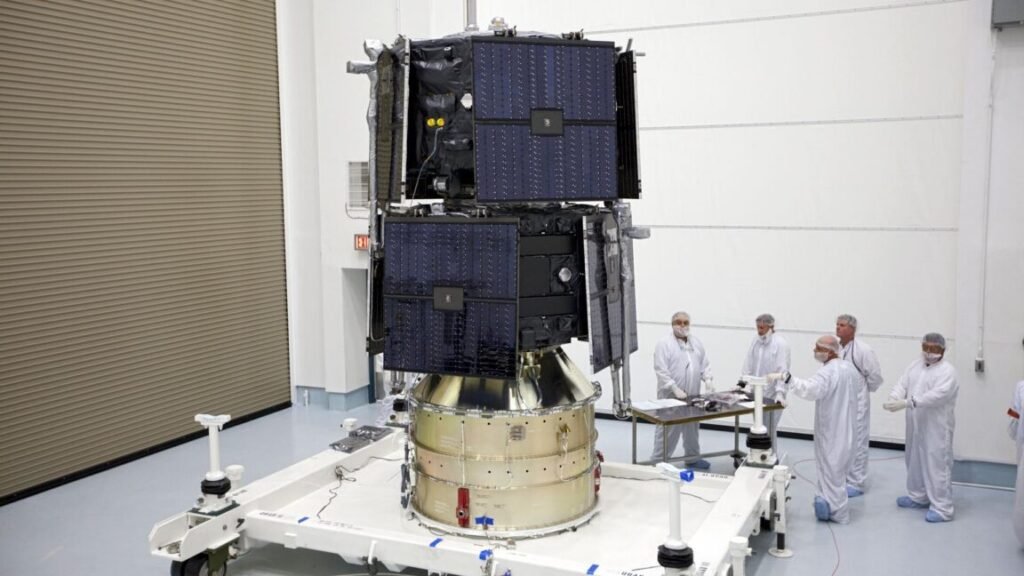
    NASA’s two Van Allen Probes launched into elliptical orbits ranging from a few hundred miles above Earth up to an apogee, or high point, of nearly 20,000 miles. The orbits are inclined 10 degrees to the equator, limiting the risk of injury or damage to a swath of the tropics. NASA ended the mission in 2019 when the satellites ran out of fuel.

    At that time, NASA engineers expected the spacecraft to reenter the atmosphere in 2034. But higher-than-anticipated solar activity caused the atmosphere to swell outward, increasing atmospheric drag on the satellites beyond initial estimates, according to NASA. Van Allen Probe B is expected to reenter no earlier than 2030, with a similar risk to the public.

    The two spacecraft were built by the Johns Hopkins University Applied Physics Lab. NASA said the mission made several major discoveries, including “the first data showing the existence of a transient third radiation belt, which can form during times of intense solar activity.”

    Several NASA satellites have reentered the atmosphere without complying with the government’s risk standard. One of the satellites, the Rossi X-ray Timing Explorer, fell out of orbit in 2018 with a 1-in-1,000 chance of harming someone on the ground. No one was hurt. RXTE was launched in 1995, just four months before NASA issued its first standard on orbital debris mitigation and reentry risk management.

    While NASA has exceeded its standards before, the US government is not a top offender when it comes to unmitigated reentry risks. China launched four heavy-lift Long March 5B rockets between 2020 and 2022, and left its massive core stages in orbit to fall back to Earth. The four abandoned rocket cores, each nearly 24 tons in mass, reentered the atmosphere uncontrolled. Two of them dropped wreckage on land—in the Ivory Coast and Borneo—but no injuries were reported.

    Source: arstechnica.com

    NASA
    Share. Facebook Twitter Pinterest LinkedIn Tumblr Telegram Email Copy Link
    Previous ArticleIn a vote of confidence for Meta’s Threads, Kalshi adds sharing feature
    Next Article Trump Administration Won’t Rule Out Further Action Against Anthropic
    Michael Comaous
    • Website

    Michael Comaous is a dedicated professional with a passion for technology, innovation, and creative problem-solving. Over the years, he has built experience across multiple industries, combining strategic thinking with hands-on expertise to deliver meaningful results. Michael is known for his curiosity, attention to detail, and ability to explain complex topics in a clear and approachable way. Whether he’s working on new projects, writing, or collaborating with others, he brings energy and a forward-thinking mindset to everything he does.

    Related Posts

    7 Mins Read

    Why States, Not Washington, May Solve the Data Center Water Fight

    6 Mins Read

    AI Chatbots Are Killing Search Clicks. Here Is Who Wins Instead

    7 Mins Read

    The EV Market’s 2026 Reset: Why Prices Crashed After the Tax Credit Died

    6 Mins Read

    Anthropic Is Reportedly Building Its Own AI Chip, and Samsung Wants In

    6 Mins Read

    Commodore’s Callback Flip Phone Is Betting You Want Less Phone, Not More

    4 Mins Read

    Inside Hyundai’s Metaplant, Where AI and Robots Build Cars to Order

    Top Posts

    Best Stores for Buying MP3 and Digital Music You Can Keep Forever

    August 2, 202563 Views

    Zip to APK: Convert ZIP Archives Into Installable Android Packages Quickly

    January 16, 202620 Views

    LG’s new $2,246 5K ultrawide monitor promises pro specs even creatives might struggle to justify

    August 2, 202519 Views
    Stay In Touch
    • Facebook

    Subscribe to Updates

    Get the latest tech news from FooBar about tech, design and biz.

    Most Popular

    Discord will require a face scan or ID for full access next month

    February 9, 2026770 Views

    Best Stores for Buying MP3 and Digital Music You Can Keep Forever

    August 2, 2025725 Views

    Trade in your old phone and get up to $1,100 off a new iPhone 17 at AT&T – here’s how

    September 10, 2025374 Views
    Our Picks

    Why States, Not Washington, May Solve the Data Center Water Fight

    July 8, 2026

    Oppo Find X9 Ultra: The Camera Phone That Has Reviewers Rethinking the Rankings

    July 8, 2026

    AI Chatbots Are Killing Search Clicks. Here Is Who Wins Instead

    July 7, 2026

    Subscribe to Updates

    Get the latest creative news from FooBar about art, design and business.

    Facebook
    • About Us
    • Contact us
    • Privacy Policy
    • Disclaimer
    • Terms and Conditions
    © 2026 GeekBlog

    Type above and press Enter to search. Press Esc to cancel.