
Browsing: NASA
NASA is the United States’ space agency, leading missions in exploration, science, and astronomy. Articles here cover rocket launches, the Artemis Moon program, Mars rovers, space telescopes, and major discoveries. Follow this tag for the latest from humanity’s push into space.
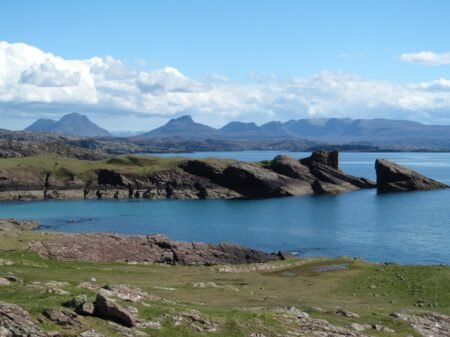
NASA’s Goddard Instrument Field Team spent part of the summer hiking tidal cliffs in the north-west Scottish Highlands with instruments on their backs. The reason is a set of grey-green spots in Martian rock that could be the residue of ancient life, or could be ordinary chemistry. The rocks at Stoer are 1.2 billion years old and they contain the same spots, which makes them the control group.
A $30 million commercial rescue mission could not reach NASA’s Swift Observatory, so NASA switched its main instrument back on and accepted the cost. The telescope is at 200 miles and sinking, and NASA expects it to stop doing science within weeks.
NASA’s Lunar Reconnaissance Orbiter found a 222-meter crater carved by an impact in spring 2024 that nobody on Earth detected. It is the largest fresh lunar crater ever recorded, and the ejecta math now feeds straight into planning for a crewed Moon base.
NASA’s Nancy Grace Roman Space Telescope lifted off on a Falcon Heavy on August 30. Its 2.4 meter mirror came free from the National Reconnaissance Office, and it captures a patch of sky at least 100 times wider than Hubble in a single shot.
Asteroid 2024 YR4 briefly carried the highest impact probability ever recorded for an object its size. Webb has now ruled out both an Earth strike and a lunar one. The number worth remembering is not 3.1 percent.
Researchers at Southern Illinois University engineered yeast to turn PET bottles and corn stalks into a protein rich, vanilla scented cookie called µBites. It smells good, it was funded by NASA, and no human has been cleared to taste one.
A viral claim said a leaked NASA document called Project Anchor warned Earth would lose gravity for seven seconds on August 12, 2026. NASA denied it, physics rules it out, and the date was chosen for a reason that explains the whole thing.
Forty feet beneath Launch Complex 39 sits a domed concrete bunker on springs, built to survive a fully fueled Saturn V exploding overhead. You reached it by jumping into a 200-foot slide. It was never used, and SpaceX is legally required to keep it.
A total solar eclipse crosses Greenland, Iceland and Spain on August 12, 2026, with a partial eclipse over much of the northern US. NASA’s guidance is blunt: an unfiltered phone camera aimed at the sun can suffer permanent sensor damage.
But the Swift spacecraft will surely crash back to Earth, likely before the end of this year, without a reboost.…