

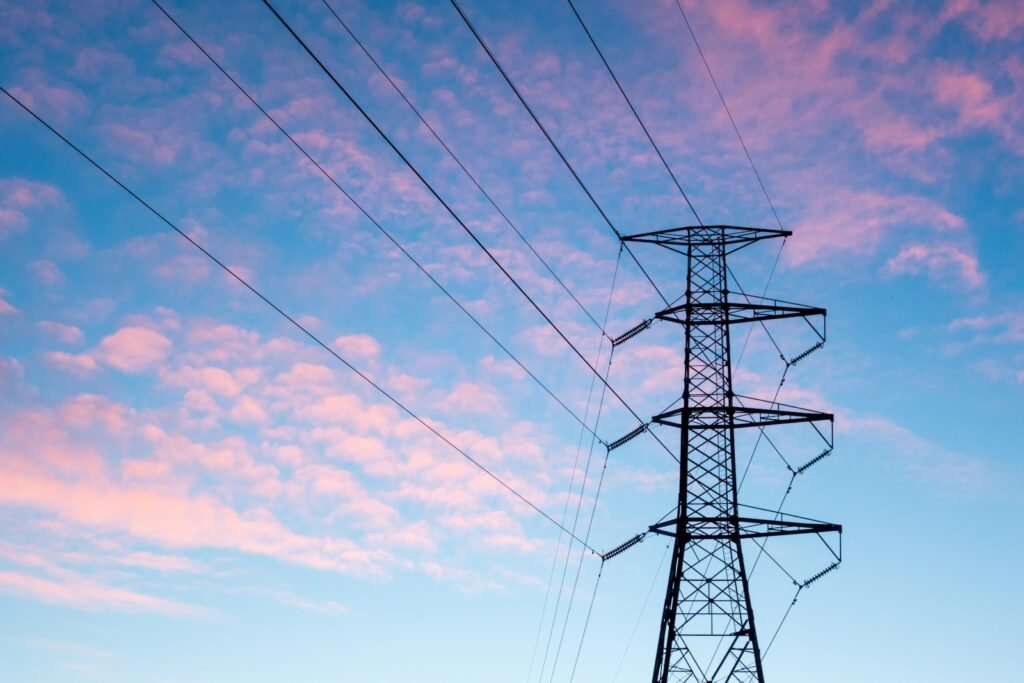
On August 26 the President signed an executive order declaring a national emergency over the equipment that moves electricity around the United States. The order does not name China in its operative text, but nobody covering it has been confused about the target. What makes this one interesting is not the politics. It is the timing.
The order restricts the purchase and installation of foreign made grid hardware from countries the government treats as adversaries. That hardware includes large power transformers. A large power transformer ordered in the United States right now has an average wait of roughly 128 weeks. That is two and a half years, and it was two and a half years before anyone started narrowing the list of places you are allowed to buy one from.
The short version
- What happened: a national emergency declared over foreign produced bulk power system equipment, using the International Emergency Economic Powers Act and the National Emergencies Act
- What it covers: transformers, high voltage circuit breakers, generation turbines, utility scale inverters, battery storage systems and the industrial control software attached to all of it
- What it does not cover: local distribution equipment, which is the wire and the pole outside your house
- The stated reason: AI data centers, advanced manufacturing and defense production have made the country more dependent on stable power than it has ever been
- What happens next: the Department of Energy has 120 days to write the actual rules
What the order actually restricts
The phrase to know is bulk power system. It is a term of art, and it does a lot of work here. The bulk power system is generation and high voltage transmission, the machinery that produces electricity and hauls it across states. It is deliberately not the distribution network, the last few miles of poles and street level transformers that deliver power to individual buildings. The order carves distribution out explicitly.
Inside that boundary, the scope is broad. It reaches substations, control rooms and generating stations, and it covers the digital layer as much as the metal: firmware, remote access capability and the industrial control systems that let an operator hundreds of miles away open a breaker.
| Category | In scope | Why it matters |
|---|---|---|
| Large power transformers | Yes | The hardest single item to replace. Custom built, enormous, and years out |
| Generator step up units | Yes | Without one, a power plant cannot put anything onto the grid |
| High voltage circuit breakers | Yes | The safety mechanism. A compromised breaker is a remote off switch |
| Utility scale inverters | Yes | Solar and storage plug into the grid through them, and they phone home by design |
| Battery energy storage systems | Yes | The fastest growing category on the grid, and heavily import dependent |
| Generation turbines | Yes | Long lead, few suppliers worldwide |
| Control software and firmware | Yes | The part that can be updated remotely after the hardware passes inspection |
| Local distribution equipment | No | Explicitly excluded. Your neighborhood transformer is not covered |
The software line is the one worth pausing on. A transformer is a lump of steel and copper and it does what physics tells it to do. An inverter, a breaker relay or a battery controller is a computer with a network connection, and the risk model there is not sabotage during manufacturing. It is the update that arrives three years after installation. Security researchers have been making this argument about consumer hardware for years, and it is the same shape as the warning that came out this month about state linked crews sitting quietly inside network equipment, waiting rather than acting.
Why now, and the AI answer
The order’s own reasoning is unusually blunt about the trigger. The growth of advanced manufacturing, data centers, artificial intelligence and defense production has raised national dependence on abundant, reliable electricity, and therefore raised the consequences of any successful disruption.
That is not spin. US electricity demand was essentially flat for about fifteen years, and it is not flat anymore. Utilities across the country have spent the last three years revising load forecasts upward, and the revisions are being driven by a small number of very large, very concentrated customers. A single hyperscale campus can draw as much power as a mid sized city, and it wants that power on a schedule that does not accommodate a four year equipment queue.
You can see the same pressure showing up in odd places. Amazon has been building its own gas plant in West Texas rather than waiting for the grid to catch up, and the Cherokee Nation went the other direction entirely and banned hyperscale data centers on its land. Both are responses to the same arithmetic: the demand curve moved faster than the hardware supply chain can move.
The China share is smaller than the headlines suggest
Here is the part that gets flattened in most coverage. Chinese origin transformers, inverters, batteries and control systems have been the stated concern for the better part of a decade. But the import share has been falling on its own. Across the relevant grid equipment categories, China’s slice of US supply has dropped from around 14 percent to around 6 percent over recent years.
Six percent of a national grid is not nothing. Substations do not fail gracefully, and a single compromised control system in the wrong place can matter more than its share of the parts list. But it does reframe the order. This is less a wall against a flood and more a policy about the installed base, the equipment already bolted down inside American substations.
That is why one clause matters more than the prohibition itself. The Energy Secretary is directed to identify equipment already installed in the United States that poses a risk, and to come back with recommendations, explicitly including isolation, monitoring or removal. Banning future purchases is a procurement rule. Removing installed transformers from live substations is a construction project measured in years.
This has happened before
The order is not the first attempt at this. In May 2020 a very similar bulk power system order was signed, restricting equipment from foreign adversaries. The Department of Energy started work on a prohibition list. The following year the incoming administration suspended it, and the effort was folded into a broader supply chain review that never produced the same hard rule.
The industry noticed. Utilities that had begun screening suppliers under the 2020 order watched that requirement evaporate, which is roughly the worst possible signal to send to a sector that plans capital projects on twenty year horizons. Whether this version survives longer than the last one is the actual question, and it will not be answered by the signing ceremony. It will be answered by whatever the Department of Energy publishes inside the 120 day window.
What this does to your electricity bill
Probably not much directly, and anyone telling you otherwise is guessing. The restricted categories are a minority of supply, and the order applies to transactions initiated after it was signed rather than clawing back existing contracts.
The indirect path is the one to watch. A narrower supplier list in an already constrained market is upward pressure on price, and grid equipment costs land in the rate base, which lands on bills eventually. That effect is real but slow, and it will be thoroughly swamped by the much larger thing happening at the same time, which is a demand surge that utilities are already using to justify new generation.
What to actually watch for
- The Department of Energy rule inside 120 days, specifically whether it names entities or names countries
- Whether the installed base review recommends removal, or settles for monitoring and network isolation
- Whether US and allied transformer factories announce capacity expansion, which is the only thing that fixes 128 weeks
- Legal challenges. Using emergency economic powers for a procurement rule is a stretch that someone will test
The honest read
A national emergency declaration is a big rhetorical instrument aimed at a genuine but narrow problem. The grid does have foreign made equipment in it with remote access capability, and nobody in the industry disputes that this is a risk worth managing. The order also lands on a supply chain that cannot currently deliver the domestic alternatives fast enough, in the middle of the largest load growth the country has seen in a generation.
Both of those things are true. The order does not resolve the tension between them, and the 120 day rulemaking is where somebody has to try.
Sources and further reading
- The White House: Executive order declaring bulk power system national emergency
- The White House: Fact sheet on bulk power system national emergency
- Utility Dive: Trump moves to block some foreign made equipment from the grid
About this article: GeekBlog covers U.S. technology news, AI, phones, smartwatches and gaming. Every story is written and checked under our Editorial Policy. Spotted a mistake or have a story tip? Contact our editors.
