

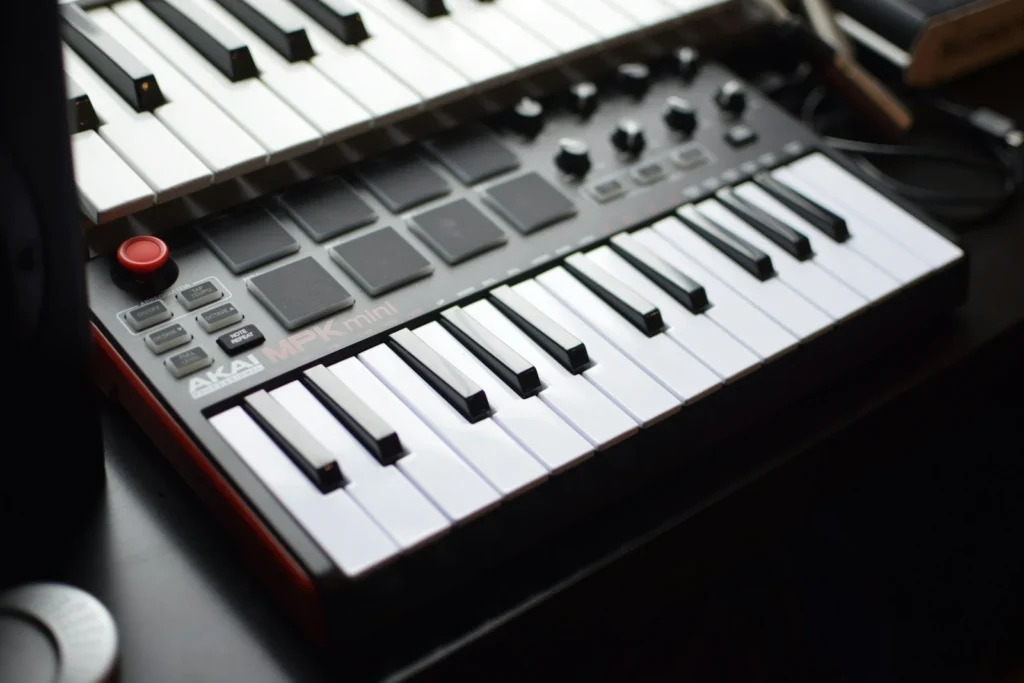
A MIDI controller does not make sound on its own. It sends notes and control messages to software instruments, a DAW or hardware synths, which is why the right one depends on how you make music. This guide covers the current MIDI controllers worth shortlisting in 2026, from a $99 portable keyboard to a pedalboard style controller for guitarists, plus the features that actually matter when you choose.
The best MIDI controllers to consider in 2026
| Controller | Best for | US list price |
|---|---|---|
| Akai MPK Mini IV | Beginners, travel, beatmaking | $99 |
| Arturia MiniLab 3 | Compact desk setups | $149 |
| Arturia KeyLab Essential mk3 | All round home studio | $299 (49 keys), $349 (61 keys) |
| Novation Launchkey 49 MK4 | Ableton users, controlling hardware | $319 list, often less |
| Native Instruments Kontrol S61 MK3 | Keyboard players, Komplete libraries | $849 |
| Muse Kinetics 12 Step 2 | Guitarists and bassists, foot control | About $319 |
Prices are manufacturer or authorized US retailer list prices as of October 2026 and change often, especially during sales.
Small and portable picks
Akai MPK Mini IV. The fourth generation of Akai’s popular mini keyboard arrived in October 2025 with real pitch and mod wheels instead of a joystick, an updated 25 key keybed, velocity sensitive RGB MPC style pads, eight assignable knobs and a full color screen. It adds a full size MIDI output, so it can play a hardware synth without a computer, and connects over USB C. Akai includes DAW scripts for Ableton Live, Logic Pro, FL Studio and Cubase, plus Ableton Live Lite 12 and a library of around 1,000 sounds.
Arturia MiniLab 3. A slightly larger compact keyboard with 25 slim keys, eight pressure sensitive RGB pads with two banks, eight encoders, four faders and touch strips for pitch and modulation. A built in arpeggiator and chord mode make it fun without plugins, and a five pin DIN MIDI out lets it drive hardware. It is bus powered over USB C and ships with Analog Lab Intro and Ableton Live Lite.
Full size keyboards for the home studio
Arturia KeyLab Essential mk3. Available with 49 or 61 velocity sensitive keys, it adds eight touch and pressure sensitive pads, nine faders, nine encoders and a 2.5 inch screen. That fader count makes it a strong choice if you mix inside your DAW, and it has a DIN MIDI out and pedal input for live use.
Novation Launchkey 49 MK4. Novation’s latest Launchkey pairs 49 full size synth action keys with 16 RGB pads that support polyphonic aftertouch and double as clip launchers. It works without a DAW through its five pin MIDI out, connects to iPhone and iPad music apps, and has deep integration with Ableton Live, which makes it a favorite for people who build tracks around clips.
Native Instruments Kontrol S61 MK3. The premium option here, with a semi weighted Fatar keybed, polyphonic aftertouch and a large 1280 by 480 color display for browsing and tweaking sounds. It is built around NI’s Komplete and NKS ecosystem. Note that Native Instruments entered preliminary insolvency in January 2026 and was acquired by inMusic, the parent of Akai and Moog, in May 2026. Core products are still supported, but check stock and lead times, since some retailers currently list the S61 as special order.
For guitarists, bassists and live rigs
Muse Kinetics 12 Step 2. Formerly sold under the Keith McMillen Instruments name, the 12 Step 2 is a thin, light foot controller with 12 pressure sensitive keys laid out like one octave of a piano. Each step can trigger chords of up to five notes, so a bassist or guitarist can play synth bass lines or pads with their feet while their hands stay on the instrument. It connects over USB C to a laptop, phone or tablet running synth apps, and also has a hardware MIDI output for synth modules.
Ableton Push 3. Not a keyboard at all, Push 3 is a 64 pad controller with MPE support, so each pad responds to pitch slides and pressure. It is offered in a tethered version that runs from your computer and a standalone version with its own processor, storage and battery, plus a built in audio interface with CV and gate ports. It is the most capable option on this list for Ableton Live users who want to perform away from the laptop.
What to look for in a MIDI controller
- Key count. 25 keys fit on a desk or in a backpack. 49 or 61 keys let you play with two hands. 88 weighted keys are for pianists.
- Key feel. Synth action keys are light and fast, semi weighted keys add resistance, and fully weighted hammer action imitates an acoustic piano.
- Pads and aftertouch. Pads are essential for drums and clip launching. Aftertouch, especially polyphonic aftertouch or MPE, lets pressure shape the sound after you play a note.
- DAW integration. Look for official scripts for your DAW so transport buttons, mixer faders and plugin controls map automatically.
- Connectivity. USB C with bus power is standard. DIN or TRS MIDI out and pedal inputs matter for live and hardware setups.
- Bundled software. Many controllers include a light DAW and sound libraries, which adds real value for beginners.
FAQ
Do MIDI controllers make sound by themselves?
No. They send MIDI data to a computer, phone, tablet or hardware synth that generates the sound. A few products bundle sounds, but you still need a host app or device.
What is the best MIDI controller for beginners?
The Akai MPK Mini IV at $99 is the easiest starting point, with keys, pads, knobs and bundled software. The Arturia MiniLab 3 is a strong alternative if you want faders and touch strips.
Can I use a MIDI controller with an iPhone or iPad?
Yes, if it is class compliant over USB. Connect it with a USB C cable or adapter and it will work with most music apps.
How many keys do I need?
For beats and sketching ideas, 25 keys are enough. If you play chords and melodies with both hands, choose 49 or 61 keys.
The verdict
For most people starting out, the Akai MPK Mini IV or Arturia MiniLab 3 covers everything at a low price. Home studio users should look at the KeyLab Essential mk3 for its faders or the Launchkey 49 MK4 for Ableton workflows, while the Kontrol S61 MK3 serves players who want a premium keybed. Guitarists and bassists who need their hands free will get the most from the 12 Step 2.
Updated October 2026: rewritten as a buying guide with current models, verified list prices and the features to compare before you buy.
Featured photo: Cedrik Malabanan on Unsplash.
About this article: GeekBlog covers U.S. technology news, AI, phones, smartwatches and gaming. Every story is written and checked under our Editorial Policy. Spotted a mistake or have a story tip? Contact our editors.
