

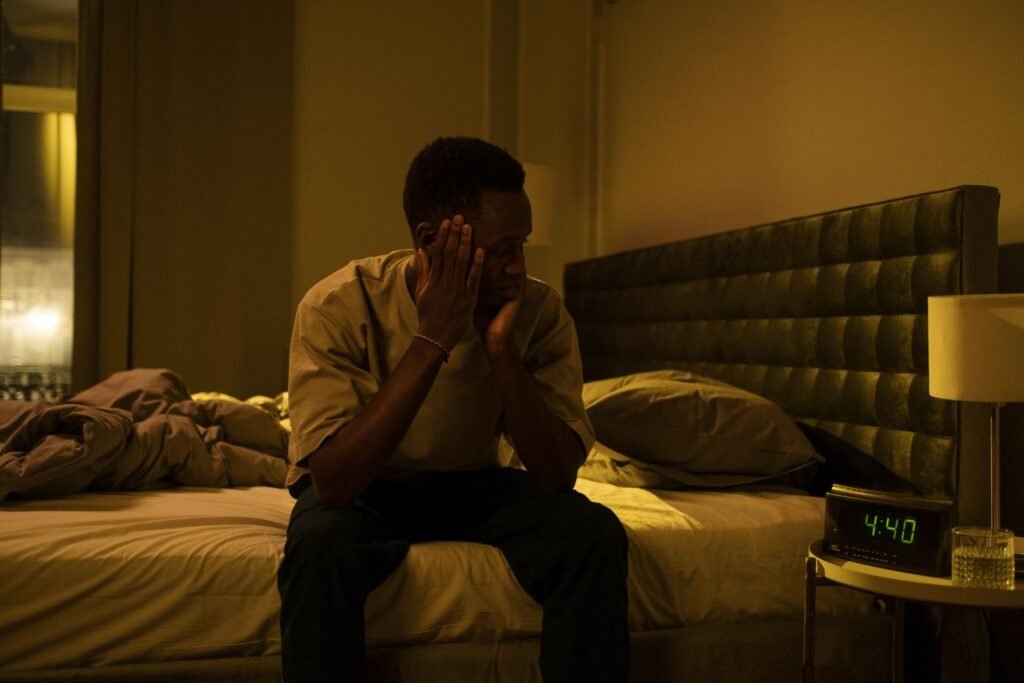
Most of us have pulled an all-nighter at some point. YouTuber Luke J decided to pull three and a half of them in a row. He stayed awake for more than 84 hours, filmed the whole thing and came out the other side calling it “the hardest thing I’ve ever done.”
His video, first spotted by UNILAD Tech, is a fascinating watch. It’s also a surprisingly accurate tour of what sleep scientists have documented about extreme sleep loss. Almost every strange thing he describes lines up with research, hour by hour. Here’s what he went through, what was happening inside his brain and why you really shouldn’t try this at home.
The short version
- Luke J stayed awake for 84+ hours and ran memory and typing tests every 12 hours.
- By hour 60 he saw a “huge bug” that wasn’t there. Later, a pile of cushions turned into the silhouette of a woman.
- Research shows 24 hours awake impairs you about as much as a 0.10% blood alcohol level, above the US legal driving limit of 0.08%.
- A 2018 review of 21 studies found hallucinations get more complex after 48 hours and can look like psychosis after 72 hours.
- Guinness World Records no longer tracks the “longest time awake” record because it’s too dangerous.
What happened during the 84 hours
Luke started the challenge as someone who actually takes sleep seriously, which is part of what made it interesting. He wanted to see how far he could push himself, and he built in a simple way to measure the damage: a memory test and a typing test every 12 hours.
The first stretch was easy. He hung out with friends, played video games and kept his usual routine. After about 12 hours he went out into the city to stay busy and admitted, “I’m really starting to feel sleepy.” By the 24-hour mark his test scores were already wobbling.
At 36 hours things got strange. Luke said it felt like he was watching himself make decisions rather than making them. By 48 hours he was questioning whether he could keep going: “It’s like I’m starting to lose my mind.” Near the 60-hour mark he kept nearly falling forward while reading at his computer, then became convinced a huge bug was crawling on the floor. Later, sitting with a friend, he stared at a pile of cushions and pillows and said, “This looks so much like the silhouette of a person sitting down right here.”
He made it to midnight, past 84 hours, then finally slept. Hard. For days afterward he said he was sleeping far more heavily than usual.
Luke J’s 84 hours, checkpoint by checkpoint
Hour 12
“I’m really starting to feel sleepy.” Still running his normal routine.
Hour 24
Memory and typing scores start to slip. Impairment comparable to being over the drink-drive limit.
Hour 36
Feels like he’s watching himself make decisions instead of making them.
Hour 48
“It’s like I’m starting to lose my mind.” Considers quitting.
Hour 60+
Nearly nods off while reading. Sees a huge bug, then a person made of cushions.
Hour 84+
Stops at midnight. Sleeps unusually heavily for days.
Why 24 hours awake is like being drunk
Luke’s comparison to drunk driving wasn’t an exaggeration. In a well-known 1997 study published in Nature, Australian researchers Drew Dawson and Kathryn Reid found that after 17 hours awake, people performed about as badly as someone with a 0.05% blood alcohol concentration. After 24 hours, it was about the same as 0.10%. The CDC’s workplace safety arm, NIOSH, still uses those numbers in its driver fatigue guidance.
A follow-up study by Ann Williamson and Anne-Marie Feyer in 2000 tested 39 transport workers and army personnel. After 17 to 19 hours without sleep, their results on some tests matched or fell below people at 0.05% BAC, and reaction times on some tasks were up to 50% slower.
Hours awake vs. equivalent blood alcohol level
Source: Dawson & Reid, Nature (1997); CDC/NIOSH. US legal driving limit is 0.08%.
17 hours awake: about 0.05% BAC
US legal limit: 0.08% BAC
24 hours awake: about 0.10% BAC
Luke was 60 hours past that point. And the real danger isn’t only foggy thinking. It’s microsleeps: involuntary episodes of sleep that usually last 15 seconds or less, often without the person noticing. Those moments when he kept almost falling forward at his desk look a lot like microsleeps. Behind the wheel, a few seconds is all it takes.
The science behind the hallucinations
The most useful guide to what Luke saw is a 2018 systematic review in Frontiers in Psychiatry by Flavie Waters and colleagues, titled “Severe Sleep Deprivation Causes Hallucinations and a Gradual Progression Toward Psychosis With Increasing Time Awake.” It pulled together 21 studies covering 760 people kept awake from 24 hours up to 11 nights.
The researchers found a clear pattern. Symptoms start small and get steadily worse the longer you stay up. Luke’s timeline fits it almost perfectly.
| Time awake | What research describes | What Luke reported |
|---|---|---|
| 24 to 48 hours | Perceptual distortions, anxiety, irritability, a sense of detachment, losing track of time | A light-and-mirror museum room felt “like I’m on an alien ship.” At 36 hours, watching himself make decisions. |
| 48 to 90 hours | Complex hallucinations and disordered thinking | A huge bug on the floor near hour 60. Cushions became a seated woman. |
| 72+ hours | Delusions and a state resembling acute psychosis, with hallucinations in sight, sound and touch | “It’s like I’m starting to lose my mind.” He stopped at 84 hours. |
Why does this happen? While you’re awake, a chemical called adenosine builds up in the brain and creates “sleep pressure.” Normally sleep clears it. Push past that point and the brain starts misfiring, especially in how it interprets what the eyes see. A shadowy pile of cushions has just enough “person-like” shape, and an exhausted brain fills in the rest. A 2017 PET imaging study in PNAS found that after 52 hours awake, the brain’s adenosine receptors had measurably changed, and it took a full recovery sleep to bring them back toward normal.
264.4 hrs
Randy Gardner’s famous 1964 record, set at age 17 while sleep researcher William Dement watched.
201 hrs
New York DJ Peter Tripp’s 1959 radio stunt in Times Square. He hallucinated badly in the final days.
84 hrs
Luke J’s total. Already deep into the range where studies report psychosis-like symptoms.
Why he slept so hard afterward
After serious sleep loss, the body doesn’t pay back every lost hour. Instead it changes the kind of sleep you get. Recovery sleep is packed with extra deep, slow-wave sleep, mostly in the first part of the night, and the rebound is bigger the longer you were awake. That’s why Luke described sleeping so heavily for days. According to VT, he also found it harder to fall asleep for weeks after the stunt, a reminder that the effects don’t disappear the moment you finally crash.
If you want to see what your own nights actually look like, a decent tracker can show your deep and REM sleep over time. Our tests of the best sleep trackers and the smartwatches with the most accurate sleep data are good places to start.
Please don’t try this
Guinness World Records stopped recognizing attempts at the longest time without sleep because of the health risks, and modern researchers rarely keep volunteers awake past 48 hours because it’s considered unethical. Luke had friends around him and stopped when he read that the risk of ending up in the hospital climbs past a certain point. That’s the right call.
The everyday version matters more
You don’t need 84 hours to be at risk. The CDC says about 1 in 3 US adults regularly sleep less than the recommended 7 hours. NHTSA counted 633 deaths in drowsy-driving crashes in 2023, and the AAA Foundation estimates drowsy drivers are involved in about 1 in 6 fatal crashes, since police reports miss many cases. If you’ve been up for 17 hours or more, treat yourself like you’ve been drinking and don’t drive.
The bottom line
Luke J’s challenge makes great content, and it’s an honest look at how quickly the brain unravels without sleep. A day without rest makes you as impaired as a drunk driver. Two days blurs the line between what’s real and what isn’t. By day three, your brain starts inventing bugs and people out of thin air. The good news is that for most healthy people, sleep fixes it. The better news is that you can learn all of this from his video without losing a single night yourself.
About this article: GeekBlog covers U.S. technology news, AI, phones, smartwatches and gaming. Every story is written and checked under our Editorial Policy. Spotted a mistake or have a story tip? Contact our editors.
