

On September 8, the Paris based AI lab Mistral closed a funding round unlike anything a European technology company had raised before. Three billion euros, led by Samsung Electronics, at a post money valuation above 21 billion euros. Mistral called it the largest equity fundraising round ever completed by a European tech company, and on the numbers alone that claim holds up. What makes the round worth a closer look is not the size of the check. It is what Mistral is selling to justify it, an idea the company calls sovereign AI, and how much of that sovereignty is actually being built with someone else’s hardware and someone else’s money.
Quick facts
- Series D closed September 8, 2026: 3 billion euros at a post money valuation over 21 billion euros
- Led by Samsung Electronics, with EQT’s Scaleup Europe Fund and PSG Equity co-leading
- New investors include Advent, funds managed by BlackRock, and the Grand Duchy of Luxembourg
- Nearly doubles Mistral’s 11.7 billion euro valuation from a year earlier
- Mistral reports roughly 1 billion dollars in annualized revenue as of May 2026, about 20x year over year growth
- French government has committed roughly 15 billion euros to sovereign AI infrastructure through 2027
What “sovereign AI” means in Mistral’s pitch
Mistral is not trying to out-benchmark OpenAI, Anthropic or Google model for model. Its pitch to European governments, banks and defense ministries is different: control. Customers can choose which region processes their queries, Mistral hosts third party open-weight models alongside its own so buyers are not locked to one vendor, and everything can run on infrastructure physically located inside the EU rather than routed through a US company’s cloud.
That positioning lines up neatly with the EU AI Act, which imposes stricter obligations on higher-risk applications and has pushed European banks, hospitals and defense agencies toward vendors that can demonstrate local data residency and an open, auditable model. An open-weight European lab with regional hosting options is, on paper, exactly what that regulatory environment rewards. It is also exactly the argument that persuaded Luxembourg’s government to invest directly in this round rather than simply buying Mistral’s product.

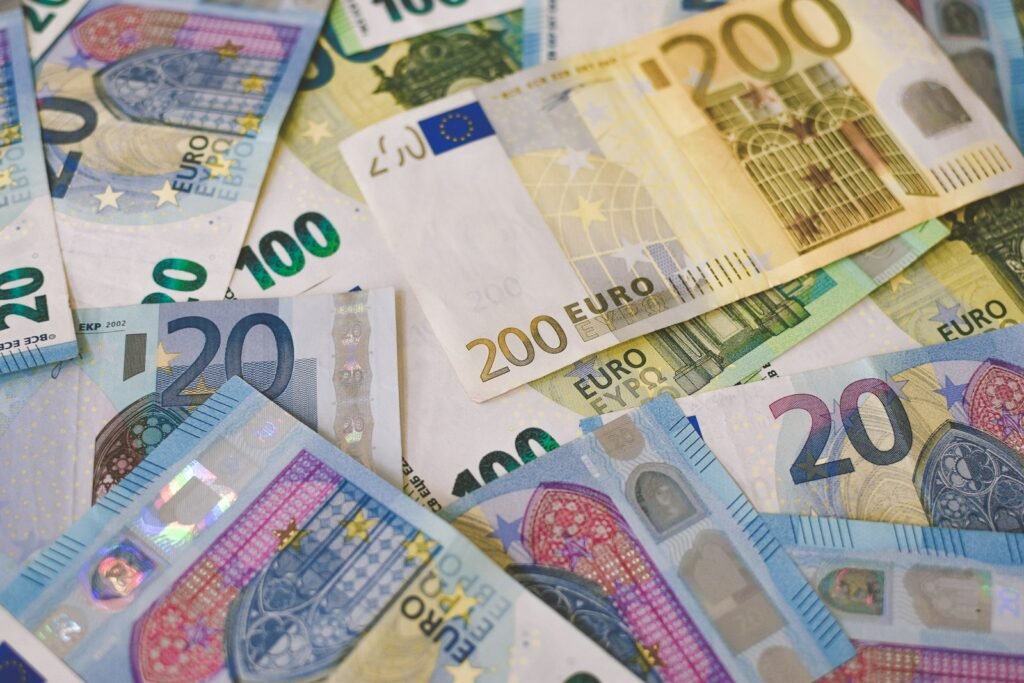
Mistral is selling regional control over AI infrastructure as much as it is selling model performance. Photo by Growtika via Unsplash.
Who is actually paying for the buildout
The sovereignty pitch is not just marketing. It is already showing up in contracts. Mistral has struck deals with the French military and the Luxembourg Armed Forces, and built a broad partnership with Airbus, the kind of customers that would never sign with a lab they could not audit or physically locate.
| Backer or customer | Relationship |
|---|---|
| Samsung Electronics | Lead investor, Series D |
| French government | Roughly 15 billion euros committed to sovereign AI infrastructure, 2024 to 2027 |
| Grand Duchy of Luxembourg | Direct state investor in this round |
| French military and Luxembourg Armed Forces | Defense contracts |
| Airbus | Enterprise partnership |
Still a minnow next to OpenAI
However large the round looks against other European deals, it is worth putting it next to the company Mistral is implicitly positioning itself against. OpenAI closed a round in March containing 122 billion dollars in committed capital, at a post money valuation of 852 billion dollars. Mistral’s 21 billion euros, a little over 24 billion dollars at current exchange rates, is not in the same category.
Valuation, roughly to scale
Bar widths approximate relative scale. Mistral’s valuation is roughly 3% of OpenAI’s.
Mistral does not need to match that number to matter. Its bet is that a meaningful slice of European buyers will pay a premium for sovereignty even at a capability gap, the same logic that keeps regional cloud providers alive next to AWS and Azure. Whether that slice is big enough to justify a 21 billion euro valuation is the real question the round is asking investors to answer, and it will not be settled for a few more years.
The paradox sitting underneath the sovereignty pitch
Here is the part of the story that gets less attention than the funding number. Mistral’s flagship data center, at Bruyeres-le-Chatel south of Paris, runs on roughly 13,800 Nvidia Grace Blackwell GPUs across 44 megawatts of capacity, the same category of US-made chips every other frontier lab depends on. The lead investor in this round is a South Korean electronics conglomerate. And a meaningful share of the capital funding the buildout is European sovereign wealth and defense spending, flowing through a company whose physical infrastructure still runs on American hardware.
None of that makes the sovereignty pitch dishonest. Regional data residency, EU based hosting and open weights are real, verifiable differences from routing a query through a US company’s cloud, and they are the specific things Mistral’s government and defense customers are actually paying for. But it does mean “sovereign AI,” as an industry term, is doing narrower work than it sounds like. It describes control over where data lives and who can audit a model, not independence from the global chip supply chain that every AI company, European or otherwise, still runs on.
What it signals for the rest of the market
Mistral’s raise lands in the middle of an industry that is competing on two fronts at once: raw capability, where the frontier labs keep leapfrogging each other, and cost, where Anthropic recently cut its own cached token pricing by 75% and OpenAI’s 80% price cut was matched and then undercut by DeepSeek within weeks. Mistral is explicitly not trying to win either of those fights outright. It is betting that a third axis, who controls the infrastructure and who can be held accountable for it, will matter enough to European buyers that a lab a fraction of OpenAI’s size can still build a durable business around it.
The chip side of that bet is not unique to Mistral either. Nvidia’s own web of investments across AI startups already runs through nearly every major lab racing to build agentic and frontier systems, Mistral included. Sovereignty, in 2026, increasingly means sovereignty over everything except the silicon underneath it, and investors just priced that distinction at 21 billion euros.
