

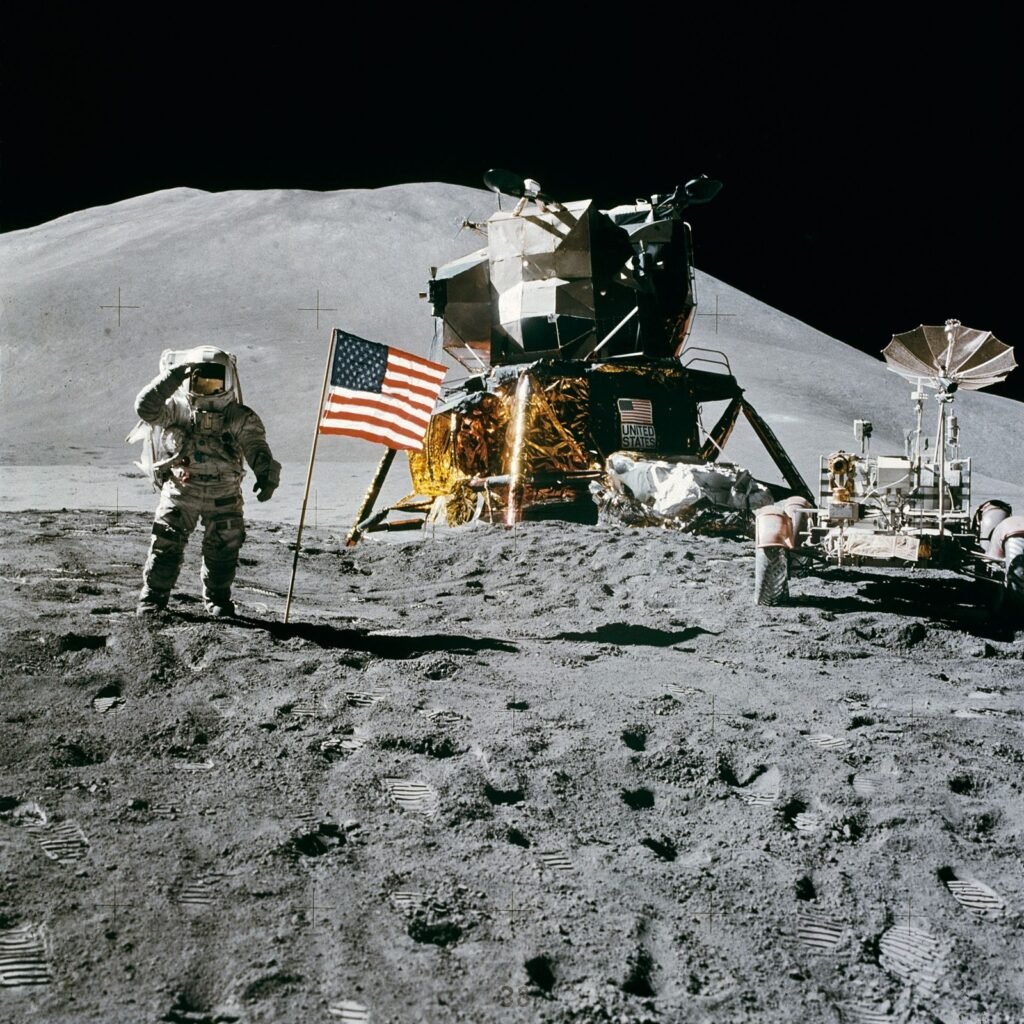
NASA wants to build a permanent base at the Moon’s south pole, and it’s asking teenagers and college students for help. As UNILAD Tech reported, the agency has launched the Moon Base Challenge, a student competition with $1 million in prize money for teams that come up with real solutions to the problems astronauts will face living on the lunar surface.
It’s not a drawing contest. Teams pick one of six engineering problems, write a proposal, and get judged by NASA experts and industry reviewers. The best ideas could actually feed into how the base gets built. Here’s who can enter, what you’d be working on, and the dates you need to know.
The short version
- Announced November 8, 2026 at Kennedy Space Center Visitor Complex in Florida.
- Open to US high school and post-secondary teams, including community colleges and technical schools.
- Teams of 2 to 5 students plus one adult coach.
- Six problem areas, from power to astronaut safety.
- Registration closes January 25, 2027. Winners are named in May 2027.
- The $1 million is a total prize pool, split among up to 100 finalists and the eventual winners.
What NASA is asking for
NASA Administrator Jared Isaacman announced the challenge at the MAX POWER aerospace expo. “We’re looking for students ready to think creatively, work as a team, and take on real problems connected to NASA’s future on the Moon,” he said. “You do not have to wait until graduation to contribute.”
Carlos García-Galán, who manages NASA’s Moon Base Program, said the agency wants to “leverage all the ingenuity and innovation” it can find as it designs the base. The challenge was put together by NASA’s Office of STEM Engagement and the Moon Base Program, and it’s run by the Institute of Competition Sciences.
Teams choose one of six categories. Each category is judged separately, so you’re only competing against teams working on the same problem.
The six Moon Base problem areas
POWER
Generating and storing energy through a lunar night that can last about two weeks.
HABITATS
Building shelters using materials found on the Moon itself.
LIFE SUPPORT
Keeping air, water and temperature livable for crews.
MOBILITY
Moving people and cargo across rough, dusty terrain.
COMMUNICATIONS
Networks that link the base, rovers and Earth.
ASTRONAUT SAFETY
Protecting crews from radiation, dust and emergencies.
Who can enter
The rules are fairly open, but there are a few details that trip people up. Here’s what the official rules say.
| Requirement | Details |
|---|---|
| Schools | US high schools and post-secondary schools: community colleges, technical and vocational schools, and four-year colleges |
| Team size | 2 to 5 students, all enrolled at an eligible US institution |
| Coach | Required. Must be 18+, a teacher, faculty member, administrator, CTE instructor or homeschool instructor tied to the team’s lead organization |
| Coach status | US citizen, permanent resident, or foreign national living in the US. Must sign a commitment letter |
| Coach limits | Can coach several teams, but can’t do the work, appear on camera or narrate videos |
| Experience | None required |
Homeschoolers are explicitly included, which is a nice touch. The catch is that every team needs an eligible adult coach, so students can’t simply enter on their own.
Key dates
The competition runs in two phases. Registration goes through NASA’s STEM Gateway. The dates below come from NASA’s announcement and the challenge’s published schedule, so check the official site in case anything shifts.
Moon Base Challenge timeline
2026 to 2027
NOVEMBER 8, 2026
Challenge announced. Registration opens.
JANUARY 25, 2027
Registration closes.
FEBRUARY 22, 2027
Project papers due.
MARCH 11, 2027
Up to 100 finalists announced. Finalists receive cash awards.
APRIL 19, 2027
Final submissions and presentations due.
MAY 6, 2027
Grand Prize and Runner-Up winners revealed at a closing symposium.
How the $1 million is split
Don’t picture one team walking away with a million dollars. The money is a total pool. Up to 100 teams across all categories and both divisions become finalists, and each finalist gets a cash award. In the final phase, NASA names a Grand Prize winner and a Runner-Up in every category, separately for high school and post-secondary teams.
$1M
total prize pool
100
max finalists
6
categories
24
top awards (winner + runner-up, 6 categories, 2 divisions)
NASA hasn’t published exact amounts for each tier in the materials we reviewed. Two more fine print points: the prize money goes to the coach’s account, and the coach decides how it’s divided. Payment also depends on federal funding, and NASA doesn’t have to pay out the full pool if not enough entries meet its quality bar.
How entries are judged
First, every entry is screened, and incomplete ones aren’t scored at all. Then a panel of NASA experts, technical reviewers and industry professionals scores each project independently using standard rubrics. The first-phase rubric is worth 25 points, with categories like how well the idea fits NASA’s mission and how it handles risk. A final judges’ summit picks the finalists and the winners.
A tip for teams
One rubric category scores “Problem Background and NASA Mission Alignment.” Read NASA’s public Moon Base plans before you start, and tie your idea directly to the south pole site and the phases below. Judges reward proposals that clearly understand the real constraints.
Where this fits in NASA’s Moon plans
The challenge feeds into a much bigger project. NASA unveiled its Moon Base plan in March 2026 and paused the lunar Gateway station “in its current form” to focus on building on the surface instead. The plan has three phases.
NASA’s three Moon Base phases
Phase 1 through 2029: robotic exploration of the south pole
Phase 2 2029 to 2032: power, communications and logistics
Phase 3 2032 onward: habitats and a sustained human presence
Artemis II flew four astronauts around the Moon in April 2026. Artemis III, now planned for 2027, has been reshaped into a crewed test in Earth orbit, docking with one or both commercial landers. The first crewed landing is targeted for Artemis IV in early 2028. We covered how NASA hopes to speed that up when it held its “Artemis Acceleration” briefing. Those landers still face hurdles, including in-orbit refueling tests that have slipped.
Students who get hooked on this have a longer path too. NASA is also recruiting the people who’ll actually live there, and our guide to NASA’s astronaut hiring and the $164,395 salary explains who qualifies.
The takeaway
If you’re a US high school or college student, or you teach one, this is one of the most direct ways to get your work in front of NASA engineers. You’ll need a team of two to five, an eligible coach and a registration by January 25. The prize money is shared, so think of it as a strong bonus rather than a jackpot. The real prize is solving a problem NASA genuinely has to solve before people can live on the Moon.
About this article: GeekBlog covers U.S. technology news, AI, phones, smartwatches and gaming. Every story is written and checked under our Editorial Policy. Spotted a mistake or have a story tip? Contact our editors.
