

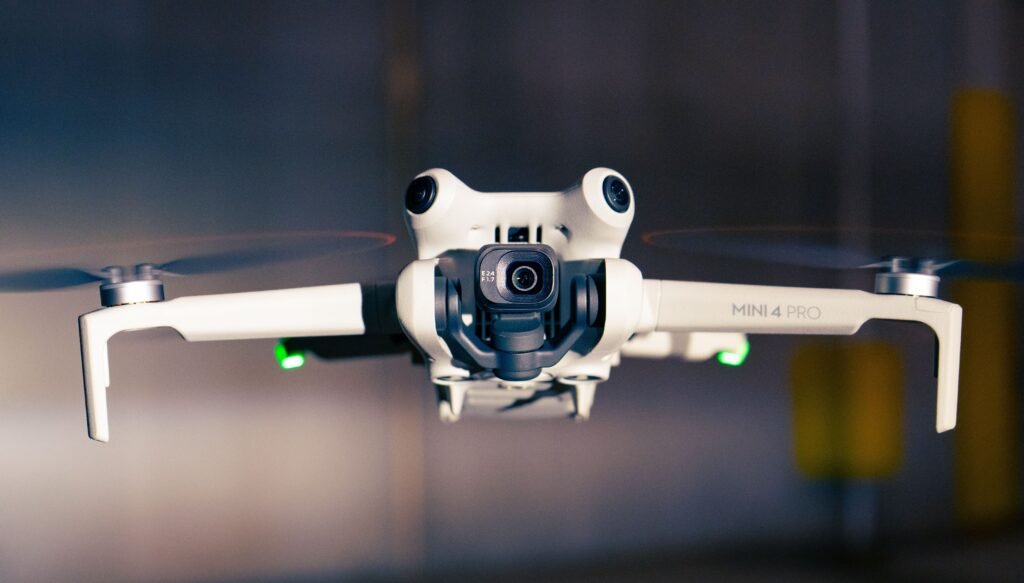
A robot roughly the size of a microcassette, weighing less than a paperclip, just completed 10 consecutive somersaults in 11 seconds while a fan tried to blow it off course.
That is a fun sentence, and it has been doing the rounds since MIT published the work on September 22. The detail that makes it genuinely interesting is the one most of the coverage skipped. The researchers did not build a better robot. They kept the machine they already had and replaced the software that decides how to move it.
The short version
- MIT’s insect-scale flapping-wing robot got about 450% faster and gained roughly 250% more acceleration versus the team’s own previous best
- It performed 10 consecutive body flips in 11 seconds, holding its path under wind-like disturbances
- The gain came from a new two-part AI control system, not from new hardware
- The method is deep-learned robust tube model predictive control, published in Science Advances
- The robot is smaller than a paperclip by weight and driven by soft artificial muscles
- Possible uses include inspecting turbine engines and pollinating vertical farms
- Search and rescue in rubble is the headline application and is realistically five to ten years out
Why controlling something this small is hard
Big drones are, in control terms, fairly well behaved. They are heavy enough to ignore small air currents, their rotors produce thrust that is easy to model, and there is room on board for a processor that can afford to think.
Insect-scale flapping flight is none of those things. The robot weighs almost nothing, so a light gust is not a disturbance, it is a catastrophe. The aerodynamics of flapping wings are nonlinear and change constantly through each beat. And the whole thing has to be decided in real time, on a budget, many times a second.
The traditional answer is model predictive control, which works by simulating the next fraction of a second, picking the best action, and repeating. It is powerful and it is expensive. Push it hard enough to handle aggressive aerobatics at insect scale and it stops running fast enough to be useful.
The two-part fix
The MIT team, working across Kevin Chen’s microrobotics group and Jonathan How’s lab, split the problem in half rather than trying to make one controller do everything.
The first half is a neural network trained in advance to approximate what the expensive planner would have decided. All the heavy computation happens offline, during training, where time is cheap. On the robot it becomes a fast evaluation rather than a solve.
The second half is the part that makes it trustworthy. A learned policy on its own is a black box that usually does the right thing, which is not good enough when the failure mode is a crash. The tube controller draws a bounded envelope around the intended trajectory and guarantees the robot stays inside it even when reality and the model disagree. Wind is exactly that kind of disagreement.
What the numbers look like
The comparisons are against the same team’s previous best results with the same class of robot, which is the honest way to measure a control improvement.
A 450% speed increase from a software change is a large number in any field. In robotics it usually means the hardware was never the binding constraint in the first place, and the machine had been flying conservatively because the controller could not safely ask for more.
That is a pattern worth recognizing because it keeps showing up. A lot of what currently looks like a robotics hardware problem turns out to be a question of whether anyone can compute a good enough answer fast enough. The same shift is what has been moving humanoid robots off demo stages and onto real production lines, and it is the reason so much money is chasing learned models of how the physical world behaves.
The robot itself
The platform this runs on is the product of years of work in Chen’s group. It is roughly microcassette-sized, weighs less than a paperclip, and flies by flapping rather than spinning rotors. The wings are driven by soft artificial muscles that contract fast enough to produce wingbeats in the range a real insect manages.
An earlier version of the design, shown in late 2025, could already fly about as fast as a bumblebee. The newer build has larger wings that give it more authority to maneuver. What it did not have until now was a controller willing to use that authority.
| What is genuinely demonstrated | What is still ahead |
|---|---|
| Aggressive aerobatics at insect scale | Flying untethered, away from lab power and tracking |
| Holding a path under wind-like disturbance | Onboard sensing instead of external motion capture |
| Control fast enough to run in real time | Battery life measured in anything but seconds |
| A reusable method, not a one-off trick | Durability across many flights without repair |
| Published, peer reviewed results | Navigating an unmapped space it has never seen |
What it might eventually be for
The application everyone reaches for is search and rescue: a swarm of tiny flyers threading through collapsed rubble where a person cannot fit and a conventional drone cannot maneuver. The researchers themselves put that roughly five to ten years away, which is a refreshingly specific thing for a robotics lab to say out loud.
The nearer-term uses are less dramatic and more plausible. Inspecting the inside of a turbine engine without disassembling it is a real industrial problem with real money attached. Pollinating crops in a vertical farm is another, and it is the kind of enclosed, controlled, well-lit environment where the hard parts of autonomy are much easier.
How to read a robotics demo without getting oversold
- Ask what is off-camera. Most insect-scale work runs tethered for power, inside a motion-capture volume
- Ask how long it flew. Flight times at this scale are measured in seconds, not minutes
- Ask what it can sense. A robot tracked by external cameras is not yet a robot that can find its own way
- Check whether the method generalizes. A new controller that works on one platform is a paper. One that works on many is a field
- Take the researchers’ own timeline. When a lab says five to ten years, that is usually the optimistic case
The part that will last
Somersaults make a good video, and that video is why most people heard about this at all. But the flips are a stress test rather than a product. They are the hardest thing the team could think to ask for, chosen precisely because the old controller could not deliver them.
The durable contribution is the method. Pairing a learned policy with a formal robustness guarantee is a general answer to a general problem: how do you get the speed of machine learning without giving up the safety properties that classical control was good at. That question is not specific to tiny flying robots. It shows up anywhere a machine has to decide quickly and cannot afford to be wrong.
If that combination holds up on other platforms, it will matter a great deal more than the eleven seconds of footage that made the rounds this week.
Sources and further reading
- ScienceDaily: MIT tiny flying robot gets 450% faster with AI
- Interesting Engineering: Insect like flying bot completes rapid somersaults
About this article: GeekBlog covers U.S. technology news, AI, phones, smartwatches and gaming. Every story is written and checked under our Editorial Policy. Spotted a mistake or have a story tip? Contact our editors.
