

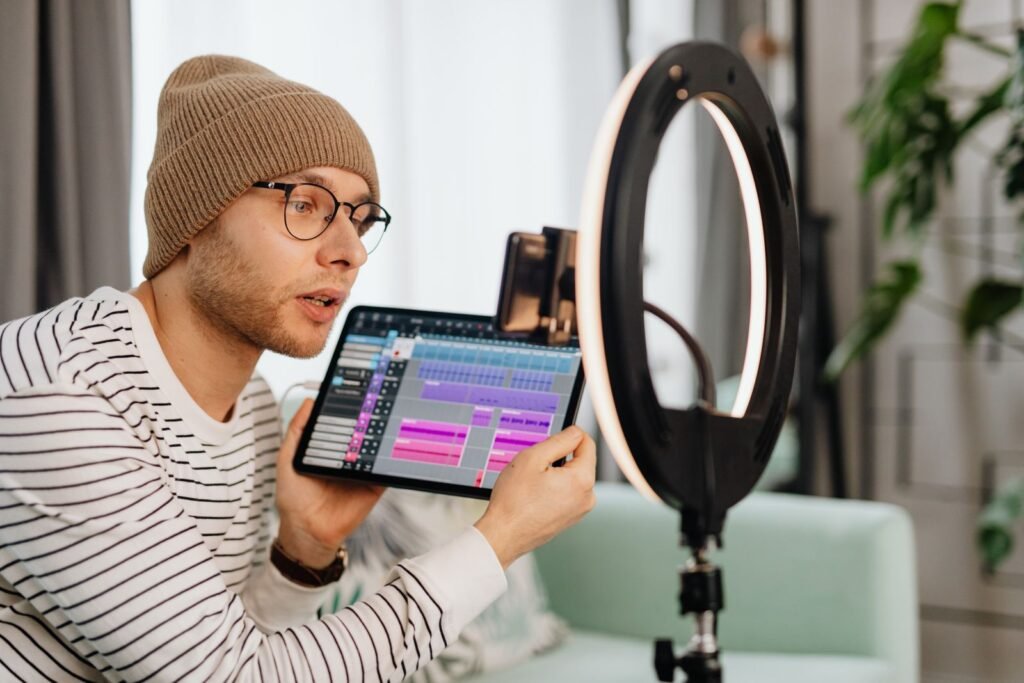
The headline going around this week is that YouTubers are secretly being paid thousands of dollars to make you afraid of artificial intelligence. It comes out of a report in The Telegraph, and the organization at the centre of it is ControlAI, an AI safety group funded in part by Skype co-founder Jaan Tallinn.
The money is real. The videos are real. The one word in that sentence worth arguing about is “secretly,” because ControlAI published a 3,000 word blog post in September laying out exactly how many videos it has paid for, what it asks creators to do, what it refuses to let them do, and where the disclosure goes. It is one of the least secret influence campaigns in the industry.
Which does not make the story uninteresting. It makes it a different story, and a better one: the fight over how the public thinks about AI has turned into a sponsorship market, and almost nobody watching is being told the size of the budgets on either side.
What is confirmed, and what is inference
- Confirmed by ControlAI itself: it has paid for nine sponsored videos and helped produce nine unpaid ones, covering superintelligence and extinction risk, totalling more than 6.3 million views
- Confirmed: the format is a 60 to 90 second ad slot, with the topic agreed in advance, disclosed in the segment, at the top of the description and in a pinned comment
- Confirmed: physicist and YouTuber Sabine Hossenfelder said publicly she was offered money “to scare you of AI” and turned it down, and that she is not the only one who was approached
- Disputed: whether ControlAI tried to script her video. ControlAI says it never spoke to Hossenfelder directly, only to her manager, and that its standard terms are narrower than she described
- Not established: that any specific creator took money without disclosing it. ControlAI says it has never run an undisclosed sponsorship
The numbers ControlAI put on the record
This is the part that makes the story concrete, and it comes from the organization rather than from reporting about it, which is unusual enough to be worth saying out loud.
Six point three million views is a real audience and a small one at the same time. It is roughly one mid-sized YouTube channel’s monthly traffic, spread across eighteen videos and two years. The 3,000 figure is the one ControlAI actually cares about, because the entire campaign is a funnel ending at a contact-your-representative form.
What a ControlAI sponsorship actually involves
Here is where the reporting and the organization’s own account genuinely diverge, and it matters, because “paid to say what we tell you” and “paid for an ad slot in a video you were going to make anyway” are very different accusations.
Getting editorial input over a clearly marked ad read is the standard arrangement for every VPN, mattress and meal-kit sponsorship on the platform. The two extra conditions are the unusual part, and they cut in an interesting direction: a creator cannot use a ControlAI-sponsored video to praise an AI company, and must cite one of two public expert statements on AI risk. ControlAI describes that second requirement as a filter, “an obvious and easy citation to make if you are actually engaging with the issue, and an awkward one to make if you aren’t.”
“ControlAI has never engaged in undisclosed paid sponsorships with content creators. Every single video we sponsor mentions our involvement within the video, and in the description. We are proud of the work we do with creators and want viewers to know about it and to take action with our tools.”
ControlAI, in its public account of its creator programme
The Hossenfelder dispute, as both sides tell it
Sabine Hossenfelder is a physicist with a large science channel, and her post on X in September is what started the whole conversation. She said she had been “offered money to scare you of AI,” that she said no, and that she was not the only one approached. In a video she went further, saying the organization “wanted to tell me what the video was supposed to be about and what I was supposed to say down to the sentences I should read and references I should quote.”
ControlAI’s account is that it never once spoke to her. It reached out in July, her manager replied, and every subsequent exchange went through him. The organization says it insisted on a direct briefing with Hossenfelder herself, was repeatedly assured she was already committed to the campaign, and eventually waived that requirement. The manager then sent a full script that was off topic, endorsed an AI company and cited neither of the two required statements. ControlAI declined. The next day, it says, Hossenfelder published a video arguing against campaigns to slow AI development.
Its conclusion is blunt: the manager misrepresented her position to them, and probably misrepresented theirs to her. Three weeks after the deal collapsed, ControlAI says, the same manager emailed again proposing a sponsored video on precisely the topic he had previously called a poor fit for her audience.
Nobody reading this can adjudicate that. What is checkable is that the two accounts of the terms are not the same document, and only one side has published the terms.
The boot camp is the part with a real disclosure gap
Tucked inside the reporting is a second operation that works nothing like a sponsorship, and it is where the “secretly” framing has more purchase.
Plzdontkillus is a month-long residency on a Berkeley campus, run by AI safety campaigners. The deal is straightforward and slightly startling when you write it out.
| What the boot camp offers | Terms |
|---|---|
| Accommodation | Free room and board for the month, on a Berkeley campus near San Francisco |
| Stipend | $2,000 on acceptance |
| Prizes | Up to $20,000 available to participants |
| The one rule | Post 15 seconds of video every single day, or you are out |
| Mentors listed | Include the musician Grimes, among others described as creators, mentors and AI experts |
| Who they want | In its own words, “scrappy, undiscovered, experimental creators” |
A daily 15 second TikTok produced during a funded month-long residency about AI risk is not an ad read. There is no sponsored segment to label, no pinned comment, and no obvious place where the viewer learns that the person holding a plank pose for a joke about OpenAI is doing it from a campus that is housing and paying them.
One creator named in the reporting, Avalon Warren, pivoted toward AI criticism after attending the camp. She has not said whether she is paid for that content, and no one has shown that she is. But the structural point stands: the short-form format has no native disclosure slot, enforcement of endorsement rules on TikTok and Instagram is famously thin, and ControlAI itself concedes that short-form platforms have “a far more rampant problem with undisclosed sponsorships” than YouTube does.
The rule, for what it is worth. US endorsement rules require disclosure of a material connection between a creator and whoever benefits from the message, and free lodging plus a $2,000 stipend is a material connection. The gap is not in the rule. It is that a 15 second clip gives you nowhere convenient to put it and almost no chance of being audited for leaving it out.
Both sides are buying the narrative
The reason this story has legs is that it reads as a scandal about one side. It is not. ControlAI opens its own account by pointing at the other direction, and the figures it cites are an order of magnitude larger than anything it is spending.
| Who | Rough spend on narrative | Channel |
|---|---|---|
| AI labs and allies | Hundreds of millions | Super PACs targeting politicians who back AI regulation, plus corporate media deals |
| OpenAI | “Low hundreds of millions” | Reportedly spent acquiring a podcast to, in its framing, accelerate global conversations around AI |
| ControlAI | Nine ad slots | YouTube sponsorships below standard corporate rates, plus unpaid research and scripting help |
| AI safety boot camps | Room, board, $2,000 stipends, $20,000 in prizes | Short-form daily video from funded residencies, with no standard disclosure format |
Those first two rows are ControlAI’s characterisation of its opponents, and should be read as such. But the shape is not in dispute. An argument with trillion-dollar companies on one side and a policy nonprofit on the other is being fought partly through other people’s audiences, and the audience is rarely told the scale of either budget.
This is also not new behaviour for platforms that reward emotional intensity. A study we covered on why X keeps showing you posts you hate, and what your own replies have to do with it found that engagement machinery pushes the most provocative framing to the top regardless of who paid for it. A sponsorship market layered on top of that does not create the incentive. It just pays for a seat on a ride that was already moving.
What ControlAI has actually achieved
It is worth noting that the video programme is a side project. The organization’s core work is legislative, and the record there is more substantial than the view counts suggest.
- Nearly 400 lawmakers briefed directly across the US, UK, Canada and Germany in about two years
- Campaigns in the UK and Canada backed by more than 170 lawmakers
- Testimony delivered multiple times in the Canadian Parliament
- The UK Artificial Superintelligence Security Bill, which it describes as the first bill anywhere to propose banning superintelligence development
- Consultation on the first US bill to ban superintelligence development, announced in September 2026
Whether you think that is a public service or lobbying with better branding depends entirely on what you believe about the underlying risk. What it is not is a secret. All of it is on the organization’s own website, and the campaign explicitly describes a playbook it wants other groups to copy.
Why any of this matters to you
Because the volume of paid-for opinion in your feed is rising faster than your ability to see it. A third of the web’s new pages are already not written by people, something Pew’s research put numbers on when it found that roughly one in three web pages created since ChatGPT launched had no human author. Layer a sponsorship market for political positions on top of that and the question stops being “is this true” and becomes “who wanted me to see this, and what did it cost them.”
The regulatory answer to that, so far, is disclosure. It is also the answer the EU is converging on from a different angle, as we saw when the EU AI Act became enforceable and most AI companies turned out not to be ready for the transparency rules. Labelling the machine output and labelling the money are the same reflex applied to two different problems.
What to watch next
- Whether any creator is shown to have taken money without disclosing it. That is the actual allegation in the headline, and so far nobody has produced an example
- Whether the boot camps adopt a disclosure standard. A pinned line in every clip’s description would close the gap in an afternoon, and its absence will be read as deliberate if it continues
- Whether regulators touch short-form political sponsorship. Endorsement rules already cover it. Enforcement does not
- Whether the pro-AI side discloses at the same granularity. ControlAI publishes its video count. Super PAC spending on AI policy is considerably harder to trace to a specific piece of content
- Hossenfelder’s manager. The most concrete factual dispute in the whole story is about what an intermediary told two parties, and he has not given an account
The bottom line
Money is changing hands to put AI extinction risk in front of millions of viewers, and that is worth knowing. It is also disclosed, in the segment, in the description and in a pinned comment, by an organization that volunteered its own numbers before any of this was reported.
The genuine transparency problem sits one platform over, in 15 second clips produced during funded residencies where there is no ad read to label and nobody checking. And the much larger pile of money being spent to make you comfortable with AI is harder to see than any of it, because it does not arrive as a sponsorship. It arrives as a podcast acquisition, a media partnership and a political action committee.
Sources and further reading
- ControlAI: Creator Outreach, the organization’s own account of how its sponsorships work
- The Telegraph, via Yahoo: The YouTube influencers paid to spread AI fear
- YouTubers are getting thousands to push the AI apocalypse narrative
- Dealroom: Who is paying creators to shape the AI debate?
- UNILAD Tech: YouTubers are secretly being paid thousands to make you afraid of AI
- Background on Jaan Tallinn, the Skype co-founder funding ControlAI
- AI Weekly on ControlAI’s legislative briefing programme
About this article: GeekBlog covers U.S. technology news, AI, phones, smartwatches and gaming. Every story is written and checked under our Editorial Policy. Spotted a mistake or have a story tip? Contact our editors.
