

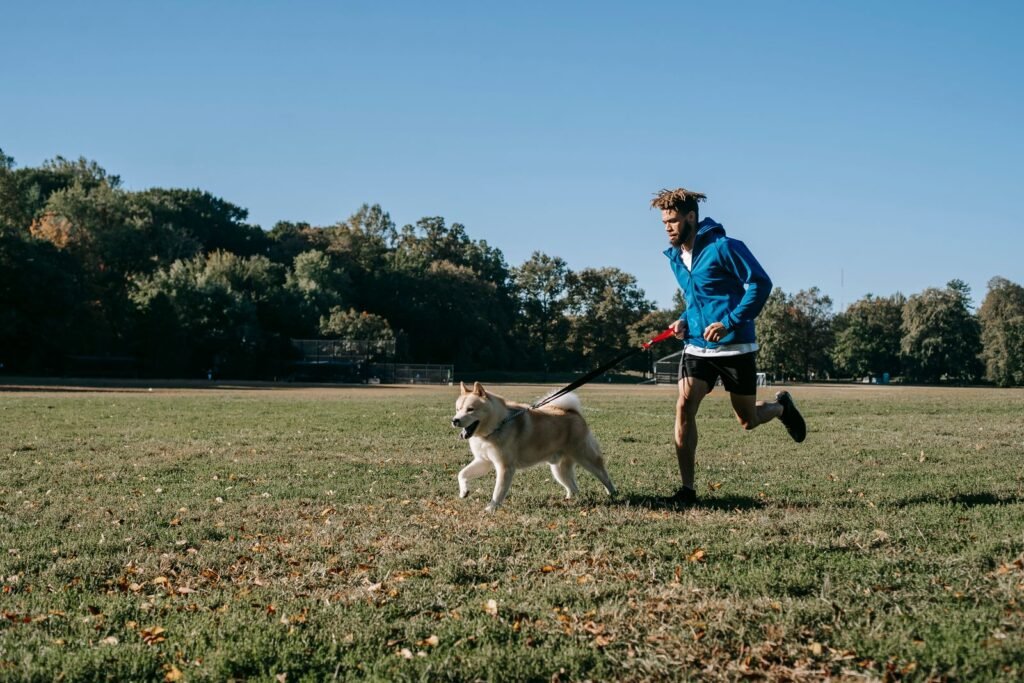
Anyone who runs with a dog knows the data never looks quite right. There is the sprint after a squirrel, the full stop at every interesting fence post, and the slow trot home when somebody decides they are done. Your watch dutifully logs all of it as a “run,” and your training load, pace trends and race predictions quietly absorb the chaos.
Garmin has finally decided to acknowledge the four-legged elephant in the room. New software rolling out right now adds dog profiles to a long list of Garmin watches, along with dog badges, activities tagged with your dog and separate activity data for the time you spend exercising together. It is a small feature on paper. For the millions of people whose daily workout has a tail, it is a surprisingly thoughtful one.
Quick take
Garmin’s system software 24.20 (Fenix 8 family, Fenix E, Enduro 3, Tactix 8, Quatix 8) and software 19.23 (Forerunner 970, 570 and 170, Venu 4, Venu X1, Vivoactive 6) add dog profiles, dog badges and an “include dog” option for activities. Parts of the Instinct range get the feature too. You set it up under Settings > Privacy and Profile > Dog. The same updates also bring better swim stroke detection, snoozable move alerts, beginner cycling plans in Garmin Coach and a cleaner map for walks. The rollout is gradual, so it may take a few days to reach your watch.
What Garmin’s Dog Profiles Actually Do
The official changelog is short and to the point: “Adds dog profiles, badges, activities, and activity data.” In practice that breaks down into three pieces.
First, you create a profile for your dog on the watch. Owners who already have the update say there is a long list of breeds to choose from, although a few popular ones, such as Pomeranians and American pit bull terriers, were reportedly missing from the list at launch. Expect that to get patched.
Second, you can attach your dog to any activity. Once a profile exists, editing a saved activity shows a new “include dog” option. Pick your dog, save, and that walk or run is now flagged as a shared session. That flag is the clever bit. It gives Garmin context for why your pace graph looks like a seismograph, and it lets you keep canine outings apart from the structured training you actually want your metrics to judge.
Third, there are dog badges. Garmin Connect’s badge system is famously habit-forming, and it now has an entire category built around you and your pup, including distance milestones like a shared 10K. If you have ever taken an extra lap of the block purely to unlock a badge, you already know how effective this will be.
Which Garmin Watches Get the Update
Garmin is shipping the feature through two separate software branches. Here is how the lineup splits, based on Garmin’s own forum changelogs.
| Software version | Watches | Rollout status |
|---|---|---|
| 24.20 | Fenix 8, Fenix 8 Pro, Fenix 8 Pro MicroLED, Fenix E, Enduro 3, Tactix 8, Quatix 8 | Rolling out now |
| 19.23 | Forerunner 970, Forerunner 570, Forerunner 170, Venu 4, Venu X1, Vivoactive 6 | Staged rollout (Venu 4 started at 50%) |
| Latest Instinct build | Selected Instinct models | Arriving in parallel |
| Not listed | Older Forerunner 265/965, Venu 3, Vivoactive 5 and earlier | No word from Garmin yet |
The pattern is familiar. Garmin’s newest features tend to land on its current platform first, and older watches either get them months later or not at all. If you are on a Venu 4, you are in the first wave. Our Garmin Venu 4 review already called it one of the best all-rounders for people who want fitness depth without a hardcore sports watch, and this update adds to that case. If you do not see the update yet, go to Menu > Settings > System > Software Update to check manually, or simply sync with Garmin Connect and wait.
Worth knowing
Dog profiles live on your wrist, not on your dog. Your watch is still measuring you: your heart rate, your pace, your steps. Garmin is not estimating your dog’s calorie burn or distance. If you want data from the dog’s side, you still need a collar tracker, which Garmin also sells for hunting and sporting dogs through its Alpha and T 20 lines.
Why Tagging Dog Workouts Matters for Your Training Data
This is where the feature goes from cute to genuinely useful. Garmin’s coaching tools lean hard on the assumption that a run is a run. Training Readiness, training load, Race Predictor and Garmin’s daily suggested workouts all treat your logged pace and heart rate as a clean signal about your fitness.
A run with a dog is not a clean signal. Heart rate can spike while pace drops, splits get wrecked by stops, and a planned easy jog might include three short bursts of sprinting. Over weeks, those sessions can make you look less fit than you are or push your load numbers somewhere strange. Tagging them gives you, and potentially Garmin’s algorithms, a way to tell the difference.
To be clear, Garmin has not said that dog-tagged activities are excluded from training load or race predictions. Right now the release notes only promise profiles, badges and activity data. But once the tag exists, filtering those sessions out of your analysis, or letting coaching features read them differently, is an obvious next step. Garmin has spent years adding hyper-specific metrics, from Hill Score to jet lag advice. A dog-aware training model would fit right in.
The Science Says Your Dog Is a Great Workout Partner
There is a good reason Garmin is leaning into this. Dog ownership is one of the most reliable real-world motivators for daily movement researchers have found, and roughly 68 million US households have at least one dog, according to the American Pet Products Association.
A 2017 study in BMC Public Health fitted 43 dog owners and 43 matched non-owners with activity monitors for three one-week periods. Dog owners walked about 22 minutes more per day and took around 2,760 extra steps daily, enough on its own to meet typical activity guidelines. A 2019 meta-analysis in Circulation: Cardiovascular Quality and Outcomes, pooling data from more than 3 million people across 10 studies, linked dog ownership with a 24% lower risk of death from any cause.
Both studies are observational, so they cannot prove the dog is doing the heavy lifting. Active people may just be more likely to get dogs. Still, anyone who has been dragged out the door at 6 a.m. by a determined Labrador knows the effect is real. Giving that habit its own space in Garmin Connect, complete with rewards, is a smart way to reinforce it.
The Rest of the Update: Swim, Cycling and Smarter Move Alerts
The dog features grabbed the headlines, but these releases are fairly meaty for everyone, dog or no dog. Here is what else is in the changelogs.
- Better swim tracking (19.23): improved accuracy for swim length and swim stroke type detection, a long-standing complaint from pool swimmers.
- Auto Lap announcements: Auto Lap prompts now call out the lap number during workouts, so you know where you are without looking.
- Garmin Coach for cyclists: new adaptive plans for beginner and recreational riders, not just racers.
- Cleaner walk maps (24.20): a simpler, more helpful map view during walk activities, handy for exactly the kind of outings you might be doing with a dog.
- Smarter move alerts: you can now snooze the inactivity Move Bar manually, and the watch suppresses it automatically in certain conditions.
- Notification fix for intervals: notifications that arrive during high-intensity intervals are now delayed so they do not interrupt you mid-effort.
- Bug fixes: a reset that could happen after passing a half-marathon timing gate, tones playing during Do Not Disturb or sleep mode, and on 24.20 a golf freeze and an Expedition mode Bluetooth bug.
The move alert change is a nice contrast with what is happening elsewhere. While Garmin is refining its nudges to be less annoying, Google’s newest tracker shipped without them entirely, as we covered when Fitbit Edge owners noticed the missing reminders to move. Garmin’s approach of keeping the alert but giving you more control is the better one.
Tip for dog runners
Until Garmin says otherwise, consider recording dog outings as a Walk or a separate custom activity rather than your main Run profile, then tag your dog afterward. That keeps your running pace history cleaner while still counting the steps, minutes and new badges.
How This Compares to Apple, Samsung and Google
As far as mainstream smartwatches go, Garmin is out on its own here. Apple Watch, Galaxy Watch and Pixel Watch have no built-in concept of a pet in your workout history. Dog owners on those platforms rely on dedicated pet trackers like Fi or Tractive, which track the dog but do not touch your own fitness data. Garmin is the first big wearable brand to connect the two sides inside its own app, and it fits a company that has always been happy to track oddly specific things.
If you are shopping for a Garmin and wondering whether the older generation still makes sense, keep in mind that watches like the Vivoactive 5 are not on the list for this update. Our Garmin Instinct 3 review is a good starting point if you want something rugged enough to survive muddy trail walks with a dog and still get Garmin’s newer features.
The Bottom Line
Dog profiles will not change how most people use a Garmin, and they are not meant to. But for the huge number of owners whose daily movement is built around a dog, this is a thoughtful addition. It makes shared walks and runs visible, rewards them with badges, and lays the groundwork for training metrics that stop punishing you for having a sniffing, sprinting, squirrel-chasing workout partner.
Add in better swim detection, snoozable move alerts, new cycling plans and a pile of bug fixes, and 24.20 and 19.23 are worth installing even if the only animal in your house is a goldfish. Check for the update today, and if your watch is on the list, it is time to give your dog the profile it has clearly earned.
About this article: GeekBlog covers U.S. technology news, AI, phones, smartwatches and gaming. Every story is written and checked under our Editorial Policy. Spotted a mistake or have a story tip? Contact our editors.
