

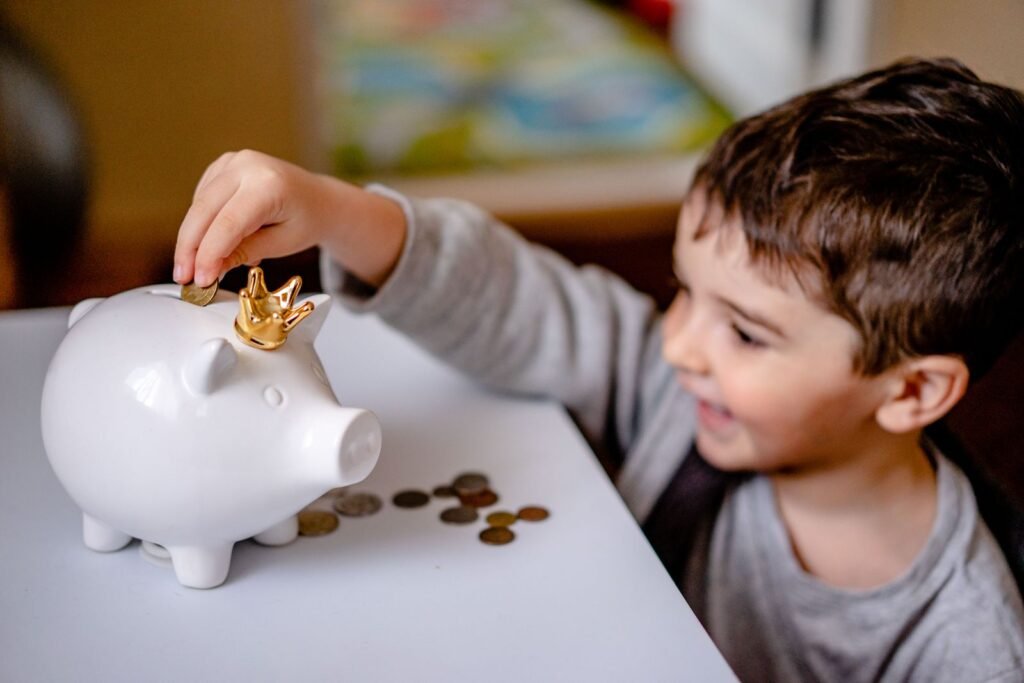
Some parents opened the Trump Accounts app this week and found money they never asked for. Not the $1,000 the federal government promised for newborns, but $250, sitting in an account for an older child, already invested in the stock market. The name on the deposit is Dell.
Michael and Susan Dell pledged $6.25 billion last December to seed the accounts of 25 million American children. That promise has now turned into actual deposits. “As of today, over 10 million of those children have $250 invested in their accounts. Millions more will by the end of the week,” the couple wrote on their OneDell site after visiting the White House on October 7. The nonprofit running the program, Invest America, said all deposits would be finished by the end of Friday, October 9.
So the practical question for a lot of families is simple. Did my kid get it? The answer depends on a birth year and a ZIP code, and nothing else.
The short version
- Who gets $250: children born from 2016 through 2024 who live in a ZIP code with a median family income of about $117,300 or less
- Also eligible: all eligible children living on military bases, regardless of ZIP code
- Do you need to apply? No. The deposit is automatic
- Where to see it: TrumpAccounts.gov or the official Trump Accounts app, once you claim your child’s account
- Not covered: kids born in 2025 or later, who get the separate $1,000 federal seed instead
How the ZIP code check works
The single most surprising detail is that your income does not matter. Eligibility is decided by where you live, not what you earn. A family making $300,000 in a modest ZIP code can qualify, and a family scraping by in an expensive one may not.
The cutoff is the median family income of the ZIP code. When the pledge was first announced, coverage put the line at $150,000. The Dells’ own site now says it is “approximately $117,300 or less” as of October 9, 2026, and says the threshold changed. The likely reason is arithmetic: $6.25 billion divided by $250 is exactly 25 million children, and with automatic enrollment pulling tens of millions of kids into the system, the money had to be pointed at a smaller slice of the country. The OneDell site also notes that some children in ZIP codes above $117,300 still got the deposit because their families signed up before auto-enrollment began.
Invest America has a lookup page where you enter your details and your ZIP code and it tells you whether your child qualifies. It takes a couple of minutes.
The money is there even if you never signed up
This is where a lot of parents are getting confused. On October 1, the Treasury automatically created accounts for roughly 60 million children, bringing the total to about 70 million. But an account existing is not the same as an account being yours. A parent or guardian has to claim it before they can see the balance, add money, or let grandparents contribute.
Very few people have done that yet. Bloomberg Government reported that only about 164,000 accounts were claimed in the first week of auto-enrollment, which is well under 1% of the accounts created. That means millions of kids now have $250 invested in their name that no adult has looked at.
To claim, go to TrumpAccounts.gov or download the official Trump Accounts app from the App Store or Google Play. Business Insider reports that parents also need to file IRS Form 4547, the election form tied to the accounts. By default, the Dell deposit sits in an S&P 500 index fund, and you can change that after you claim the account.
One warning worth repeating: a program where strangers deposit free money into children’s accounts is a gift to scammers. Nobody legitimate will text you a link asking for your Social Security number to “release” a Dell deposit. Use the official site or app, type the address yourself, and if you want a refresher, our online safety basics for beginners covers the phishing tricks that will almost certainly be wrapped around this.
Three programs, three different kids
It helps to think of Trump Accounts as one container with several different people putting money in it, each with their own rules.
| Money | Who funds it | Which kids | Amount |
|---|---|---|---|
| Federal seed | US government | Born Jan 1, 2025 through Dec 31, 2028 | $1,000 one time |
| Dell gift | Michael and Susan Dell | Born 2016 through 2024, qualifying ZIP or military base | $250 one time |
| Shotwell gift | SpaceX president Gwynne Shotwell | Ages 11 to 17 in lower income areas | SpaceX stock |
| Family money | Parents, relatives | Any account holder | Up to $5,000 a year |
| Employer money | A parent’s employer | Employee’s children | Up to $2,500 a year, tax free to the employee |
The program itself was signed into law on July 4, 2025, as part of the administration’s tax and spending bill, and the accounts launched a year later. The money is locked until the child turns 18.
What $250 actually becomes
On its own, $250 is not life changing, and the Dells do not pretend it is. Their pitch is about getting kids to watch an investment grow. Time is the variable that matters, which means the youngest eligible children benefit the most from the same gift.
Why everyone was talking about Susan Dell instead
The deposits should have been the story. Instead, the clip from the Oval Office that went viral was about Susan Dell herself. She urged parents and grandparents to claim their kids’ accounts, said “the greatest investment that we could possibly make is in children,” and President Trump joked that she would have his “complete and total endorsement” if she ever ran for office.
Social media fixated on her face and her mannerisms. Users posted before and after photos, speculated about cosmetic procedures, compared her to the Evil Queen from Snow White and to the alien from Mars Attacks!, and declared her proof that we live in a simulation. None of the cosmetic surgery claims have been verified. Fake screenshots followed, including one that showed her begging Meta to remove the posts and another where she supposedly asked New York Comic Con to ban people cosplaying as her. Fact checkers debunked both.
Michael Dell has not addressed the mockery directly, but he made his position clear in the most online way possible. He reshared a post from an X user who wrote that it was “truly insane how evil and full of themselves people are,” and that $250 had shown up “out of the blue” for both of his sons even though the family lives in a wealthy area. Dell’s reply was three emoji: 🙏🫡🇺🇸. Eric Trump also defended her on X, calling the attacks “vicious” and adding, “I’m tired of this nonsense. Very few people have done more for philanthropy. It’s disgusting and it has to stop.”
The fight that matters more: company stock in kids’ accounts
The meme cycle drowned out a more substantive argument. Under a new Treasury rule, donors can now put individual company stock directly into Trump Accounts. The accounts were originally designed around low-cost index funds, and critics say letting billionaires hand out shares of their own companies is a departure from that idea. One analyst quoted by Raw Story accused the administration of “helping rich donors offload overvalued stocks onto children.” Treasury’s position is that the law never prohibited it.
The test case is SpaceX president Gwynne Shotwell, who pledged SpaceX stock worth about $325 million, according to Yahoo Finance, to children aged 11 to 17 in lower income areas. That covers kids who are too old for most of the other money flowing into the program. If you have been following SpaceX’s push into everything from rockets to becoming your next wireless carrier, the appeal of a share in the company is obvious, and so is the concentration risk.
Michael Dell defended the rule in an interview with Yahoo Finance. “It’s kind of hard for me to believe that’s a bad thing, right? That these children are going to somehow be negatively influenced because they now have one share of SpaceX, but they didn’t have before, right? The alternative is they didn’t have it,” he said. “If anything, they’re going to be interested in space and capitalism and how capital markets work, compounding and investing.”
Both sides have a point. A share of a single company is riskier than a slice of the S&P 500, and children cannot sell it for years. But it is also a free asset that did not exist in the account before. The real issue is transparency: parents should be able to see exactly what is in their child’s account and move it if they want to, which brings everything back to the same step.
What to do this week
- Check your ZIP code on Invest America’s Dell eligibility page.
- Claim your child’s account at TrumpAccounts.gov or in the official app, even if you do not plan to add money.
- Look at how the money is invested and decide whether the default index fund suits you.
- Ignore any text, email or social post offering to “unlock” the deposit for a fee.
The Dells have now spent $6.25 billion to put a small investment in front of 25 million kids. Whether those kids ever learn about it depends entirely on whether an adult bothers to log in.
Sources and further reading
- UNILAD Tech: How to check your ZIP code to see if $250 is already in your child’s new Trump Account
- UNILAD Tech: Michael Dell defends wife Susan following backlash
- OneDell: 25 million children to receive $250 in Trump Accounts
- Yahoo Finance: How to find out if your child qualifies for the Dells’ $250 deposit
- Newsweek: Trump Account stock gifts explained as Michael Dell defends rule
- Bloomberg Government: Trump Accounts claimed by under 1% of 60 million auto-enrolled
- CNN: Michael and Susan Dell donate $6.25 billion to fund Trump Accounts
About this article: GeekBlog covers U.S. technology news, AI, phones, smartwatches and gaming. Every story is written and checked under our Editorial Policy. Spotted a mistake or have a story tip? Contact our editors.
