

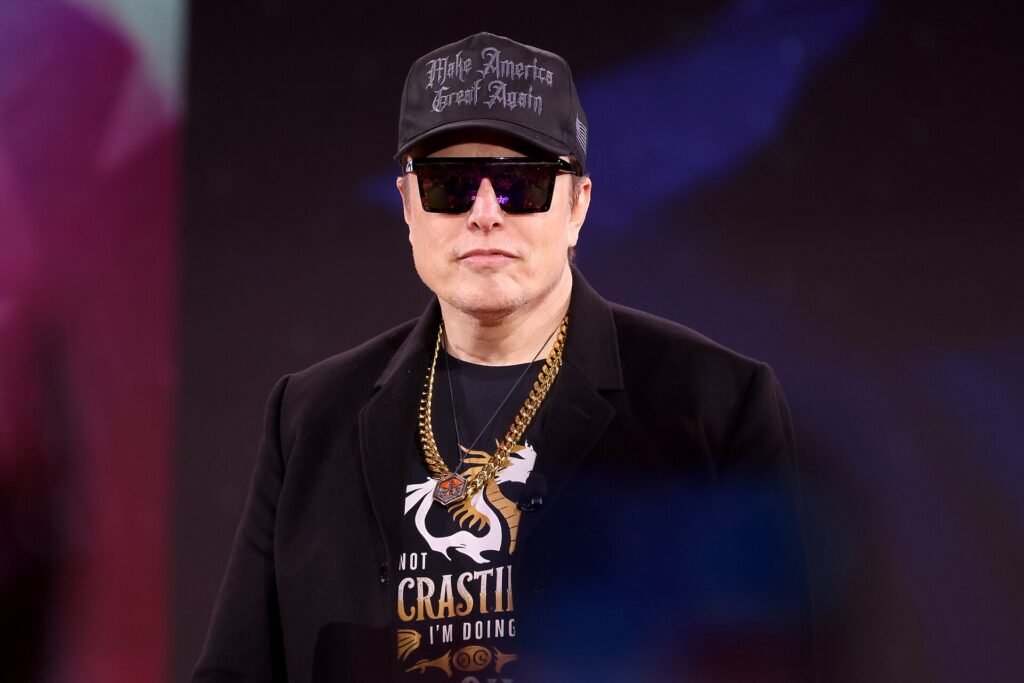
Americans vote in the 2026 midterms on Tuesday, November 3, and one of the people with the most riding on the result isn’t on any ballot. Elon Musk has given more money to this election than any other individual donor, almost all of it to Republican-aligned groups. So what happens to him if his side loses?
UNILAD Tech put that question to ChatGPT. The chatbot’s answer came in three parts: investigations into his time running DOGE, scrutiny of the government contracts his companies depend on, and a loss of political influence. It’s a tidy answer. We wanted to see how well it holds up against how Congress actually works, and against the numbers behind Musk’s midterm push.
The short version
- Musk is the largest individual donor of the 2026 cycle, with $446 million according to Federal Election Commission data compiled by Al Jazeera.
- ChatGPT predicted three risks: DOGE investigations, contract scrutiny for SpaceX and Tesla, and reduced political influence.
- The first one is the most realistic. A chamber majority means committee chairs and subpoena power.
- The second is harder. Congress can’t simply cancel contracts, and NASA and the Pentagon rely heavily on SpaceX.
- The third depends on more than Congress. Musk still owns X and has plenty of money for 2028.
How much Musk has spent
The figures have climbed quickly this fall, partly because different outlets count different things. On October 12, CNBC reported $276 million to Republican groups since July, including $158 million to the Senate Leadership Fund and $89 million to his own America PAC. Ten days later, CNBC put his commitments at about $366 million across at least 40 races. By October 27, Al Jazeera’s tracker, built on FEC data, listed him at $446 million for the cycle.
That’s a lot of money even by the standards of this election, which is on track to be the most expensive midterm ever. Ad tracking firm AdImpact estimates more than $11 billion in political ad spending this cycle. The 50 biggest donors alone have put in $2.77 billion, and about 60% of that came from Republican-aligned contributors, Al Jazeera found.
Much of Musk’s money has gone into a few key Senate races, especially Texas, where the Senate Leadership Fund funneled $158 million into a super PAC backing Republican Ken Paxton. The three priciest Senate contests look like this, according to Al Jazeera.
| Senate race | Total spent | Candidates | Late polling |
|---|---|---|---|
| Texas | More than $534M | Talarico (D) vs. Paxton (R) | CNN: Talarico 49%, Paxton 43% |
| Ohio | More than $435M | Brown (D) vs. Husted (R) | Marist: Brown up 4; others tied |
| Michigan | About $333M | El-Sayed (D) vs. Rogers (R) | MSU: El-Sayed 48%, Rogers 45.5% |
In Texas, Paxton has had nearly $300 million in outside spending behind him, compared with about $80 million for Democrat James Talarico, yet Talarico has raised $146 million for his own campaign to Paxton’s roughly $22 million. Money buys a lot of ads. It doesn’t guarantee votes.
Musk’s own warning
Musk has been loud about the stakes on X, where he has pinned a post warning about a Democratic “clean sweep.” In it, he claims Democrats would “make DC and Puerto Rico states to gain a strong majority in the Senate. Open the borders and legalize everyone living in America illegally to cement a permanent majority. Increase the size of the Supreme Court to gain an immediate majority.” The result, he wrote, would be “a permanent one-party state and the end of democracy in any meaningful sense of the word.”
As UNILAD notes, Democratic leaders haven’t announced any such plan. It’s also worth remembering where Musk was a year and a half ago. He fell out publicly with Trump in mid-2025 after leaving DOGE, and briefly talked up launching his own party. He has since patched things up and gone all in for Republicans this fall.
Checking ChatGPT’s three predictions
Chatbots are good at summarizing the conventional wisdom, and that’s roughly what ChatGPT did here. The question is how much each risk depends on the midterm result alone.
| ChatGPT’s prediction | What a Democratic majority could do | How likely |
|---|---|---|
| DOGE investigations | Run oversight committees, issue subpoenas, call Musk and former DOGE staff to testify, demand records | High, if Democrats win the House |
| Contract scrutiny | Hold hearings, request inspector general reviews, shape appropriations bills. Contract awards stay with the agencies | Medium: lots of noise, limited direct power |
| Lost political influence | Block or slow legislation he wants. Senate control also affects confirmations | Medium: he keeps X and his money |
1. Investigations: the real risk
This is where ChatGPT is on the firmest ground. Whichever party wins a majority in the House or Senate gets the committee gavels, and with them the power to set hearings and issue subpoenas. Democrats have spent two years asking questions about what DOGE accessed inside federal agencies, how it handled sensitive data, and whether Musk’s companies benefited. With a majority, they wouldn’t need to ask nicely. They could demand documents and testimony. Musk could fight subpoenas in court, as many witnesses do, but that takes time and generates headlines.
2. Contracts: harder than it sounds
Musk’s companies do depend on Washington. A Washington Post analysis in early 2025 found his businesses had received at least $38 billion in government contracts, loans, subsidies and tax credits over about two decades. SpaceX is the biggest piece. It flies NASA astronauts and cargo to the International Space Station, launches national security satellites and is building Starship for NASA’s Moon program.
But Congress doesn’t sign those contracts. Agencies like NASA and the Space Force do, and they report to the president, who stays in office until January 2029. Congress can hold hearings, ask inspectors general to review awards and write rules into spending bills. That’s real pressure. Pulling work from SpaceX is another story, because for some missions there’s no ready alternative. We’ve seen how much leverage that gives Musk in other areas too, like when Ukraine’s drones lost Starlink overnight.
3. Influence: down, not out
A Democratic Congress would certainly make it harder for Musk to get policies he wants through. But his influence was never only about Congress. He owns X, one of the main places political news breaks. He remains close to the White House again. And with the kind of wealth he has, he can come back in 2028 with even more money. A loss on Tuesday would be a setback, not an exit.
Tue Nov 3 … Election Day. All 435 House seats, about a third of the Senate
Watch …… Texas, Ohio and Michigan Senate races
Majority … 218 seats controls the House, 51 the Senate
(the vice president breaks 50-50 ties)
Jan 3 …… New Congress sworn in. Committee chairs change hands
Then ……. First oversight hearings and subpoenas can begin
Why you shouldn’t treat chatbot predictions as forecasts
One more thing about the source of these predictions. ChatGPT didn’t model anything here. It doesn’t know the polls you’re reading, can’t weigh insider information, and tends to repeat the most common arguments it has seen. That makes it a decent way to brainstorm “what could happen” and a poor way to judge “what will happen.” UNILAD has used the same approach before, asking AI what happens if Republicans lose the House and Senate. These pieces are fun thought experiments, and that’s how to read them.
Musk’s business and political lives keep overlapping. Catch up on why a Tesla and SpaceX merger would need half of Tesla’s shareholders to agree, and the clause in his pay package that could be worth $824 billion.
Sources and further reading
- UNILAD Tech: AI predicts what happens to Elon Musk if Republicans lose the midterms
- Al Jazeera: Tracking the money, the biggest donors in the 2026 US midterm elections
- Al Jazeera: Where are the most expensive midterm races and who is funding them?
- CNBC: Elon Musk gives $276 million to Republican groups
- CNBC: Elon Musk’s 2026 election spending and SpaceX, Tesla business interests
- Elon Musk on X: pinned post on a Democratic “clean sweep”
- Federal Election Commission: Campaign finance data
About this article: GeekBlog covers U.S. technology news, AI, phones, smartwatches and gaming. Every story is written and checked under our Editorial Policy. Spotted a mistake or have a story tip? Contact our editors.
