

John Ternus has been Apple’s CEO for two months, and his first earnings call was mostly about one word. “What we’re seeing with memory pricing right now is unprecedented,” he told investors on November 2. He said it twice.
That’s a warning shoppers should take seriously. Apple has already raised prices on Macs, iPads and iPhones this year because of the same problem, and UNILAD Tech and others are now asking whether another round is coming in 2027. Apple hasn’t announced anything. But its own numbers show how much pressure it’s under, and how long it expects that pressure to last.
The short version
- Apple had a record September quarter: $114.5 billion in revenue, up 12%, driven by the iPhone.
- Ternus said memory costs will be higher this quarter than last, and will keep rising after that.
- Apple expects its gross margin to fall to 45 to 46% this holiday quarter, “primarily” because of memory.
- Apple already raised prices on Macs and iPads in June and on the iPhone 17 in September.
- No 2027 price increase has been announced, but Apple hasn’t ruled one out.
What Apple actually said
The quarter itself was strong. iPhone revenue rose 17% to $57.6 billion, services hit a record $31.6 billion, and earnings per share came in at $2.10, ahead of Wall Street’s estimates. iPad and wearables were the weak spots, both down from a year ago.
The trouble was the outlook. According to AppleInsider, Ternus said memory cost Apple more in the September quarter than in June, will cost more again in December, and that the prices Apple pays will keep climbing after that. Chief financial officer Kevan Parekh then guided gross margin down to between 45% and 46%, below the 46.3% analysts expected. “This includes primarily the impact of higher memory costs, as well as some costs related to the ramp of Siri AI,” he said.
Apple also said Mac and iPad supply will be tight this quarter, “primarily driven by memory.” The stock fell about 3 to 4% after the call.
| Apple, fiscal Q4 2026 | Result | vs. a year ago |
|---|---|---|
| Total revenue | $114.5B | +12% |
| iPhone | $57.6B | +17% |
| Services | $31.6B | +10% |
| Wearables, Home and Accessories | $8.3B | about 8% down |
| iPad | $6.2B | about 10% down |
| Gross margin | 47.9% | Guide for Dec quarter: 45 to 46% |
One more number stood out. Apple’s annual report shows component inventory jumping to $10.4 billion from $2.1 billion a year earlier, as The Motley Fool pointed out. Apple appears to be buying parts early, which is what a company does when it thinks prices will be higher later.
Why memory got so expensive
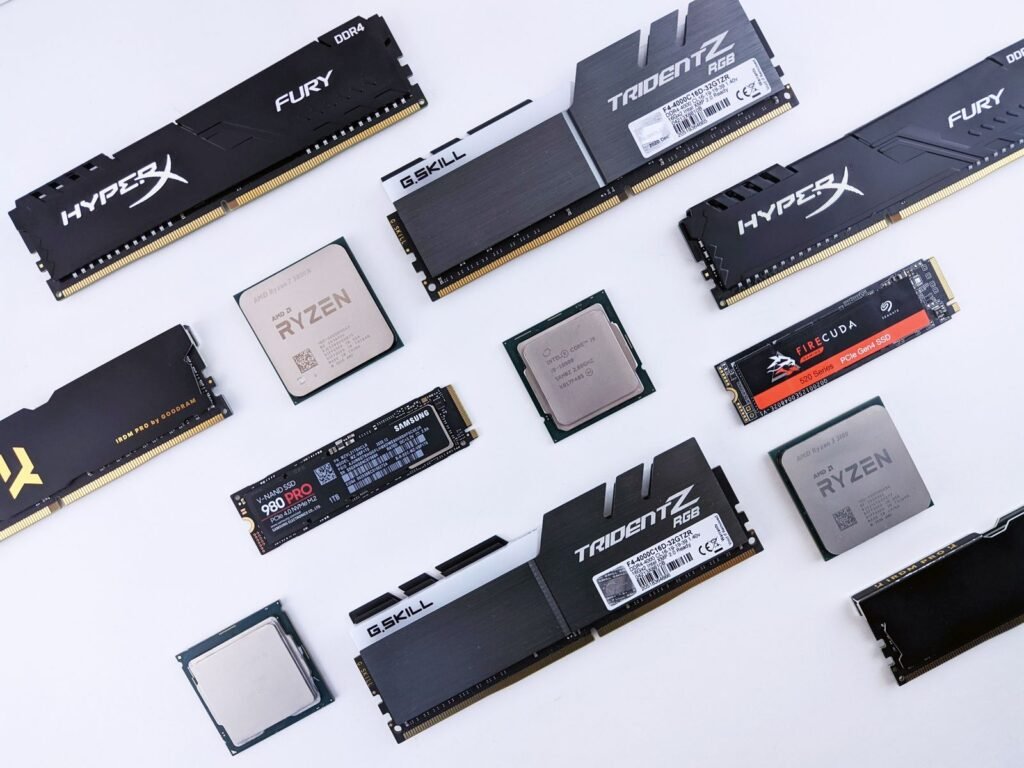
The short answer is AI. Data centers need enormous amounts of high-bandwidth memory, or HBM, for AI chips, and memory makers like Samsung, SK Hynix and Micron have shifted production toward it because it pays far better. That leaves less capacity for the regular DRAM and flash storage that go into phones and laptops. Cloud companies have also locked up supply with long-term contracts.
The result has been the steepest run of price increases the memory market has seen. Here’s how contract prices for conventional DRAM moved each quarter this year, according to research firm TrendForce.
The increases are slowing, which sounds like good news. But they’re still increases, stacked on top of each other. Memory that cost $10 at the end of 2025 would cost roughly $40 by the end of 2026 if you compound the midpoints. That’s why Ternus can say costs are still rising even as the percentage gains get smaller. We explained how the RAM crunch started and what comes next earlier this year.
What Apple has already raised this year
Apple held off longer than most. On July 30, Tim Cook, in his last call as CEO, said Apple had “reluctantly raised prices” and described the market as a “100-year flood on memory pricing.” Here’s what changed.
| Product | Before | After | When |
|---|---|---|---|
| iPad (base) | $349 | $449 | June 25 |
| MacBook Neo | $599 | $699 | June 25 |
| iPad Air 128GB | $599 | $749 | June 25 |
| MacBook Air 512GB | $1,099 | $1,299 | June 25 |
| iPhone 17 | $799 | $899 | September 9 |
| iPhone 18 Pro | $1,099 (17 Pro) | $1,199 | September launch |
MacBook Pro, iMac and Mac Studio models went up by $100 to $300 in June as well. When Apple announced those increases, it said: “We have shielded our customers from these increases so far, but we have now reached a point where we need to begin raising prices on a number of products.” Pricier phones have also cooled demand. Apple reportedly cut iPhone 18 Pro production orders by 15% in October.
Apple isn’t the only one
Almost every hardware maker has passed memory costs on to buyers this year:
- Sony: PS5 prices went up $100 to $150 in April. The Pro now costs $899.99.
- Nintendo: The Switch 2 rose from $449.99 to $499.99 in September, with memory cited as the reason.
- Microsoft: The Xbox Series X now starts at $799.99.
- PC makers: Lenovo, Dell, HP, Acer and Asus confirmed increases of 15 to 20%, according to IDC.
- Raspberry Pi: The 16GB Pi 5 now costs $205.
Industry analysts don’t expect the shortage to ease before late 2027 at the earliest, since new memory factories take years to build.
What it means for your next Apple purchase
The next test is the base iPhone 18, which Apple pushed to spring 2027 when it split its lineup. We covered why Apple delayed the standard iPhone 18 back in August. According to the leaker Digital Chat Station, it’ll get a bigger battery than the iPhone 17’s 3,692mAh and a 2nm A20 chip. 9to5Mac expects it to cost $899, the same as today’s iPhone 17. Any memory-driven increase would push that higher.
iPhone 17: $899
iPhone 18 Pro: $1,199
iPhone 18 Pro Max: $1,299
iPhone Duo (256GB): $1,999
iPhone 18 (spring 2027): $899 expected
Sources and further reading
- UNILAD Tech: Apple CEO issues worrisome warning that could trigger 2027 price hikes
- Apple: Fiscal Q4 2026 results (SEC filing)
- AppleInsider: Apple’s earnings were all about unprecedented memory costs
- CNBC: Apple raises MacBook and iPad prices as memory costs surge
- TrendForce: Q3 2026 DRAM and NAND contract price forecast
- 9to5Mac: iPhone 18 will have two upgrades inspired by Pro models
About this article: GeekBlog covers U.S. technology news, AI, phones, smartwatches and gaming. Every story is written and checked under our Editorial Policy. Spotted a mistake or have a story tip? Contact our editors.
