

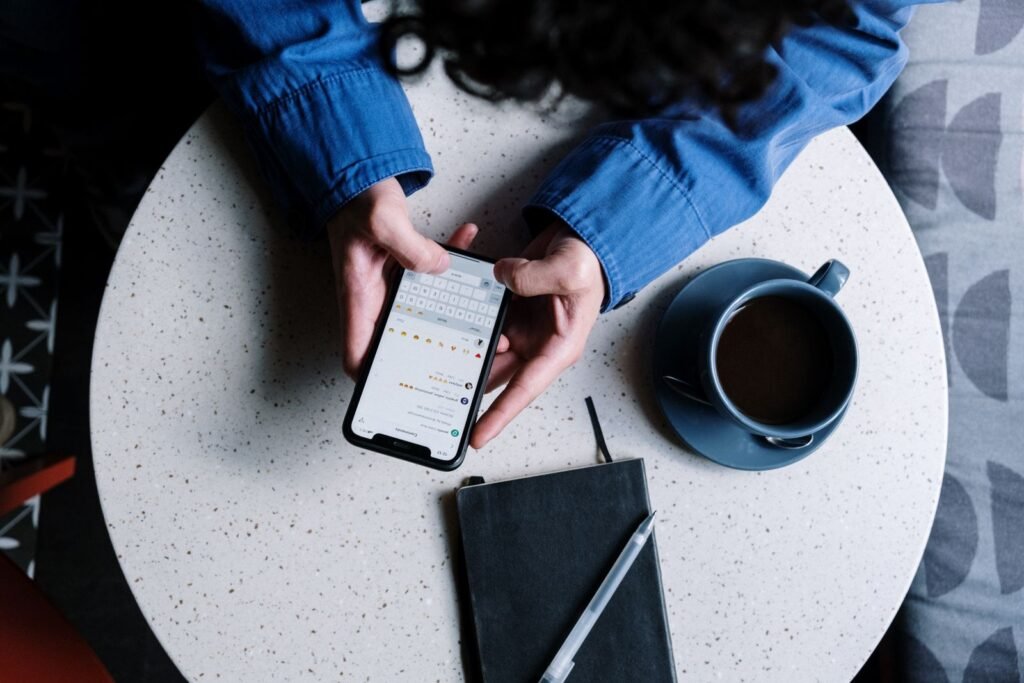
Try to swipe-type “Sleepy Joe” on an iPhone and the keyboard will offer you “Sleepy hope.” Try “Dictator Trump” and the suggestion bar simply goes quiet. Neither phrase is banned. You can still tap them out letter by letter and send them to anyone you like. But the keyboard will not help you get there, and until last week almost nobody outside Apple knew why.
The reason is a file buried inside iOS that researchers are now calling Apple’s gray list: a multilingual collection of words and phrases the iPhone keyboard will not autocomplete and makes hard to swipe. Most of it is what you would expect a big company to filter. Some of it is not, and Apple has not explained the parts that raised eyebrows.
How a swipe-typing glitch turned into a 100,000-entry discovery
Kauffman, who founded Blacklight, a start-up that checks scientific papers for errors, was not hunting for censorship. He noticed his iPhone behaving oddly with swipe typing. It struggled with “bad boy” and “white man” but had no trouble with “bad girl” or “black man.” That kind of asymmetry is hard to explain with a normal language model, so he started digging.
Using AI coding tools to help pull apart the keyboard’s resources, he eventually found the file that drives the behavior. His conservative estimate puts it at around 100,000 words, phrases and variants, and that is before counting Chinese characters. Reuters tested a sample of entries on an iPhone and confirmed they were either missing from suggestions or difficult to enter with a swipe.
The second set of eyes came from Matt Suiche, an engineer at security company Tolmo, who recovered the same list on his own and said it was a near-perfect match against Kauffman’s findings. That matters, because it means this is not one person misreading a dictionary file.
What is actually on the list
The bulk of the gray list is unsurprising. Most entries are slurs, sexual terms, or references to drugs and violence. Every major keyboard maker filters some version of that. The controversy comes from the long tail of political and oddly specific entries, many of which do not look offensive at all.
| Category | Reported examples | Surprising? |
|---|---|---|
| Offensive language | Slurs, sexual terms, references to violence | No, this is the expected bulk |
| Drugs | Many drug use references | Not really |
| US politics | “Sleepy Joe,” “Dictator Trump,” “right wing conspiracy,” “NSA spies” | Yes |
| Global politics | “Tibetan independence,” “United Ireland,” “occupied territories” (Hebrew), “immigration too high” (French) | Yes |
| Identity | “question your sexuality,” “read gay smut” (while “read smut” works) | Inconsistent |
| Just odd | “Santa isn’t real,” “iMessage doesn’t work,” “Australia is a very bad place” | Very |
Sources: Reuters, The Guardian, The Next Web, TechRadar. GeekBlog has not tested the full list.
Some of those entries have a plausible commercial logic. A phone maker selling in dozens of countries has every reason to avoid its keyboard “suggesting” a loaded political slogan to a user in a market where that slogan is sensitive. “iMessage doesn’t work” is harder to read charitably, though it is just as likely a quirk of how such lists get built from automated filters and complaint reports.
The symmetry problem is the bigger issue. Filtering “Dictator Trump” and “Sleepy Joe” side by side looks even-handed. Filtering “bad boy” but not “bad girl” does not. When a list has 100,000 lines and no public criteria, those inconsistencies are exactly what people notice first.
What Apple says, and what it doesn’t
Apple did not comment on individual entries. In its response to Reuters, the company said users can type any word they want and that the keyboard is designed to avoid offering suggestions that might be inappropriate or offensive. It did not explain why political expressions from several countries are on a list that is supposed to be about offensive language.
Kauffman described the result as “a very light-touch form of censorship,” and that phrase is a fair summary of both sides of the argument. Light touch, because nobody is stopped from saying anything. Censorship, because a company is quietly deciding which ideas get a frictionless path through the most used input method on a billion devices.
The Electronic Frontier Foundation’s David Greene told Reuters he could understand the reasoning behind a list like this, but that “this is something users should be really well aware of and have some ability to customize.” He also said, more bluntly, that it “should not be secret.”
This is not the first time the iPhone keyboard has picked sides
If the story feels familiar, that is because it rhymes with earlier ones.
- 2013: Reporters found that iOS would not autocorrect misspellings of certain sensitive words, a sign that Apple was already curating its dictionary well beyond profanity.
- Years of “ducking”: The keyboard’s habit of turning a certain four-letter word into “ducking” became a meme. It even applies to handwriting converted to text in Notes.
- 2025: iPhone dictation briefly showed “racist” when some users said “Trump.” Apple called it a speech recognition bug and pushed a fix.
- September 2026: Kauffman notices the swipe-typing asymmetry and finds the file.
- November 6, 2026: Reuters publishes the gray list story with independent verification from Suiche.
The difference this time is scale and specificity. A 100,000-entry list with country-specific political phrases is a deliberate, maintained system, not a dictionary oversight.
How Apple compares with Android keyboards
Filtering is not unique to Apple. Google’s Gboard also avoids suggesting offensive words. The meaningful difference is control.
| iPhone keyboard | Gboard (Android) | |
|---|---|---|
| Filters offensive suggestions | Yes | Yes |
| User toggle for the filter | No | Yes, “Block offensive words” |
| Filter list published | No | No |
| Can swap in another keyboard | Yes, with limits | Yes |
That toggle is the whole point of the EFF’s criticism. Nobody is asking Apple to suggest slurs by default. The ask is for a switch, plus some public explanation of why “Tibetan independence” sits in the same bucket as hate speech.
What you can do on your iPhone right now
There is no setting that disables the gray list. You can, however, reduce how much it shapes what you write.
Turn off predictions: Settings > General > Keyboard > Predictive Text. Without the suggestion bar, you type exactly what you mean and the list has nothing to hide.
Add your own shortcut: Settings > General > Keyboard > Text Replacement lets you map a short code to a full phrase. Results with gray-listed phrases may vary, so test it.
Try a different keyboard: Settings > General > Keyboard > Keyboards > Add New Keyboard. Third-party keyboards use their own dictionaries and filters, though they come with their own privacy trade-offs.
If you have never explored the keyboard settings, they hide more than most people realize. We covered a few more in our roundup of iPhone tricks most longtime owners still don’t use, including the trackpad gesture that makes fixing typos much faster.
Will Apple change anything?
History suggests Apple will quietly prune the most embarrassing entries rather than publish the list or add a toggle. That is roughly what happened after the dictation bug last year. A point release could easily trim political phrases without a word in the release notes, the same way iOS 27.2 shipped 163 security fixes with little fanfare.
The pressure, though, is different now. The list has been extracted twice, it is circulating among researchers, and every odd entry is a potential headline. A short public explanation of how the list is built, plus a switch in Settings for adults who want unfiltered suggestions, would cost Apple very little. It would also turn a story about secret filtering into one about user choice, which is the kind of story Apple usually likes to tell.
Until then, the practical takeaway is simple. Your iPhone is not stopping you from saying anything. It is just not going to help you say some things, and it decided which ones without asking.
About this article: GeekBlog covers U.S. technology news, AI, phones, smartwatches and gaming. Every story is written and checked under our Editorial Policy. Spotted a mistake or have a story tip? Contact our editors.
