

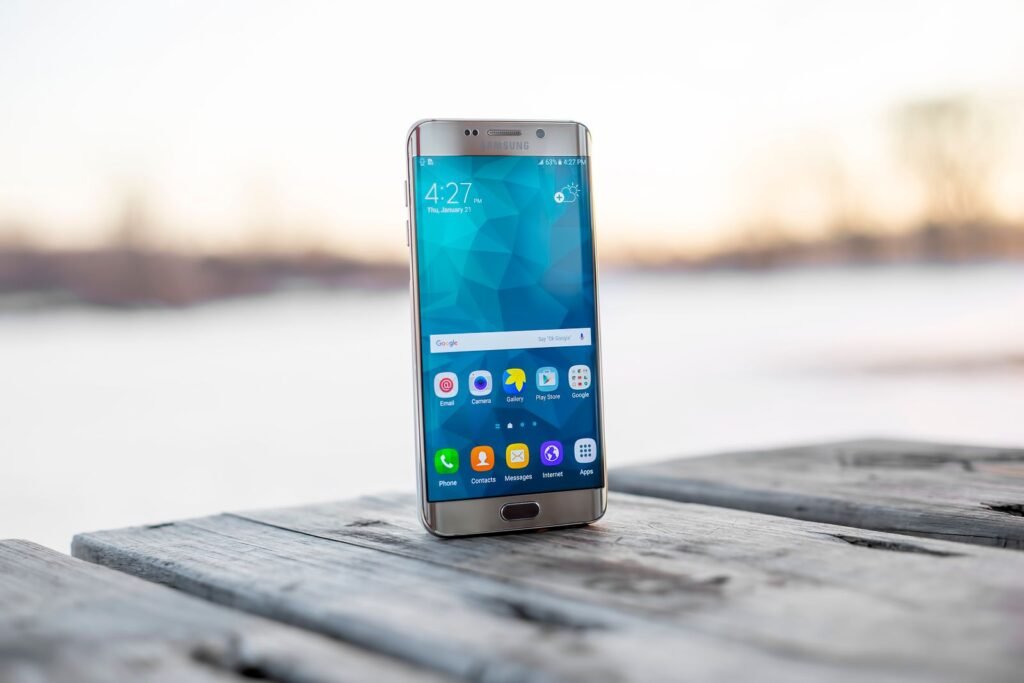
Murena sells a version of the Fairphone 6 Plus with no Google inside it. No Play Services, no Gmail, no Maps, no account login just to download an app. It costs $699.99, which is $50 more than the regular Fairphone with Android 16. On paper, that is a modest premium for getting out of the biggest data machine in consumer tech.
In practice, the sticker price is only the first bill. TechRadar’s Hamish Hector spent a month trying to live with the /e/OS Fairphone as a daily phone and gave up, and the reasons are a useful map for anyone thinking about the same move. Some of the friction comes from /e/OS, some from the hardware, and a surprising amount from the simple fact that Google’s services were free and their replacements mostly are not.
What /e/OS actually removes, and what it adds
/e/OS is built by Murena, the company founded by Gaël Duval, and it is a fork of Android. That last part is the clever bit. Because it is still Android underneath, most Android apps install and run, which removes the biggest historical barrier to ditching Google: having nothing to run on the phone afterward.
Where stock Android leans on Google Play Services for things like push notifications and location, /e/OS uses microG, an open-source stand-in that lets many apps work without talking to Google directly. Apps come from the App Lounge, which pulls from open-source repositories and from the public Play catalog, and you can browse and install without signing in to anything.
The headline feature is the Advanced Privacy widget. It blocks in-app trackers, can hide your IP address, and can fake your location on the fly. It also keeps a running count of how many tracking attempts it stopped over the last 30 days, and a “Wall of Shame” that names the installed apps leaking the most data. TechRadar found that genuinely motivating, and it is the clearest example of /e/OS doing something an ordinary Android phone simply does not.
The hardware: solid, repairable, and not fast
The Gen. 6+ is a refresh of last year’s Fairphone 6, and the changes are all under the hood. We covered the regular model’s arrival in America in the Fairphone Gen 6+ US launch, and the /e/OS version uses the same body.
| Spec | Fairphone 6 (2025) | Fairphone 6+ with Android | Fairphone 6+ with /e/OS |
|---|---|---|---|
| US price | $899 at US launch via Murena, later cut | $649.99 | $699.99 |
| Chip | Snapdragon 7s Gen 3 | Snapdragon 7s Gen 4 | |
| RAM / storage | 8GB / 256GB | 12GB / 256GB, microSD up to 2TB | |
| Display | 6.31-inch LTPO OLED, 10Hz to 120Hz, Gorilla Glass 7i | ||
| Cameras | 50MP main with OIS, 13MP ultrawide, 32MP selfie | ||
| Battery | 4,415mAh, user-replaceable, 30W wired | ||
| Durability | IP55, 12 parts swappable with one T5 Torx screwdriver | ||
| Software | Android 15 or /e/OS | Android 16 with Google services | /e/OS (Android 16 base), no Google services |
Sources: Fairphone, Murena, It’s FOSS, The Next Web, TechRadar.
The repair story is still the best in the business. A replacement screen is around $90 and a SIM tray about $8, and you do not need heat guns or a repair shop. The weak link is speed. The Snapdragon 7s Gen 4 is a midrange chip, and TechRadar’s review of the Android model noted it “starts sluggishly” before settling down. Coming from a flagship, that first-second hesitation is noticeable every single day.
Where de-Googling actually breaks
None of the friction points below is a dealbreaker on its own. Together, they explain why a motivated, tech-savvy reviewer went back to a Galaxy after a month.
- Navigation: Google Maps alternatives exist, but most lack Google’s coverage and, critically, its public transit data. If you live in a city and ride trains, this is the one you will feel first.
- The App Lounge: It works, but users regularly describe it as clunky, and finding the right build of an app is slower than on the Play Store.
- Home screen control: /e/OS fills pages automatically, iPhone style. You cannot leave gaps or place icons freely, which feels like a strange omission for an Android-based system.
- Banking and payments: Some banking apps check Google’s Play Integrity system and refuse to run on phones that cannot pass it. Murena is part of a consortium with Volla, Iodé and Apostrophy working on an open alternative, but it is not something you can rely on today.
- Messaging: At least one reviewer reported RCS chat not working on /e/OS, so group chats with Android friends may fall back to plain SMS.
The hidden cost: replacing “free”
This is the part most de-Googling guides skip. Gmail, Google Drive, Photos, Calendar and the password manager cost Android users nothing up front. Their privacy-friendly replacements usually have a free tier that is too small to live on.
TechRadar used Proton for mail and calendar. Proton’s free plan works, but matching what Google gives you means paying $12.99 a month, or the equivalent of $9.99 a month if you pay annually. Murena also sells its own Workspace cloud, and launch buyers between August 18 and September 1 got a year of the 1TB plan included, but that offer has ended.
That is not an argument against de-Googling. It is an argument for being honest about it. Google’s services are paid for with your data, and once you stop paying that way, you pay another way. For a lot of people, around $10 a month for a mailbox and calendar that nobody mines is a fair deal. It just is not the “same costs as before” story some marketing implies.
Why more people are trying this in 2026
De-Googling used to be a niche hobby for privacy enthusiasts. Two things have pushed it toward the mainstream. The first is plain fatigue with how much of daily life runs through one company’s account. The second, especially in Europe, is a push to de-Americanize: after US sanctions on International Criminal Court officials in 2025 left some of them cut off from American online services, the idea that a foreign government could switch off your email stopped sounding paranoid.
A Dutch phone running French software fits that mood neatly, which is a large part of Fairphone and Murena’s pitch. If you want to see how far the alternatives have come on the desktop and the web, our guide to the best alternatives to Google covers search, mail and maps.
The three realistic paths away from Google
| Fairphone 6+ with /e/OS | GrapheneOS on a Pixel | iPhone | |
|---|---|---|---|
| Setup effort | None, preinstalled | Web installer, about 15 minutes | None |
| Google involvement | None by default | Hardware only; Play optional and sandboxed | Optional apps, Google is default search |
| Security hardening | Good | Best available on Android | Strong |
| App compatibility | Most apps, some banking gaps | Very high with sandboxed Play | Full |
| Repairability | Best in class | Average | Improving, still pricey |
| Best for | People who want ethics and privacy out of the box | Privacy purists comfortable with tinkering | “Less tracking” without changing habits |
TechRadar’s conclusion, and ours, is that the /e/OS Fairphone is squeezed between these two neighbors. People willing to accept some friction tend to accept a lot of it, and they often go straight to GrapheneOS, which has stronger security and runs on faster Pixel hardware. That is also about to get more interesting, because GrapheneOS is no longer Pixel only: a Motorola phone became the first non-Pixel GrapheneOS device. People who want minimal friction usually just buy an iPhone, which is not de-Googling in the purist sense but does cut a lot of tracking without any learning curve.
Who should buy the /e/OS Fairphone 6 Plus
The most encouraging part of TechRadar’s experiment is its last line: with a few /e/OS fixes and a more powerful Fairphone, the reviewer would try again. That is a fair summary of where this category sits in late 2026. The idea works. The ecosystem around it is still catching up, and anyone making the switch should budget for both the phone and the services that replace what Google used to give away.
About this article: GeekBlog covers U.S. technology news, AI, phones, smartwatches and gaming. Every story is written and checked under our Editorial Policy. Spotted a mistake or have a story tip? Contact our editors.
