

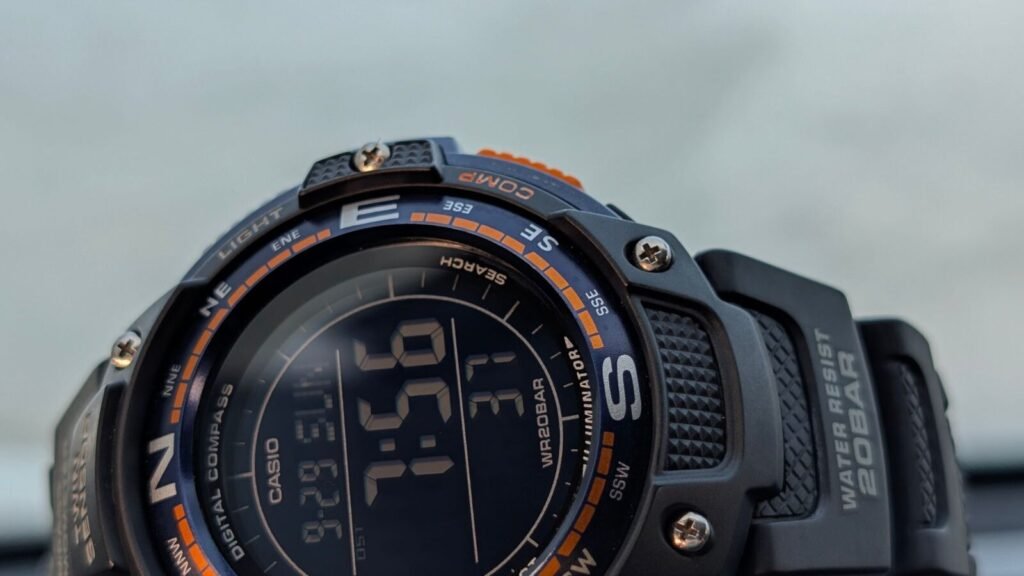
For years, buying a Coros Vertix meant accepting a simple deal. You got enormous battery life, a tough titanium watch and a no-nonsense interface, and in exchange you put up with a dim memory-in-pixel screen that looked a generation behind everything else on the trail. The Coros Vertix 4, which goes on sale today, November 27, finally changes the deal.
Announced on November 24, the new flagship trades the old display for a bright 1.47-inch AMOLED, adds the first built-in flashlight on any Coros watch, picks up a speaker and microphones, and still claims up to 105 hours of GPS tracking. It costs $799, which is $100 more than the Vertix 2S it replaces, but several hundred dollars less than the Garmin watch it is now clearly aiming at.
Quick take
The Coros Vertix 4 costs $799 / €799 / £699 in Black or Silver and ships with both a silicone and a nylon band. It replaces the Vertix 2 and Vertix 2S with an LTPO AMOLED screen (up to 3,500 nits), a side-mounted LED flashlight, a speaker with two mics, 64GB for maps and music, and a case that is 14% thinner. Coros rates it at 30 days of daily use and 105 hours of standard GPS with the always-on display off. Missing: LTE, satellite messaging, contactless payments, an ECG app and dive certification. Free satellite maps arrive in early 2027.
What Is New on the Coros Vertix 4
The Vertix 4 is less a refresh than a rethink. Coros has folded the hardware it introduced on the cheaper Pace 4 and Apex 4 into its top watch, and then added a few things nobody else in its lineup has.
An AMOLED screen, at last
Every previous Vertix used a memory-in-pixel display. Those screens sip power and look great in direct sun, but they are dull indoors and in the shade. The Vertix 4 switches to a 1.47-inch, 466 x 466 LTPO AMOLED under sapphire glass, rated up to 3,500 nits. That is brighter on paper than the 3,000-nit panels on Garmin’s Fenix 9 Pro, and the LTPO part matters: the panel can drop its refresh rate to save energy, which is how Coros keeps battery numbers this high on a color screen.
A flashlight on the side, not the front
Garmin made watch flashlights popular, but it puts them on the front edge of the case. Coros mounts its cool-white LED on the side, with a wide 90-degree beam. The idea is that you can light up the trail or the inside of a tent while still reading the screen, without twisting your wrist. There are three brightness levels plus strobe and SOS modes, and Coros says the light can run for up to 100 hours on its lowest setting with the screen off. It also keeps working while the watch is on the charger, a small touch that turns the watch into a bedside lamp at camp.
The catch is color. The Fenix 9 Pro offers white, red and green light, and the Enduro 4 has white and red. Red light protects your night vision and does not blind your hiking partners, and early reviewers at outlets such as ZDNET and GearJunkie flagged its absence on the Vertix 4 as one of the few clear misses.
Thinner, lighter and easier to wear
The case measures 49.4 x 49.4 x 13.8 mm, which makes it 14% thinner than the 16.3 mm Vertix 2S. It weighs 84 grams with the silicone band, 68 grams with the nylon band and 60 grams for the watch alone. The bezel is titanium and doubles as the GPS antenna, while the case itself is fiber-reinforced composite. Coros also set the buttons flush with raised edges around them, so they are harder to press by accident when you are scrambling over rock or wearing a backpack strap across your wrist.
A speaker, two mics and a new Action Button
The Vertix 4 gets a speaker and two noise-canceling microphones, so you can take calls through your paired phone and use voice control. A new Action Button at the eight o’clock position records a voice note with a short press and starts voice control with a long press. Voice Pins let you save a spoken note as a point on the map, which is handy for marking a water source or a missed turn without stopping to type.
One early complaint, raised in DC Rainmaker’s first look, is that you cannot yet assign the Action Button to your own custom shortcut. That is the kind of thing Coros usually fixes in firmware, but it is worth knowing if you are buying on day one.
Double the storage and faster maps
Storage doubles to 64GB, enough for offline topo and street maps of several regions plus a music library. Coros says a new multi-core processor draws maps noticeably faster, which addresses a long-running complaint about sluggish panning on older Coros watches. Free satellite map layers are promised in an update in early 2027, so they are not available at launch.
Sensors and Safety Features
Under the hood, the Vertix 4 has dual-frequency GPS across all five satellite systems, an updated optical heart rate sensor, SpO2, a barometer, a compass and a thermometer. There is also an electrical heart rate sensor in the digital dial, but Coros only uses it for HRV readings and its Wellness Check feature. Unlike Garmin, it does not offer an ECG app.
The watch is rated to 10 ATM and works from -22°F to 122°F, so winter mountaineering and desert ultras are both on the table. When paired with your phone, it can share a live tracking link and send SOS messages, and it can push safety alerts during an activity. A full recharge takes about an hour and a half.
Important: SOS needs your phone
The Vertix 4 has no LTE and no satellite messaging of its own. Its SOS and live tracking features relay through your phone, so they will not help in a dead zone with no cell signal. If you regularly go beyond coverage, pair it with a dedicated satellite messenger or look at Garmin’s inReach models.
Battery Life: Big Numbers, With One Big Asterisk
Battery has always been the reason people buy a Vertix, and the headline figures are still excellent: 30 days as an everyday smartwatch and 105 hours of standard GPS. Those are with the always-on display turned off, though. Switch it on and the numbers fall sharply, according to figures reported by the5krunner.
| Mode | Always-on display off | Always-on display on |
|---|---|---|
| Daily smartwatch use | 30 days | 10 days |
| Standard GPS | 105 hours | 75 hours |
| All satellite systems | 75 hours | 58 hours |
| Dual-frequency GPS | 60 hours | 48 hours |
Even the worse column is strong. Ten days with an always-on AMOLED is more than most AMOLED watches manage, and 48 hours of dual-frequency GPS covers a 100-mile ultra with time to spare. Interestingly, the Vertix 4 actually beats its predecessor where it matters most for accuracy: the Vertix 2S managed 43 hours in dual-frequency mode, while the new watch reaches 60. It only falls behind in standard GPS, 105 hours against 118.
If long trips without a charger are your top priority, our roundup of smartwatches with the longest battery life shows where the Vertix line usually sits against solar Garmins and budget Amazfits.
Coros Vertix 4 vs Garmin Fenix 9 Pro and Enduro 4
The Vertix has traditionally lined up against Garmin’s Enduro, the other battery monster. But with an AMOLED screen, a flashlight and a speaker, the Vertix 4 now looks a lot more like a Fenix 9 Pro. Here is how the three compare on paper.
| Spec | Coros Vertix 4 | Fenix 9 Pro 47 mm | Fenix 9 Pro 51 mm | Enduro 4 |
|---|---|---|---|---|
| Price | $799 | $1,099.99 | $1,199.99 | $899.99 |
| Display | 1.47″ AMOLED, 3,500 nits | 1.4″ AMOLED, 3,000 nits | 1.5″ AMOLED, 3,000 nits | 1.4″ solar MIP |
| Thickness | 13.8 mm | 13.8 mm | 15.8 mm | 15.7 mm |
| Weight with band | 84 g silicone / 68 g nylon | 78 g | 99 g | 66 g |
| Smartwatch battery | 30 days | 18 days | 31 days | 36 days (90 with solar) |
| Dual-frequency GPS | 60 hours | 26 hours | 45 hours | 60 hours (90 with solar) |
| Flashlight | White, strobe, SOS | White, red, green | White, red, green | White, red |
| Speaker and mic | Yes | Yes | Yes | No |
| ECG app | No | Yes | Yes | Yes |
| LTE / satellite messaging | No | inReach models | inReach models | No |
| Water rating | 10 ATM | Dive-rated to 40 m | Dive-rated to 40 m | 10 ATM |
Manufacturer figures, as compiled by Garmin Rumors. The 51 mm Fenix 9 Pro battery numbers are for the inReach model.
Where the Vertix 4 wins
Price and endurance. At full price it is $300 cheaper than the 47 mm Fenix 9 Pro and $400 cheaper than the 51 mm model. It matches the smaller Fenix for thickness while lasting more than three times as long in standard GPS, and its screen is the brightest of the group. Against the Enduro 4, it is $100 cheaper and adds a speaker and a far nicer display.
Where Garmin still wins
Garmin offers more hardware and a deeper software ecosystem. The Fenix 9 Pro has a full titanium case, works as a recreational dive computer, adds red and green flashlight modes, and its inReach versions bring LTE plus satellite messaging and SOS. Both Garmins have an ECG app and contactless payments, and Garmin’s training tools, such as real-time stamina and grade-adjusted pace, are more mature. The Enduro 4 also remains the endurance champion overall, reaching 36 days as a smartwatch, up to 90 days with enough sun, and 210 hours in Max Battery mode.
Who should buy which
- Vertix 4: you want a bright AMOLED, a flashlight and 100+ hours of GPS without paying Fenix money, and you do not need payments, ECG or satellite messaging.
- Enduro 4: battery life is everything, you spend long days in the sun, and you can live with a duller screen.
- Fenix 9 Pro: you want every feature, including diving, LTE or satellite SOS, and the price is not the deciding factor.
Coros has been chipping away at Garmin from below all year. The Coros Pace 4 Pro did it for runners with a titanium case and 60 hours of GPS, and the Vertix 4 now applies the same formula to mountain athletes.
The Launch Timing Is Awkward
There is one thing working against the Vertix 4 right now: the calendar. It goes on sale on Black Friday, the exact week Garmin’s lineup is at its cheapest. The Fenix 9 Pro has been $100 off at Amazon, which narrows the gap, and older Fenix and Enduro models are discounted even further. DC Rainmaker was among the reviewers who questioned the timing, along with some rough software edges at launch.
Still, even against a discounted Fenix 9 Pro, the Vertix 4 is around $300 cheaper. For a watch with brighter display specs and much longer GPS life, that is a gap many buyers will happily take.
Price and Availability
The Coros Vertix 4 is available starting today, November 27, directly from Coros, priced at $799 in the US, €799 in Europe and £699 in the UK. It comes in Black or Silver, and both a silicone band and a nylon band are included in the box, so you do not need to buy a second strap for long days on the trail.
Shopping around before you commit? Our guide to the best smartwatch for hiking compares GPS battery life and offline maps across Garmin, Coros, Suunto and others.
The Bottom Line
The Vertix 4 fixes the one thing that held the Vertix line back. Its new AMOLED screen is bright, sharp and still efficient enough to deliver 105 hours of GPS, and the side flashlight, speaker and doubled storage close most of the feature gap with Garmin’s flagships. It is not a Fenix replacement for everyone: no ECG, no payments, no satellite messaging and no red light are real omissions, and satellite maps will not land until 2027.
But at $799, it undercuts the watches it competes with by hundreds of dollars while beating them on screen brightness and battery. If you have been waiting for a Coros flagship that looks as good as it lasts, this is the one.
About this article: GeekBlog covers U.S. technology news, AI, phones, smartwatches and gaming. Every story is written and checked under our Editorial Policy. Spotted a mistake or have a story tip? Contact our editors.
