

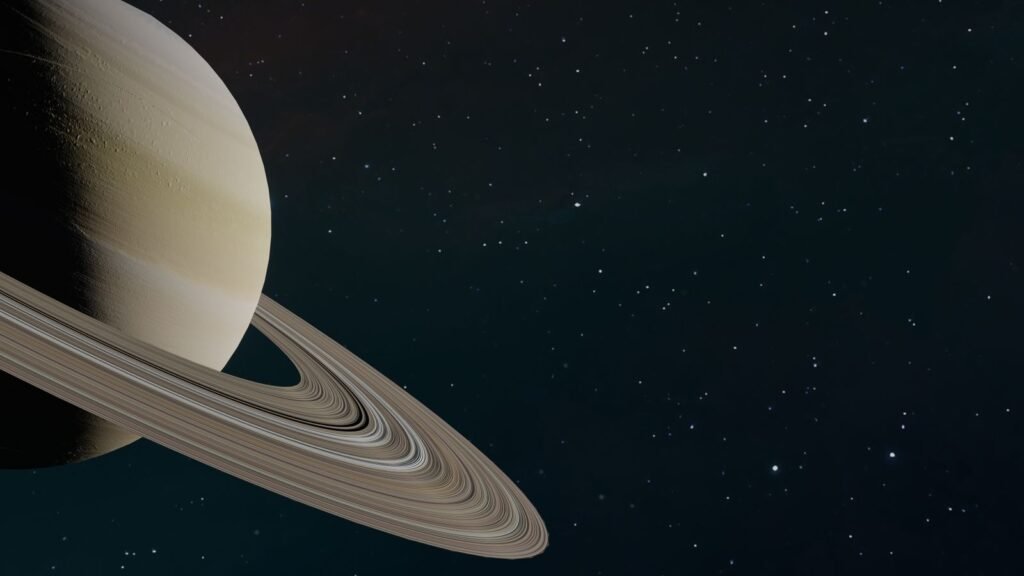
You will probably never stand on the orange sands of Titan, Saturn’s largest moon. Your name can, though, and getting it there takes about a minute. NASA is collecting names from the public to put on a microchip aboard Dragonfly, the nuclear-powered rotorcraft scheduled to launch in 2028 and land on Titan in 2034. Everyone who signs up gets a personalized digital boarding pass. As UNILAD Tech reported, more than half a million people had already added their names by late November.
It’s a free, slightly goofy bit of space fandom, and it’s also a good excuse to look at one of the strangest missions NASA has ever approved: a car-sized drone that will fly around a frozen moon a billion miles from home. Here’s how to sign up, what the deadline is, and what Dragonfly is actually going to do once it gets there.
The short version
- What: NASA’s “Send Your Name With Dragonfly” campaign puts your name on a microchip flying to Titan.
- Cost: free. You get a personalized digital boarding pass.
- Deadline: 11:59 p.m. EST on January 15, 2027.
- Where: NASA’s sign-up portal at go.nasa.gov/dragonfly-names.
- The mission: launch in 2028 on a SpaceX Falcon Heavy, arrival at Titan in 2034, then more than three years of flying between landing sites.
How to send your name to Titan
The process is about as simple as NASA gets. Johns Hopkins APL, which is building the spacecraft, opened the portal on October 29, and it stays open until mid-January.
- Go to NASA’s Send Your Name With Dragonfly page (go.nasa.gov/dragonfly-names).
- Enter the name you want to fly. You can sign up family members, kids or a pet separately.
- Opt in to the mission email list if you want updates. NASA says that also enrolls you in its virtual guest program, which sends launch and mission news as the spacecraft moves along.
- Download your boarding pass. It’s a digital keepsake, so save the image or print it.
The cutoff is 11:59 p.m. Eastern on January 15, 2027. After that, the names get etched onto a chip that’s installed on the lander before it ships to Florida for launch.
The NASA science chief, Nicky Fox, didn’t undersell it. “NASA’s Dragonfly mission will simply blow your mind,” she said in the announcement, calling it “one of the most exciting space missions of our lifetime.” Online, the reaction was a little less formal. One person on X posted that they had their boarding pass already. Another warned everyone to be careful, because “Thanos lives on Titan.”
How it compares with past name campaigns
NASA has done this before, and the public tends to show up in big numbers. Perseverance carried almost 11 million names to Mars on three fingernail-sized chips. Europa Clipper took more than 2.6 million to Jupiter’s system along with a poem by U.S. Poet Laureate Ada Limón, and Artemis II took more than 5.6 million around the Moon on an SD card inside Orion. Dragonfly is just getting started, with roughly seven weeks left on the clock.
Names flown on recent NASA missions
Final totals for closed campaigns. Dragonfly is the count reported on November 26, 2026, with sign-ups still open.
Sources: NASA, NASA JPL, UNILAD Tech. NASA called Europa Clipper’s total a record for names flown beyond Mars at the time.
Dragonfly has a long way to go to catch those totals, but it has a different kind of appeal. Its passengers aren’t going to orbit a planet or sit on a rover. They’re going to fly.
What Dragonfly actually is
Forget the image of a rover crawling a few feet a day. Dragonfly is an octocopter, a lander with eight rotors arranged in stacked pairs on four arms. It can lose one rotor and keep flying. Instead of solar panels, which would be close to useless that far from the Sun, it runs on a Multi-Mission Radioisotope Thermoelectric Generator, the same type of nuclear power source used by the Curiosity and Perseverance rovers. The generator also produces heat that keeps the electronics warm on a world that averages about minus 290 degrees Fahrenheit.
The plan is to touch down first in the Shangri-La dune field near Titan’s equator, then hop toward Selk crater, an impact structure about 50 miles (80 kilometers) wide. Scientists think liquid water and organic molecules may once have mixed there, which makes it one of the best places in the solar system to study the chemistry that comes before biology. Over the mission, Dragonfly is expected to visit more than 20 landing sites.
The spacecraft is currently being assembled and tested at APL in Laurel, Maryland. It recently got its eyes, too. NASA said this month that the DragonCam camera suite has been installed. “We’ll be able to see Titan from perspectives we’ve never had before,” said principal investigator Elizabeth “Zibi” Turtle, adding that the cameras will capture both close-up detail and sweeping panoramas while the craft is on the ground and in the air.
Why Titan is worth the trip
Titan is the only moon in the solar system with a thick atmosphere, and the only place besides Earth known to have stable liquid on its surface. The catch is that its rivers and lakes are made of liquid methane and ethane, not water. Under the icy crust, scientists believe there’s an ocean of liquid water. Only four spacecraft have visited so far: Pioneer 11, Voyager 1, Voyager 2 and Cassini, which dropped the Huygens probe onto the surface in 2005.
| Titan | Earth | |
|---|---|---|
| Diameter | About 3,200 miles (bigger than Mercury) | About 7,900 miles |
| Surface temperature | About -290°F | About 59°F average |
| Air pressure at surface | About 1.5 times Earth’s | 1 atmosphere |
| Gravity | About 14% of Earth’s | 100% |
| Surface liquids | Methane and ethane lakes and rivers | Water |
That combination of thick air and weak gravity is exactly why a flying lander makes sense. Flying on Titan takes far less effort than flying on Earth, so Dragonfly can cover distances in minutes that would take a rover months. It’s the first time NASA has sent a science rotorcraft to another world, building on the much smaller Ingenuity helicopter that rode to Mars with Perseverance.
The long road to launch
Dragonfly mission timeline
2019: NASA selects Dragonfly as its fourth New Frontiers mission.
2024: NASA confirms the mission and sets a July 2028 launch target after delays pushed it from 2027.
2026: Assembly and integration testing at APL. Name sign-ups open October 29.
Jan. 15, 2027: Last day to add your name.
July 2028: Launch on a SpaceX Falcon Heavy from Kennedy Space Center.
2034: Arrival at Titan after a roughly six-year cruise, followed by 3+ years of flights.
Dragonfly hasn’t had a smooth ride. It was originally meant to launch in 2026, slipped to 2027, and then to 2028, with pandemic disruption, supply chain problems and a switch to a heavier rocket all playing a part. Its projected cost also climbed well past the original New Frontiers cap, to about $3.35 billion across the mission’s lifetime according to coverage of NASA’s 2024 confirmation. The team has been hitting milestones since then, including a simulated first flight on flight-like avionics this fall, but a launch window this far out leaves room for surprises.
Should you bother?
Honestly, why not. It’s free, it takes a minute, and there’s something nice about a list of ordinary names riding along on a machine designed to answer big questions about where life comes from. If you have kids who are into space, a boarding pass with their name on it is a pretty good hook. NASA has been leaning into public involvement lately, from the Artemis II crew’s Integrity capsule to a $1 million student challenge to design a Moon base.
And if Dragonfly does find something remarkable in Titan’s chemistry, your name will have been there for it. Scientists already have a plan for what happens if we ever find signs of alien life. Titan isn’t expected to have living things on the surface, but it’s one of the best natural labs we have for figuring out how life could start. You have until January 15 to get on the passenger list.
About this article: GeekBlog covers U.S. technology news, AI, phones, smartwatches and gaming. Every story is written and checked under our Editorial Policy. Spotted a mistake or have a story tip? Contact our editors.
