

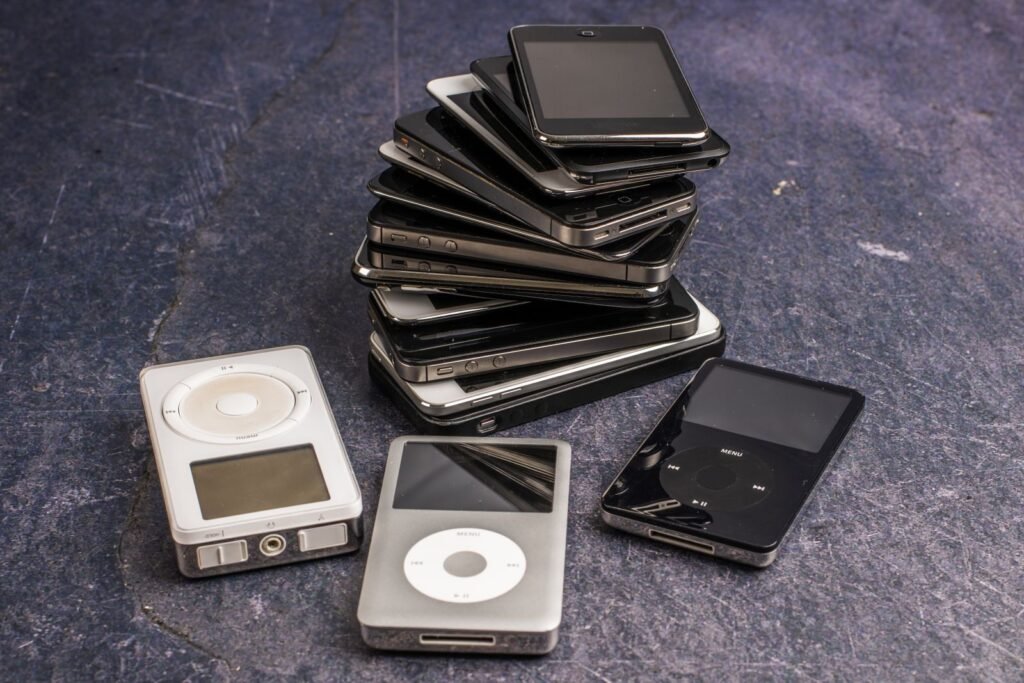
Black Friday has a predictable side effect. A new phone shows up, and the old one gets shoved into a drawer next to the three phones before it. Eventually someone cleans out that drawer, and the easiest move is to drop everything in the kitchen trash. That move can now cost you money. As UNILAD Tech reported this week, councils in the UK can fine people who bin battery-powered devices, and a growing number of US cities and states have rules of their own.
The fine is honestly the smaller problem. The lithium-ion battery inside that phone is the reason waste trucks and recycling plants keep catching fire. Here’s what the rules actually say, how big the fire problem has gotten, and the easiest ways to get rid of an old phone without breaking the law or starting a blaze.
The short version
- In the UK: phones are banned from household bins, and households in England can be fined up to £80 after a warning, with some bin misuse penalties reaching £400.
- In the US: there’s no federal ban, but New York City charges $100 per violation and California requires phone retailers to take old handsets back for free.
- The real risk: crushed lithium batteries start fires. North America logged a record 448 waste and recycling facility fires in 2025.
- What to do: trade it in, drop it at a retailer kiosk or battery collection site, and wipe it first.
Why a phone in the trash is a fire hazard
A garbage truck is built to crush things. When its compactor squeezes a phone, the lithium-ion cell inside can be punctured or bent. A damaged cell can short circuit and go into thermal runaway, a chain reaction that produces intense heat and sparks. Surround that with paper, cardboard and plastic and you have a truck fire, or worse, a fire that starts hours later inside a sorting plant.
The Environmental Protection Agency looked into this and identified 245 fires caused by lithium-ion batteries at 64 waste facilities between 2013 and 2020. The agency said its own count was almost certainly too low, because battery fires are badly underreported. Since then the numbers from industry trackers have only climbed.
Fires at US and Canadian waste and recycling facilities
Publicly reported fires per year, per Fire Rover’s annual Waste Facility Fires Report. Lithium-ion batteries are named as the leading cause.
The 2025 fires caused an estimated $2.5 billion in damage. Only publicly reported incidents are counted, so the true total is higher.
The UK picture is even more dramatic. The Recycle Your Electricals campaign counted a record 2,839 battery fires in the UK waste system in 2025, a 135% jump, and an older Eunomia estimate put the annual cost to the waste sector at up to £158 million (about $207 million). Compare and Recycle, the phone recycling comparison site behind the latest warning, says 20% of the 2,000 UK adults it surveyed admit to binning a battery-powered device at some point.
Can you really get fined for it?
Yes, depending on where you live. In the UK, the Waste Electrical and Electronic Equipment (WEEE) rules and local council policies keep phones out of household bins, which is what the crossed-out wheelie bin symbol on your phone’s box means. Antonia Hristov of Compare and Recycle told UNILAD Tech that households in England caught ignoring council bin rules “can be fined up to £80, after a written warning and a notice of intent.” She also argued the rules are too soft: “A crisp packet won’t set a bin lorry alight, and a battery can.”
In the US there’s no national law. The Resource Conservation and Recovery Act treats some electronics as hazardous waste, but phones and small gadgets mostly slip through. Instead you get a patchwork. Around 25 states have some form of e-waste law, according to the e-waste guide Dropcurb, and the rules vary wildly.
| Where | The rule | Possible penalty |
|---|---|---|
| New York City | Electronics banned from trash since 2015 | $100 per violation |
| California | Phones count as universal waste; retailers must take them back free | Enforced locally |
| Illinois | Landfill ban on covered electronics | From $25 |
| Oregon | Disposal ban on covered electronics | Up to $10,000 a day for repeat offenders |
| England | No batteries or battery devices in household bins | Up to £80 (about $105) after warnings |
Realistically, nobody is going through your garbage bag looking for an iPhone 8. Fines like these tend to land on repeat offenders and on buildings where sanitation crews keep finding electronics at the curb. But “probably won’t get caught” isn’t a great reason to put a fire risk in a truck that drives past schools all day.
How many old phones are we talking about?
A lot. Survey data suggests most of us are sitting on a small pile of retired tech, and very little of it gets recycled properly.
The junk drawer, by the numbers
Sources: Allstate Protection Plans survey (phones, recycling, trash) and Dropcurb (e-waste per person). Americans generate about 6.9 million tons of electronic waste a year, and only around 15% is recycled.
Keeping an old phone in a drawer isn’t automatically safe either. Hristov points out that batteries in unused devices “can age, swell or, worse, become a fire hazard.” If a phone’s back is bulging or the screen is lifting, that’s a swollen battery and it should be dealt with soon. If you’re thinking about keeping an older phone in service instead, it’s worth checking what a new iPhone battery costs before you write the device off.
Where your old phone should go instead
The good news is that getting rid of a phone properly is usually free, and sometimes it pays.
| Option | Best for | Cost |
|---|---|---|
| Manufacturer trade-in (Apple, Samsung, Google) | Phones from the last few years; dead ones are recycled for free | Free, may pay you credit |
| Carrier stores | Upgrade credit; New York requires carriers to accept old phones | Free |
| Best Buy recycling kiosks | Any brand, any condition; usually up to three items per household per day | Free |
| Call2Recycle drop-off | Phones and loose batteries; find a site by ZIP code | Free |
| City or county e-waste events | Clearing out several gadgets at once | Usually free |
If the phone still works, selling it beats recycling it. Demand for secondhand phones is strong right now, and refurbished iPhone sales jumped 53% this season, which helps keep trade-in values up for recent models.
Before you hand it over
Whatever route you pick, take five minutes to prep the phone. A lot of people keep old devices because they’re nervous about their data, and that worry is easy to fix.
- Back it up to iCloud, Google or your computer, and move any two-factor authentication apps to your new phone.
- Sign out of your Apple Account or Google account so Activation Lock or Factory Reset Protection doesn’t block the next owner.
- Factory reset the phone, then pull your SIM card and any microSD card.
- Don’t ship a swollen phone. Damaged batteries shouldn’t go in the mail. Take it to a drop-off site in person, ideally in a sealed plastic bag.
- Keep it out of curbside recycling, too. The blue bin is just as dangerous for batteries as the trash, because the same trucks compact it.
The bigger picture
The fines get the headlines, but the warning is really about a gap between how much battery-powered stuff we buy and how hard it still is to get rid of it. Vapes, earbuds, smartwatches and power banks all carry the same kind of cell, and they’re even easier to toss without thinking. Europe recycles about 42% of its e-waste under the WEEE Directive. The US manages around 15%, and with no new state passing an e-waste law in 2026, a federal fix doesn’t look close.
Until it arrives, the rule of thumb is simple. If it charges, it doesn’t go in the trash or the recycling bin. Your old phone might even be worth a few bucks, which is a lot better than a fine.
About this article: GeekBlog covers U.S. technology news, AI, phones, smartwatches and gaming. Every story is written and checked under our Editorial Policy. Spotted a mistake or have a story tip? Contact our editors.
