

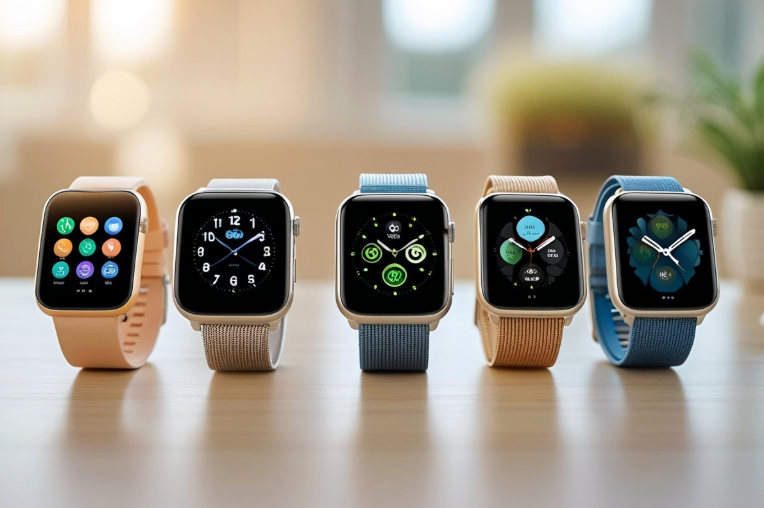
You want a clear guide to choosing a smartwatch that supports aging with independence, safety, and simplicity. This article helps identify which models balance easy use, reliable health features, and long-term comfort so you can pick the best option for an older adult.
They will compare popular options like Apple Watch Series 9, Fitbit Versa 4, Garmin Venu 2 Plus, Samsung Galaxy Watch 6, Amazfit GTS 4 Mini, and Withings ScanWatch, and explain key features to prioritize and how watches can boost daily independence. Expect practical, focused information and straightforward answers to common concerns.
1. Apple Watch Series 9
The Apple Watch Series 9 offers a familiar, polished interface that many seniors find easy to learn. It runs watchOS with large-font accessibility options and customizable watch faces.
It includes fall detection, Emergency SOS, and reliable heart-rate monitoring, which provides practical safety benefits without extra setup. The upgraded S9 chip delivers snappier performance and smoother app transitions.
Battery life typically covers a full day of normal use, though heavy GPS or workout tracking shortens it. The device supports cellular models so a senior can call or text without a phone nearby.
The Retina display is bright and readable in varied lighting, and the haptic alerts are strong enough for most users. Pairing with an iPhone is required, which suits households already using Apple devices.
2. Fitbit Versa 4
The Fitbit Versa 4 offers a balanced mix of health tracking and everyday smartwatch features suited to many seniors. It records heart rate continuously, provides sleep staging, and tracks steps and active minutes with reliable accuracy.
Its lightweight design and simple interface make it comfortable to wear all day and easy to navigate. Large, bright display and haptic feedback help users notice alerts without squinting.
Built-in GPS supports outdoor walks without a phone, and on-wrist workout modes guide gentle exercises. Battery life typically lasts about 6 days depending on use, reducing the need for frequent charging.
The device integrates with the Fitbit app for medication reminders, health trends, and emergency contact setup via community features. It does require a paired smartphone for full functionality, so caregivers should confirm compatibility before purchase.
3. Garmin Venu 2 Plus
The Garmin Venu 2 Plus offers a clear, bright AMOLED display that helps seniors read notifications and health stats without squinting. It includes a physical button plus touch controls, making navigation flexible for different dexterity levels.
It tracks heart rate, sleep, stress, and advanced metrics like Body Battery for energy monitoring. The watch supports 24/7 health monitoring but does not replace medical devices.
Safety features include incident detection during selected activities when paired with a phone. It also offers fall detection via connected smartphone apps in some regions, though functionality depends on phone connectivity and settings.
Battery life lasts up to around 9 days in smartwatch mode and shorter with GPS or continuous sensors active. The watch fits a range of wrist sizes and offers interchangeable bands for comfort and style preferences.
4. Samsung Galaxy Watch 6
The Samsung Galaxy Watch 6 offers a sharp AMOLED display and a lightweight design that many seniors find comfortable for all-day wear. It balances style and durability without feeling bulky.
It includes heart-rate monitoring, SpO2 tracking, sleep analysis, and automatic fall detection. These features provide timely health insights while integrating with Samsung Health for easy review.
Battery life typically lasts about one to two days depending on use, so daily charging may be necessary for heavy users. The watch supports fast charging to minimize downtime.
The interface remains intuitive with large icons and customizable watch faces that improve readability. Wear OS compatibility and LTE options let users stay connected even when away from their phone.
Its medical features are useful but not a substitute for professional care; readings should be treated as indicative rather than diagnostic. The Galaxy Watch 6 suits seniors who want a modern, capable smartwatch with strong health tracking and reliable performance.
5. Amazfit GTS 4 Mini
The Amazfit GTS 4 Mini offers a compact, lightweight design that suits smaller wrists and reduces discomfort for continuous wear. It uses an easy-to-read AMOLED display with adjustable text size, which helps seniors see notifications and health data clearly.
It tracks heart rate, SpO2, sleep, and daily activity with reasonable accuracy for consumer wearables. The watch provides guided breathing exercises and basic stress monitoring, useful for daily wellness checks without overwhelming complexity.
Battery life lasts about 7–14 days depending on usage, so charging stays infrequent and predictable. It pairs with the Zepp app to store health trends and share data with caregivers or family when needed.
Controls are straightforward: one physical button plus touchscreen gestures that work reliably. The watch lacks advanced medical features like FDA-cleared ECG, so it complements — rather than replaces — professional medical devices.
6. Withings ScanWatch
The Withings ScanWatch blends traditional analog styling with medical-grade sensors that appeal to seniors who prefer a classic look. It includes FDA-cleared ECG and clinically validated SpO2 monitoring, offering reliable heart rhythm and blood-oxygen data without complex menus.
Its battery lasts up to 30 days, reducing charging hassles for users who may forget daily top-ups. The display is minimal but clear, showing essential notifications and health alerts at a glance.
Sleep tracking and automatic detection of sleep apnea indicators provide useful long-term health trends. Withings Health Mate app presents data in straightforward charts and shares reports easily with caregivers or clinicians.
The watch is water-resistant to 50 meters and uses durable materials suitable for everyday wear. It prioritizes accuracy and ease of use over extensive third-party app libraries, which suits seniors focused on health monitoring rather than smartwatch extras.
Key Features to Consider in a Senior-Friendly Smart Watch
Focus on reliable health monitoring, easy interaction, and long battery life. Prioritize features that directly support safety, independence, and daily convenience.
Health and Safety Tracking
Vital metrics matter most: continuous heart rate, irregular rhythm/AFib detection, and fall detection should be accurate and configurable. Devices that log SpO2, skin temperature trends, and provide ECG on demand add clinical value; check FDA clearance or CE marking where applicable.
Emergency response options reduce risk. Look for automatic fall alerts with location-sharing, one-touch SOS that calls designated contacts, and integrated, subscription-free emergency calling when possible. Verify that the watch can send SMS or push to caregiver apps and that the watch stores recent alerts for review.
Data access and sharing are important for care coordination. The watch should export readable reports (PDF or CSV) and sync with common health platforms (Apple Health, Google Fit, or caregiver portals). Strong privacy controls and simple permission settings help manage who sees health data.
Battery Life and Charging Simplicity
Long runtime reduces daily charging burden. Aim for at least 24–48 hours with continuous heart rate and activity tracking enabled; multi-day battery life matters for users who may forget nightly charging.
Charging design must be simple and forgiving. Magnetic snap chargers or wireless pads that self-align work better than tiny proprietary pins. Look for clear battery percentage displays and low-battery alerts that trigger well before shutdown.
Consider charging speed and accessory availability. Faster charging (30–60 minutes to 80%) helps users with limited time or dexterity. Replaceable charging cables and widely available adapters reduce downtime if the original charger is lost.
Display Readability and Ease of Use
High-contrast, large-font screens improve readability. Choose displays with adjustable text size, bold font options, and true blacks on OLED or high-brightness LCDs to aid visibility in sunlight and indoor lighting.
Touch targets and physical controls should suit reduced dexterity. Larger icons, a responsive touch area, and at least one programmable physical button for home or SOS actions make navigation easier. Haptic and audible feedback confirms input without forcing visual attention.
Interface clarity and accessibility settings matter. Simple watch faces that show time, battery, step count, and an SOS icon at a glance reduce confusion. Voice prompts, screen readers, and guided setup wizards speed onboarding for users and caregivers.
How Smart Watches Enhance Senior Independence
Smartwatches give seniors immediate access to emergency help, automated health tracking, and fast communication tools that reduce reliance on others for routine safety and mobility. They provide fall detection, location sharing, medication reminders, and direct calling features that support daily autonomy.
Emergency Support Functions
Smartwatches detect falls using accelerometers and gyroscopes and can automatically place an emergency call or send an alert after a configured delay. Devices like the Apple Watch and Garmin models allow a one-button SOS or auto-call to local emergency services, and they can send a preset emergency message to emergency contacts.
Many watches include medical ID data and heart-rate alerts that notify the wearer and caregivers of abnormalities such as high or low heart rate or irregular rhythm. Some models record an ECG and store it for physician review, which helps fast clinical decisions after an incident.
Battery life and accuracy matter: longer battery life reduces the chance a watch is offline during an emergency. Seniors should verify local emergency-call compatibility and set up contacts and location-sharing before relying on these features.
Connectivity With Family and Caregivers
Smartwatches enable direct voice calls, text messaging, and app-based alerts to family or caregivers without a smartphone nearby. Cellular-capable watches maintain independent connection for calls and messages; Wi‑Fi or Bluetooth models require the paired phone to relay notifications.
Shared location services let caregivers check real-time GPS, set safe zones, and receive exits/entries alerts. Geofencing reduces unnecessary check-ins by only notifying when a senior leaves a designated area, which is useful for memory-impaired users.
Care teams can receive scheduled medication reminders and activity summaries through companion apps, allowing remote monitoring of adherence and mobility trends. This lets caregivers intervene early for declining activity or missed medications while preserving the senior’s day-to-day independence.
Frequently Asked Questions
This section answers common concerns about fall detection, blood pressure tracking, ease of use, readability, women’s styles, and potential financial help for buying a smartwatch. It cites specific models and realistic capabilities to guide purchasing decisions.
What are the top smartwatches for seniors offering reliable fall detection?
Apple Watch Series 9 includes automatic fall detection and can call emergency services if the wearer is immobile after a hard fall. Its algorithms are well-tested and integrate with Emergency SOS and Medical ID.
Samsung Galaxy Watch 6 offers fall detection and incident alerts through Samsung Health Monitor and can notify designated contacts. It performs well when paired with a compatible Samsung phone for full features.
Fitbit Versa 4 provides fall detection via Fitbit’s safety features when used with a paired smartphone. It is less automatic than Apple’s system but still lets caregivers receive alerts.
Garmin Venu 2 Plus and Amazfit GTS 4 Mini do not have widely recognized automatic fall-detection features comparable to Apple or Samsung, so they are less recommended for fall monitoring.
Which smartwatches provide the best blood pressure monitoring for the elderly?
Samsung Galaxy Watch 6 supports blood pressure estimation when calibrated with a cuff and the Samsung Health Monitor app in supported regions. It gives trend data but requires periodic re-calibration.
Amazfit GTS 4 Mini includes blood pressure estimation features through its companion app, but accuracy varies and the readings should not replace medical devices. It can be useful for trend monitoring.
Apple Watch Series 9 and Fitbit Versa 4 do not provide direct blood pressure measurements; users rely on third-party cuff pairing or apps for that metric. Garmin Venu 2 Plus also lacks built-in blood pressure sensing.
For medical-grade blood pressure data, seniors should use an FDA-cleared home cuff and log readings in a health app rather than relying solely on wrist sensors.
What are the most user-friendly smartwatches suitable for senior citizens?
Apple Watch Series 9 is highly user-friendly with a large accessible interface, clear icons, VoiceOver, and simple emergency features. It supports family setup for users who don’t have their own iPhone.
Fitbit Versa 4 offers a simple menu layout, straightforward activity tracking, and a light companion app, making it easier for users with basic tech needs. Battery life is generally longer than the Apple Watch.
Samsung Galaxy Watch 6 balances advanced features with an intuitive One UI layout and large fonts. It also supports a straightforward watch face selection for simpler displays.
Amazfit GTS 4 Mini is lightweight with an easy-to-navigate menu and long battery life, which reduces charging frequency for users who prefer low maintenance.
Which smartwatches for seniors are easiest to read and operate?
Apple Watch Series 9 and Samsung Galaxy Watch 6 both offer large, bright displays and adjustable font sizes, improving readability for users with reduced vision. They include high-contrast watch faces and bold text options.
Garmin Venu 2 Plus has a bright AMOLED screen and customizable widgets that let users prioritize step count, heart rate, or notifications. It also supports clear tactile buttons for operation during exercise.
Amazfit GTS 4 Mini provides a simple, square display and multiple watch faces designed for large numerals. The small form factor may help if the user prefers a lightweight device.
Fitbit Versa 4 focuses on clear, minimal screens and one-button navigation that reduces complexity for users who want fewer menu layers.
Are there smartwatches specially designed for elderly women?
None of the listed models are exclusively designed for elderly women, but style and size variants match different preferences. Amazfit GTS 4 Mini and Fitbit Versa 4 come in smaller case sizes and color choices that generally appeal to women who prefer a slimmer profile.
Apple Watch Series 9 and Samsung Galaxy Watch 6 offer multiple case sizes, band styles, and third-party bands, enabling women to select softer colors or jewelry-style bands. Garmin Venu 2 Plus also offers smaller strap options and a range of watch faces to suit personal style.
Buyers should choose based on band comfort, case diameter, and display clarity rather than gendered marketing.
Is there any financial aid available for seniors to purchase a smartwatch, such as through Medicare?
Medicare Part B generally does not cover consumer smartwatches, since they are considered non-prescription consumer electronics. Coverage may apply if the device is part of a durable medical equipment (DME) plan prescribed and billed through a Medicare-approved vendor, but this is uncommon.
Veterans Affairs and some state Medicaid programs may provide assistive technology funding in specific cases; eligibility varies widely. Local Area Agencies on Aging and nonprofit programs sometimes offer grants or low-cost device programs for seniors with limited income.
Some insurers and employer wellness programs provide partial discounts or reimbursements for devices tied to health programs. Seniors should check with their Medicare plan, Medicaid office, VA benefits office, and local aging services for program-specific options.
About this article: GeekBlog covers U.S. technology news, AI, phones, smartwatches and gaming. Every story is written and checked under our Editorial Policy. Spotted a mistake or have a story tip? Contact our editors.
