

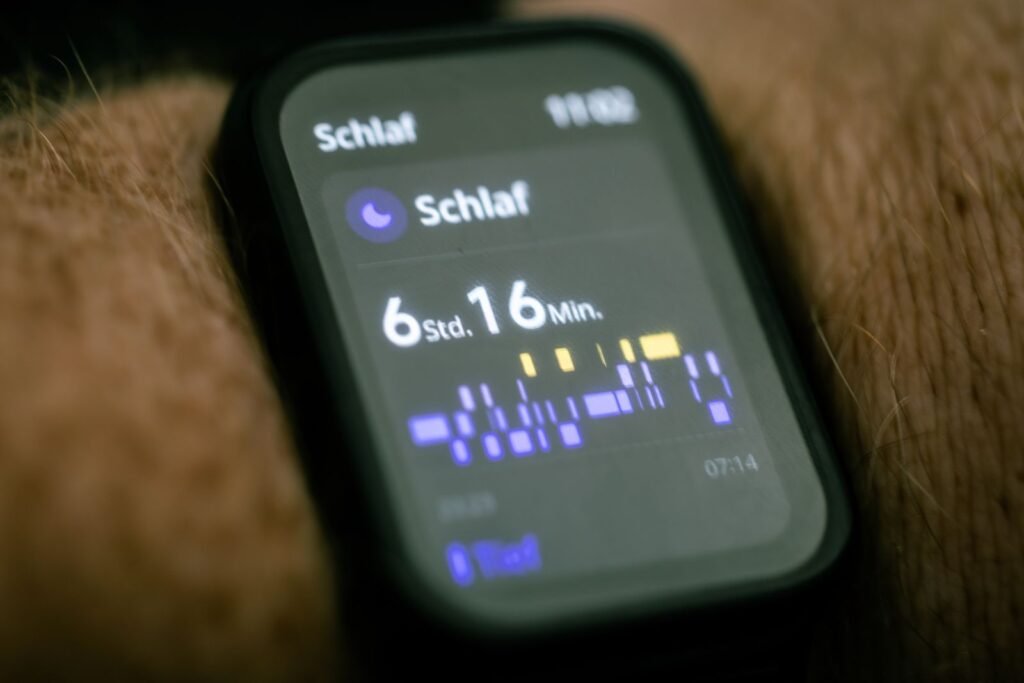
The best sleep trackers in 2026 are the Oura Ring 4 for most people, WHOOP 5.0/MG for serious athletes chasing recovery, and the Withings Sleep Analyzer if you would rather not wear anything to bed. Every one of these devices estimates sleep stages from proxies like heart rate and movement, so treat the numbers as trends, not clinical truth.
How we ranked the best sleep trackers
We weighed six things that actually matter to data-driven users: sleep-stage accuracy, HRV and recovery insight, battery life, subscription cost, comfort for overnight wear, and app depth. One honest caveat up front. No consumer wearable matches polysomnography, the clinical sleep study that uses brain-wave (EEG) sensors. Independent testing consistently shows these devices are excellent at telling sleep from wake and good at total sleep time, but only fair at splitting light, deep, and REM. The gap has narrowed in 2026, yet a “deep sleep” number is still an educated estimate. Use the trends, not the decimals.
Oura Ring 4 — Best overall
Mini-verdict: The most refined sleep tracker you can buy, with class-leading staging and effortless comfort. You just have to accept the membership.
The fourth-generation Oura Ring remains the sleep specialist to beat. Its underside sensors sit close to the finger’s arteries, which gives it a strong heart-rate and HRV signal overnight, and its Sleep and Readiness scores are the most polished in the category. Because it is a ring, there is nothing pressing into your wrist, so it is the device most people actually forget they are wearing. Battery runs about seven to eight days, and the titanium build handles workouts and showers without complaint.
Pricing is where you have to pay attention. The ring itself runs $349 to $499 depending on finish, and the Oura Membership costs $5.99/month or $69.99/year on top of that. Without it, you are limited to the three headline scores; full sleep staging, long-term trends, and stress tracking all live behind the paywall. Over three years you are looking at roughly $550 all in. For a serious sleep nerd, it is money well spent. For a casual user, it stings.
WHOOP 5.0 / MG — Best for recovery and athletes
Mini-verdict: The recovery obsessive’s tool of choice. No screen, no distractions, just strain, recovery, and sleep coaching backed by a strong HRV engine.
WHOOP is built for exactly the person who reads a sleep-tracker ranking to the end. The screenless band lives on your wrist (or bicep) 24/7, feeding a daily Recovery score built primarily from overnight HRV, resting heart rate, and sleep performance. Its Sleep Coach tells you how much sleep you need to hit a performance target, and the strain-versus-recovery framing is genuinely useful if you periodize training. Battery is now 14-plus days, and the slide-on battery pack charges the band without taking it off.
WHOOP is subscription-only, and the hardware comes bundled with membership. WHOOP One is $199/year on the 5.0 sensor, Peak is $239/year, and WHOOP Life is $359/year on the medical-grade MG sensor, which adds ECG and blood-pressure insights. There is no way to buy it outright and walk away, so if you cancel, the band stops working. That model rubs some people the wrong way; if it does, our roundup of WHOOP alternatives covers the non-subscription options worth considering.
Apple Watch Series 11 — Best for iPhone owners
Mini-verdict: A superb all-around smartwatch that finally takes sleep seriously, held back only by battery life.
With the Series 11, Apple added a proper Sleep Score, joining the existing FDA-cleared sleep apnea detection and new hypertension notifications. Combined with watchOS’s revamped sleep views, it is now a legitimate nightly tracker rather than an afterthought. Sleep-stage accuracy is competitive with the wrist-worn pack, and the health app ecosystem is deep. The starting price is $399, and there is no mandatory subscription for the core sleep features.
The limitation is obvious to anyone who has tried to wear a watch to bed: battery. Even with the Series 11’s improved efficiency, you get around a day and a half of real use, which means charging discipline is required to have juice for the night. It is also iPhone-only. If you want the smartwatch experience without the Apple lock-in or the nightly charging dance, see our picks for the best Apple Watch alternatives in 2026.
Samsung Galaxy Ring — Best ring without a subscription
Mini-verdict: Oura’s comfort and form factor with no monthly fee, as long as you live in Samsung’s world.
The Galaxy Ring delivers the same wear-and-forget appeal as Oura, and crucially, Samsung does not charge a subscription. You get sleep stages, a Sleep Score, movement and heart-rate tracking, and Samsung’s Energy Score for daily readiness, all inside Samsung Health at no recurring cost. Battery lands around seven days depending on ring size. It is the smart ring to buy if the Oura membership is a dealbreaker.
The trade-offs: it works best paired with a Samsung Galaxy phone, and its app and sleep-coaching depth still trail Oura’s. Accuracy is solid but not category-leading. For an Android user who already owns a Galaxy phone, though, it is the most sensible ring on the market.
Garmin Venu / Fenix — Best no-subscription wearable for fitness geeks
Mini-verdict: Marathon battery life, a genuinely useful recovery model, and zero subscription. The endurance crowd’s default.
Garmin’s appeal for sleep tracking is simple: multi-day to multi-week battery life means the watch is actually on your wrist every night, and everything is included with no membership. Body Battery quietly tracks your energy reserves across the day using HRV, stress, and sleep, and the Sleep Score with sleep-stage breakdown has improved substantially. A Fenix can go a week or two between charges; even the smaller Venu comfortably covers several nights.
Sleep staging is decent rather than best-in-class, and the watches are chunkier on the wrist at night than a ring. But for athletes who want training load, VO2 max, recovery, and sleep in one device they never have to charge mid-week and never have to pay monthly for, Garmin is hard to beat.
Fitbit Charge 6 — Best value
Mini-verdict: The most affordable way into genuinely good sleep tracking, if you can live with Fitbit’s soft paywall.
At around $159, the Charge 6 is the value champion. Fitbit has long had one of the most readable sleep experiences in the business, with a nightly Sleep Score, stage breakdown, and the Sleep Profile that assigns you a “sleep animal” based on long-term patterns. The band is light and comfortable for overnight wear, battery lasts about a week, and Google integration has added handy features like Google Maps and Wallet.
The wrinkle is Fitbit Premium at roughly $9.99/month. Basic sleep scores are free, but the richest analysis, including the detailed Sleep Profile and daily readiness, sits behind the subscription. New devices include a trial. Even so, for the price of entry, nothing else offers this much polish.
Withings Sleep Analyzer — Best non-wearable
Mini-verdict: Set-and-forget sleep tracking with no charging and no wearing, plus clinically validated sleep apnea detection.
Not everyone wants a gadget on their body all night. The Withings Sleep Analyzer is a thin pad that slides under your mattress and tracks sleep cycles, heart rate, snoring, and breathing disturbances automatically the moment you lie down. It is a one-time purchase of around $130 with no subscription, it never needs charging, and its sleep apnea detection is medically certified in some regions, a genuine standout among consumer devices. We break down the experience in our full Withings Sleep Analyzer review.
The limits are inherent to the format. It only knows about you when you are in bed, so there is no all-day HRV, activity, or workout data, and it can get confused when two people share a bed. As a dedicated, zero-effort sleep monitor, though, it is excellent value.
Eight Sleep Pod 5 — Best premium non-wearable
Mini-verdict: The luxury option that actively changes your sleep by heating and cooling the bed. Extraordinary, and priced like it.
The Eight Sleep Pod 5 is a smart mattress cover that does something none of the others can: it warms or cools each side of the bed through the night and tracks heart rate, HRV, respiratory rate, and sleep stages contactlessly. For hot sleepers or couples with different temperature preferences, the cooling alone can be transformative, and its Autopilot feature adjusts automatically.
It is a serious investment. Hardware starts around $2,799 and climbs well past $3,000 for larger sizes, and a mandatory Autopilot subscription runs $199 to $399/year, with core features disabled if you cancel. Its sleep staging, per its own maker, is not medical-grade. This is a lifestyle upgrade first and a tracker second, but as a non-wearable it is in a class of its own.
2026 sleep tracker ranking at a glance
| Device | Best for | Sleep tracking strength | Subscription | Approx. price |
|---|---|---|---|---|
| Oura Ring 4 | Best overall / best ring | Class-leading staging and readiness | $5.99/mo required for full data | $349–$499 + sub |
| WHOOP 5.0 / MG | Recovery and athletes | Deep HRV-based recovery coaching | Subscription-only, $199–$359/yr | Included with membership |
| Apple Watch Series 11 | iPhone owners | Sleep Score + apnea detection | None for core sleep | From $399 |
| Samsung Galaxy Ring | No-subscription ring | Solid staging, Energy Score | None | ~$399 |
| Garmin Venu / Fenix | No-sub wearable, endurance | Good staging + Body Battery | None | $450–$1,000+ |
| Fitbit Charge 6 | Best value | Readable scores, Sleep Profile | Premium ~$9.99/mo for depth | ~$159 |
| Withings Sleep Analyzer | Best non-wearable | Auto tracking + apnea detection | None | ~$130 |
| Eight Sleep Pod 5 | Premium non-wearable | Contactless tracking + cooling | Autopilot required, $199–$399/yr | $2,799+ |
How to choose the right sleep tracker
Start with the form factor you will actually wear. If a watch feels bulky at night, a ring or an under-mattress sensor will get you more consistent data simply because you will use it every night. Rings win on comfort; watches win on all-day fitness features; bed sensors win on zero effort.
Next, be honest about subscriptions. Oura, WHOOP, Fitbit Premium, and Eight Sleep all lean on recurring fees for their best insights, and those add up fast. Garmin, the Samsung Galaxy Ring, and the Withings Sleep Analyzer give you strong data for a one-time price, which can save hundreds over a few years. If you want to obsess over recovery and will use the coaching daily, a subscription earns its keep. If you just want a reliable nightly score, buy something you own outright.
Finally, match the tool to your goal. Chasing athletic performance and periodized training points to WHOOP or Garmin. Pure sleep quality with minimal fuss points to Oura or the Galaxy Ring. Clinical concerns like snoring and possible apnea point to Withings or the Apple Watch. And if budget or bed temperature is the real problem, the Fitbit Charge 6 and Eight Sleep Pod 5 sit at opposite ends of that spectrum.
The bottom line
The Oura Ring 4 is the best sleep tracker for most fitness geeks in 2026, combining the sharpest staging, the best comfort, and a mature app, provided you accept the membership. WHOOP is the pick if recovery is your religion, Garmin and the Samsung Galaxy Ring are the smart no-subscription buys, the Fitbit Charge 6 is the value leader, and Withings and Eight Sleep own the non-wearable category at wildly different prices. Whichever you choose, remember the honest limitation shared by all of them: they are outstanding at spotting trends and flagging bad nights, but the exact minutes of deep and REM sleep are still estimates. Track the direction, sleep better, and do not lose sleep over the decimals.
About this article: GeekBlog covers U.S. technology news, AI, phones, smartwatches and gaming. Every story is written and checked under our Editorial Policy. Spotted a mistake or have a story tip? Contact our editors.
