

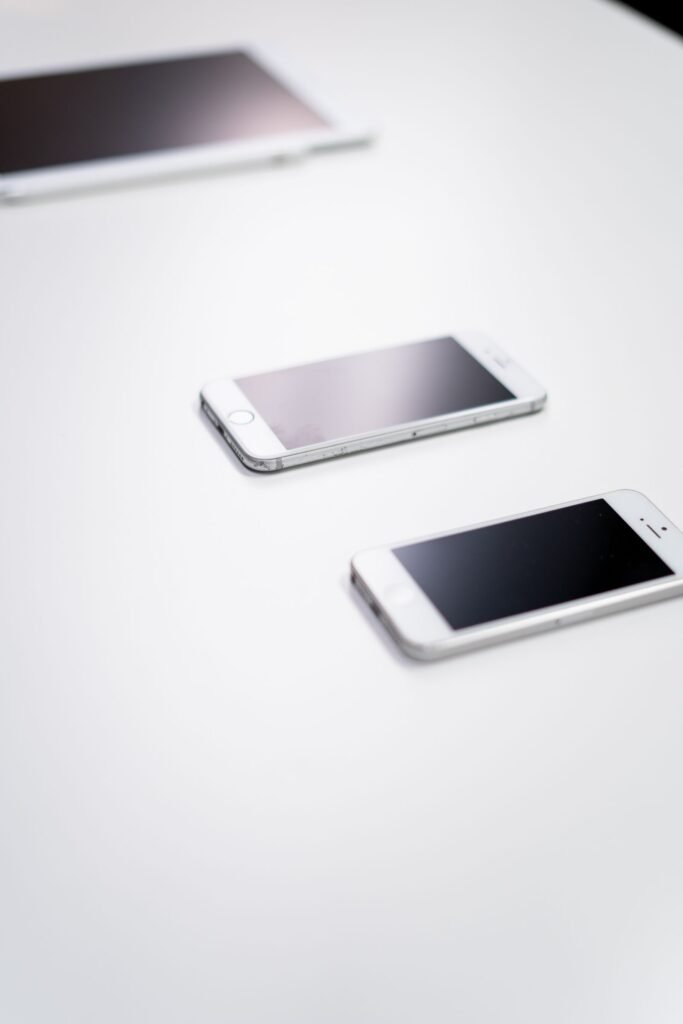
Nearly two decades after Steve Jobs walked onstage and promised to reinvent the phone, the iPhone has become one of the best-documented products in history — and yet plenty of its most interesting details are still buried under marketing and myth. This collection of iPhone facts sticks to what actually happened, from the 2007 launch to the iPhone 17 lineup on shelves today.
Below, we’ve grouped the most interesting iPhone facts by theme: the early history and firsts, Apple’s habit of skipping numbers, the staggering sales figures, the engineering choices most people never notice, and where the line stands in 2026. Every claim here is checkable, and where the public record is fuzzy — total lifetime sales, for instance — we say so rather than inventing a number.
History and firsts
Apple announced the first iPhone on January 9, 2007, at Macworld in San Francisco. It did not go on sale that day. The phone reached stores nearly six months later, on June 29, 2007, in the United States only.
- It launched at $499 — with a contract. The original iPhone cost $499 for the 4GB model and $599 for the 8GB model, and both prices required a two-year AT&T contract. The 4GB version sold so poorly that Apple discontinued it within a couple of months.
- There was no App Store at launch. When the first iPhone shipped in 2007, Apple expected developers to build “web apps” that ran in Safari. The native App Store didn’t arrive until July 2008, alongside the iPhone 3G and iPhone OS 2.0. Essentially every third-party app you’ve ever installed postdates the phone itself.
- No copy and paste until 2009. As noted above, one of the most basic text features on any computer was missing for the first two years. Apple added it in iPhone OS 3.0.
- It was exclusive to AT&T. In the U.S., the iPhone was tied to a single carrier (then called Cingular, quickly rebranded AT&T) for years. A Verizon iPhone didn’t appear until 2011.
- The name was almost a lawsuit. Cisco already owned the “iPhone” trademark through its Linksys division when Apple used it. The two companies settled in 2007, agreeing to share the name.
Naming oddities
Apple’s iPhone naming has never followed a clean, incrementing sequence, and two gaps in particular still confuse people.
- There was never an “iPhone 2.” The second-generation model was called the iPhone 3G — named for its 3G cellular support, not because it was the third phone. The one after that was the iPhone 3GS. So the numbers “2” as a standalone model simply never existed.
- Apple skipped the iPhone 9. In 2017, the lineup jumped straight from the iPhone 8 to the iPhone X (pronounced “ten”), marking the phone’s tenth anniversary. There has never been a device sold as the “iPhone 9.” The later iPhone XR, XS, and XS Max continued the roman-numeral branding before Apple returned to plain numbers with the iPhone 11.
- The “S” years. For much of the 2010s, Apple alternated between a numbered redesign (iPhone 5, 6, 6s aside) and an “S” refresh on the same body — the 3GS, 4S, 5S, 6S, and so on. The “S” was variously said to stand for “speed” or “Siri,” but Apple was never fully consistent about what it meant.
- “Plus,” then “Air.” The large non-Pro model carried the “Plus” name for years. In 2025 Apple retired Plus and replaced it with the ultra-thin iPhone Air, so the current lineup has no “iPhone 17 Plus.”
Sales and scale
The iPhone is the best-selling smartphone product line in history and, by revenue, one of the most successful consumer products ever made. Exact lifetime unit totals are estimates — Apple stopped reporting per-unit iPhone sales in 2018 — so treat any single number with some caution.
- Well over two billion sold. Independent analysts generally put cumulative iPhone sales somewhere north of 2.3 billion units since 2007. Because Apple no longer breaks out unit figures, the precise running total is an informed estimate, not an official count.
- The iPhone 6 is widely considered the best-seller. The iPhone 6 and 6 Plus generation from 2014 is commonly cited as the most successful single iPhone, with estimates around 220 million-plus units over its life. It arrived just as Apple embraced larger screens, and demand was enormous.
- It’s the bulk of Apple’s business. The iPhone has for years generated roughly half of Apple’s total revenue, making a single product line more valuable than most entire technology companies.
- A sealed 2007 unit is now a collector’s item. Factory-sealed first-generation iPhones have sold at auction for well into the tens of thousands of dollars — in some cases over $190,000 — many times their original retail price.
Design and engineering trivia
Some of the most interesting iPhone facts are the small engineering decisions that most owners never think about.
- The camera shutter sound isn’t just for nostalgia. On iPhones sold in Japan and South Korea, the camera makes a shutter sound that cannot be silenced, even in silent mode. This is a response to regional concerns about covert photography, and Apple bakes it into the firmware for those markets. In most other countries, flipping the silent switch mutes it.
- “Live Photos” are short videos. Introduced with the iPhone 6s in 2015, a Live Photo captures roughly 1.5 seconds of motion and audio before and after you press the shutter. What looks like a single still is actually a still frame paired with a short clip.
- The Pro camera names describe focal length, not just marketing. Apple labels its rear cameras by field of view — Ultra Wide, Wide, and Telephoto — rather than by megapixels alone. The “Wide” camera is the standard main lens; “Ultra Wide” fits more into the frame; “Telephoto” zooms in optically.
- Taptic feedback replaced a real button. Starting with the iPhone 7 in 2016, the home button stopped physically moving. It used a Taptic Engine to simulate a click through vibration — many users never realized they were pressing a solid, immovable pad. The home button disappeared entirely on Face ID models.
- The notch, then the Dynamic Island. The iPhone X introduced the “notch” to house the Face ID sensors in 2017. In 2022, Apple reshaped that cutout into the pill-shaped “Dynamic Island,” turning a hardware compromise into an interactive status area.
The modern era
The current-generation iPhone reflects two big shifts: a move to USB-C charging and a redesigned operating system.
- USB-C arrived with the iPhone 15. In 2023, the iPhone 15 line became the first to ship with a USB-C port, replacing Lightning. The change was driven in large part by the European Union’s common-charger rules, which required a standard USB-C port on many small electronics sold in the bloc.
- Lightning lasted eleven years. The Lightning connector debuted on the iPhone 5 in 2012, replacing the older 30-pin dock connector that dated back to the iPod era. Lightning served the iPhone from 2012 until USB-C took over in 2023.
- The iPhone 17 lineup, launched in 2025. The current family, announced in September 2025, has four models: the iPhone 17, the new iPhone Air, the iPhone 17 Pro, and the iPhone 17 Pro Max. The standard iPhone 17 uses Apple’s A19 chip, while the Air and both Pro models use the A19 Pro. The iPhone Air is notable for being strikingly thin — it’s the model that replaced the old Plus slot in the range.
- iOS 26 and the “Liquid Glass” redesign. Apple skipped ahead in its software numbering too. Rather than releasing “iOS 19,” the company aligned its operating systems to the model year and shipped iOS 26 in September 2025. Its headline change is a translucent interface look Apple calls Liquid Glass — the biggest visual overhaul to iOS in years — and follow-up updates like iOS 26.2 have continued to tune it.
If you’re weighing a purchase against all this history, our regularly updated iPhone price list for 2026 breaks down what each current model costs, and our guide to which iPhone has the best camera is a useful companion to the camera trivia above.
iPhone milestones by year
| Year | Model | Notable first |
|---|---|---|
| 2007 | Original iPhone | First iPhone; no App Store, no copy-paste |
| 2008 | iPhone 3G | App Store launches with iPhone OS 2.0 |
| 2010 | iPhone 4 | Retina display and FaceTime |
| 2011 | iPhone 4S | Siri debuts |
| 2012 | iPhone 5 | Lightning connector replaces 30-pin dock |
| 2014 | iPhone 6 / 6 Plus | Larger screens; best-selling generation |
| 2015 | iPhone 6s | Live Photos introduced |
| 2016 | iPhone 7 | Solid-state home button; headphone jack removed |
| 2017 | iPhone X | Face ID and the notch; “iPhone 9” skipped |
| 2022 | iPhone 14 Pro | Dynamic Island replaces the notch |
| 2023 | iPhone 15 | USB-C replaces Lightning |
| 2025 | iPhone 17 / Air | iPhone Air replaces Plus; ships with iOS 26 |
The takeaway
What makes these iPhone facts interesting isn’t just nostalgia — it’s how much of what feels permanent about the phone was added later or nearly went a different way. The device that reinvented the smartphone shipped without an app store, without copy and paste, and locked to a single carrier. The naming has skipped numbers and swapped suffixes. And the hardware keeps quietly shedding parts, from the headphone jack to the physical home button to the Lightning port. Nearly twenty years in, the iPhone is less a finished product than a moving target — which is exactly why there are always new facts worth knowing.
