

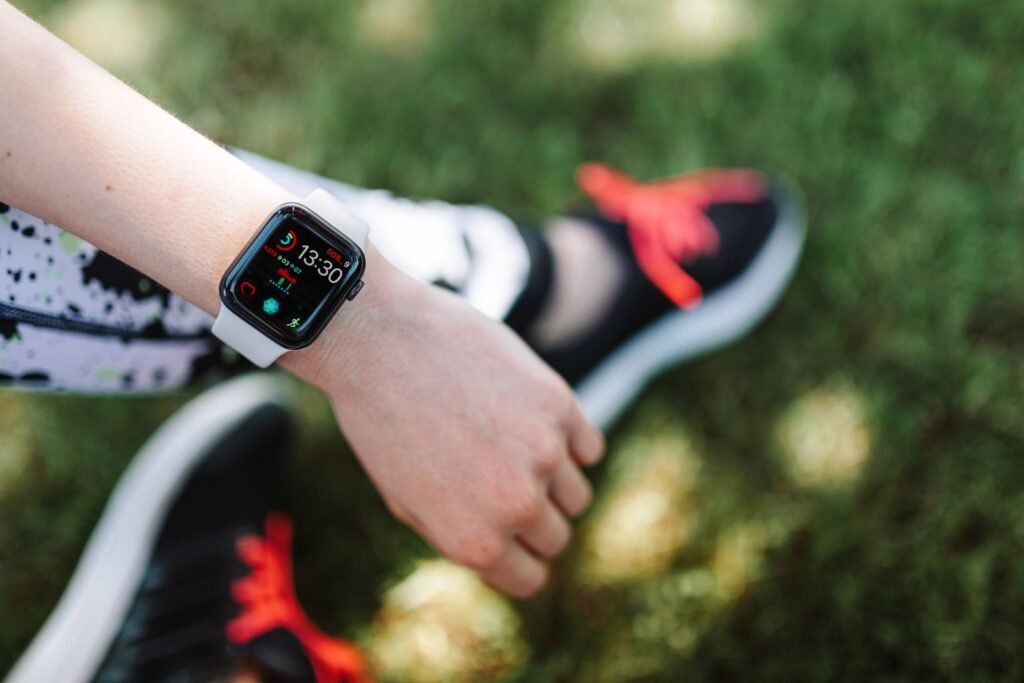
Nobody buys a smartwatch for weight loss because they love charts. They buy one because they want a little honesty on their wrist: how much they actually move, how they sleep, and whether that evening walk is making any difference. The good news is that the research says a tracker can help. The less good news is that the calorie number it shows you is probably wrong, and if you treat it as gospel it can quietly work against you.
This guide to the best smartwatch for weight loss in 2026 starts with what the studies actually found, then walks through six watches that are worth your money, what each one costs to run once subscriptions are included, and a simple routine that turns all that data into results. Prices come from manufacturer listings and recent reviews and change often, especially around Black Friday, so check the current price before you buy.
Quick answer
For iPhone users, the Apple Watch Series 12 (from $399) is the best smartwatch for weight loss, and it posted the most accurate calorie estimates in a 2026 lab study. Android users should get the Samsung Galaxy Watch 9 (from $379.99), which puts calories burned, food logging and body composition in one free app. Pick the Pixel Watch 5 if you want an AI coach that logs meals from a photo, the Garmin Venu 4 if you hate charging, and the Fitbit Charge 6 or Amazfit Active 2 if you want to spend around $100.
Sources: Ferguson et al., The Lancet Digital Health (2022); pooled trial analysis in the British Journal of Sports Medicine; Florida International University study in PLOS One (2026).
Can a Smartwatch Actually Help You Lose Weight?
Yes, but modestly, and mostly by changing how much you move. The biggest look at the question is a 2022 umbrella review in The Lancet Digital Health by Ferguson and colleagues. It pulled together 39 systematic reviews and meta-analyses covering almost 164,000 people. On average, activity trackers were linked to about 1,800 extra steps a day, roughly 40 minutes of extra walking and around 1 kg (2.2 lb) less body weight. The authors concluded there was enough evidence to recommend them.
A separate pooled analysis in the British Journal of Sports Medicine, focused on people with overweight or obesity, found that wearables helped users lose weight and lower their BMI. Programs that lasted at least 12 weeks did best. That lines up with what most people find in real life: the first few weeks of novelty fade, and the habit is what is left.
There is one study every buyer should know about, though. In the IDEA trial, published in JAMA in 2016, 471 young adults went through the same diet and exercise program for six months. After that, half of them added a wearable. Two years in, the group with the device had lost less weight than the group without one.
The researchers never pinned down exactly why. A popular theory is that people saw a big “calories burned” number and ate it back. Whatever the reason, the lesson is practical: a watch works best as a habit tool for steps, workouts and sleep, not as a calorie bank account.
The Calorie Problem Nobody Puts on the Box
In 2026, researchers at Florida International University published a study in PLOS One that put four popular brands to the test. Fifty-eight adults rode a stationary bike while wearing Apple, Fitbit, Garmin and Samsung watches, and their real energy use was measured with a COSMED K5 metabolic analyzer. Typical errors landed between 15% and 25%. Apple was the most accurate. Garmin and Samsung overestimated the most, and Fitbit had the largest average error once a batch of implausible readings was counted. Error also grew with body fat, which is exactly the group most likely to be shopping for a weight loss watch.
That is not new. A 2017 Stanford study of seven wrist devices found that none of them measured energy expenditure accurately. The best one was off by an average of 27%, and the worst by 93%.
What should you do with that? The FIU team’s advice is simple: treat the number as a rough guide and round it down. Here is how that looks in practice.
What to Look for in a Weight Loss Smartwatch
- Reliable steps and all-day activity. Daily movement outside the gym, the stuff researchers call NEAT, is where trackers make their biggest difference. A good step count, inactivity reminders and a clear daily goal matter more than any fancy metric. If walking is your main plan, our guide to the best smartwatch for walking covers that use case in depth.
- A food log that connects to your activity. Calories in still matter more than calories out. Samsung, Google and Garmin now offer food logging inside their own apps, and Apple Watch works with apps like MyFitnessPal or Lose It! through Apple Health.
- Weight and body composition tracking. Watching muscle as well as weight helps you avoid losing the wrong kind of pounds. Samsung builds this into the watch. Others pair with smart scales.
- Sleep tracking. Short sleep is linked to more hunger and worse food choices, so a watch you can comfortably wear to bed is worth more than it sounds.
- Battery life you can live with. A watch that sits on the charger for half the day cannot count your steps. If you know you will forget, go for a multi-day battery.
- The real cost. Some of the best features now sit behind monthly subscriptions. Add those up before you compare price tags.
Best Smartwatches for Weight Loss in 2026, Compared
| Watch | Best for | Food logging | Battery | Starting price |
|---|---|---|---|---|
| Apple Watch Series 12 | iPhone users, calorie accuracy | Via third-party apps | Rated 24 hrs, often 40+ in tests | $399 |
| Samsung Galaxy Watch 9 | Android users, body composition | Free in Samsung Health | About 1.5 to 2 days | $379.99 |
| Google Pixel Watch 5 | AI coaching, photo meal logs | Google Health Coach (Premium) | About 1 to 1.5 days | $399 |
| Garmin Venu 4 | Long battery, training data | Garmin Connect+ (paid) | Up to 10 to 12 days | $549.99 |
| Fitbit Charge 6 | Simple tracker, small budget | Google Health app | Up to 7 days | $159.95 (often under $100) |
| Amazfit Active 2 | Best value under $100 | Sync to a food app | Up to 10 days | $99.99 |
Prices are US list prices at the time of writing. Battery figures are manufacturer ratings unless noted, and real-world results vary with screen settings and GPS use.
1. Apple Watch Series 12: Best for iPhone Users
If you carry an iPhone, this is the easy pick. Apple’s Activity rings are still one of the best motivational systems on any wearable, because they reward three things that actually move the needle: total movement, exercise minutes and standing up regularly. Closing the Move ring every day is a simple, visible goal that fits nicely into a weight loss plan.
Accuracy is the other reason it tops this list. In the 2026 FIU study, Apple’s calorie estimates were the closest to lab measurements of the four brands tested. That does not make them perfect, but if you are going to look at an “active calories” number at all, you want the least wrong one.
The Series 12 starts at $399 for the 42mm model and $449 for the 46mm. Apple still rates the battery at 24 hours, though independent rundown tests have regularly gone past 40. The one gap is food: there is no built-in calorie log, so you will need a third-party app such as MyFitnessPal or Lose It!, which write your meals into Apple Health. On a tighter budget, the Apple Watch SE 3 ($249) has the same rings and step tracking.
Why we like it
Most accurate calories in the latest lab test, excellent Activity rings, huge app ecosystem.
Keep in mind
iPhone only, no native food log, needs charging every day or two.
2. Samsung Galaxy Watch 9: Best for Android Users
Samsung has quietly built the most complete free weight management setup of any watch maker. In Samsung Health you can set a target weight and a timeline, log meals with a barcode scanner, and see calories eaten next to calories burned on one screen. A newer feature called Scan Meal, launched as a beta in the US, estimates calories from a photo of your plate.
The standout is body composition. Like recent Galaxy Watches, the Watch 9 can estimate skeletal muscle, body fat percentage, body water and basal metabolic rate in about 15 seconds by holding two fingers on the side buttons. Samsung recommends measuring in the morning before eating, at the same time each day, and it is clear the feature is a wellness tool rather than a medical device. Used that way, the trend line is genuinely useful, because it shows whether you are losing fat or muscle.
The Galaxy Watch 9 starts at $379.99, with LTE models from $429.99. It runs the fast new Snapdragon Wear Elite chip, but battery life barely moved from last year, so plan on charging every day or so. Some health features also work best with a Samsung phone.
Why we like it
Body composition on the wrist, free food logging and weight goals, no subscription needed.
Keep in mind
Overestimated calories in the FIU test, short battery, best with a Galaxy phone.
3. Google Pixel Watch 5: Best AI Coaching
Google’s pitch for 2026 is coaching. The Fitbit app became the Google Health app in May, and the Gemini-powered Google Health Coach can now take a photo of your meal or a quick chat message and log calories, carbs, protein and fat for you. It then mixes that with your activity and sleep data to suggest what to change. For people who gave up on food logging because typing every meal was tedious, that is a real improvement. Google also expanded its MyFitnessPal integration in October, so existing logs can flow in.
The catch is the price. The coach needs Google Health Premium at $9.99 a month, on top of a watch that costs $399 for the 41mm and $429 for the 45mm. The Pixel Watch 5 itself is excellent, with dual-frequency GPS, improved sleep tracking and a comfortable domed design, but its battery still lasts about a day or a little more.
Why we like it
Fastest meal logging of any platform, strong sleep and step tracking, great GPS.
Keep in mind
Best features need a $9.99 monthly plan, daily charging, Android only.
4. Garmin Venu 4: Best Battery Life
A watch only helps if it is on your wrist, and the Venu 4 is the pick here for people who forget to charge. Garmin rates it at up to 10 days for the 41mm model and 12 days for the 45mm, with about 8 to 9 days in real use. You get a bright 2,000 nit AMOLED screen, multi-band GPS, ECG and Garmin’s training tools, which are some of the most detailed around.
Since January 2026, Garmin also has its own food log. You can search a database, scan barcodes or snap a photo of your plate, and the app compares what you ate against targets based on your height, weight and activity. It ties into training load, recovery and sleep, which is genuinely smart. It does sit behind Garmin Connect+, though, at $6.99 a month or $69.99 a year after a 30-day trial. Free MyFitnessPal sync is still an option.
At $549.99 the Venu 4 is not cheap. Our full Garmin Venu 4 review covers whether it is worth that money. If it is too much, the Vivoactive 6 ($299.99) gives you most of the same tracking and around 11 days of battery.
Why we like it
More than a week of battery, superb workout and recovery data, works with iPhone and Android.
Keep in mind
Expensive, food logging needs Connect+, calories ran high in the FIU test.
5. Fitbit Charge 6: Best Budget Tracker
Not everyone wants a smartwatch. The Charge 6 is a slim band that does the core weight loss jobs well: steps, active minutes, heart rate, sleep and built-in GPS for walks and runs. It lasts up to seven days, even includes an ECG app, and syncs to the same Google Health app as the Pixel Watch, including free food logging and Premium coaching if you want it.
The list price is $159.95, but it is one of the most discounted wearables around and has dropped to roughly $85 to $100 several times this year. At that price it is hard to beat. The screen is small and it has been on sale since 2023, so do not expect cutting edge hardware.
6. Amazfit Active 2: Best Smartwatch Under $100
The Amazfit Active 2 costs $99.99 and gives you a sharp 1.32 inch AMOLED screen, built-in GPS with offline maps, Bluetooth calls and up to 10 days of battery, with roughly a week in real use. It works with both iPhone and Android through the free Zepp app, which handles steps, sleep, workouts and weight entries without a subscription.
Its heart rate tracking can wobble during hard intervals, so the calorie estimates are best taken with an extra pinch of salt. For a beginner whose goal is to walk more, sleep better and build a routine, that hardly matters.
What It Really Costs: Subscriptions Compared
| Platform | Food logging | Monthly cost | First year, watch + plan |
|---|---|---|---|
| Samsung Health | Built in, barcode and photo | Free | $379.99 (Galaxy Watch 9) |
| Apple Health | Third-party apps | Free (app plans optional) | $399 (Series 12) |
| Google Health Premium | AI coach, photo and chat | $9.99 | About $519 (Pixel Watch 5) |
| Garmin Connect+ | Database, barcode, photo | $6.99 or $69.99 a year | About $620 (Venu 4, annual plan) |
All four platforms still track steps, workouts and sleep for free. Subscriptions add coaching and in-app food logging where noted.
How to Use a Smartwatch to Actually Lose Weight
A simple five-step routine
- Set a step goal you can hit, then raise it. Take your average from the first week and add 1,000 to 2,000 steps. That is close to the 1,800 step boost seen in the research.
- Log food for at least two weeks. Even if you stop later, a couple of weeks of honest logging teaches you more about portions than any watch metric.
- Ignore single-day calorie burns. Look at weekly trends in steps, active minutes and weight instead.
- Protect your sleep. Use bedtime reminders and aim for a consistent schedule. Tired days are hungry days.
- Stick with it for 12 weeks. That is the program length that worked best in pooled trials, and long enough for a habit to stick.
Taking a GLP-1 Medication? Watch Your Muscle
Millions of Americans are now losing weight with GLP-1 drugs such as semaglutide and tirzepatide. Fast weight loss can include a meaningful share of muscle, which is why Samsung and Mass General Brigham launched a study using Galaxy Watch body composition data to help manage muscle loss in patients on these drugs. If you are on one, strength training a few times a week and tracking muscle as well as weight is worth the effort. A watch that logs lifting well helps here, and our pick for the best smartwatch for weightlifting is a good place to start. Talk to your doctor about protein and exercise targets, since a watch cannot tell you what is right for your situation.
Frequently Asked Questions
Which smartwatch is most accurate for calories burned?
In the 2026 FIU study, Apple Watch was the most accurate of the four brands tested, while Garmin and Samsung overestimated the most. The study only tested cycling, so results for walking, running or weight training could differ. No watch is precise enough to plan your diet around.
Should I eat back the calories my watch says I burned?
Not all of them. Typical errors run 15% to 25% and can be much higher, usually in the direction of overestimating. If you are hungry after a hard workout, eat a little more, but judge your plan by your weekly weight trend rather than the burn number.
Is a fitness band or a smartwatch better for weight loss?
For pure weight loss, they work about the same, because the benefit comes from steps, active minutes and habits. A band like the Fitbit Charge 6 is cheaper and lasts longer. A smartwatch adds a bigger screen, better apps and features like body composition on Samsung.
Do I need a subscription?
No. Every watch here tracks steps, workouts and sleep for free. Samsung even includes food logging at no cost. Google Health Premium and Garmin Connect+ add coaching and in-app food tracking for $9.99 and $6.99 a month.
How many steps a day should I aim for to lose weight?
There is no magic number. Start from your current average and add 1,000 to 2,000 steps, then build from there. As a rough rule of thumb, 2,000 steps is about a mile, which burns somewhere around 80 to 100 calories for many adults, depending on body weight and pace.
The Bottom Line
The best smartwatch for weight loss is the one you will wear every day and actually look at. For iPhone owners, that is the Apple Watch Series 12. For Android, the Galaxy Watch 9 gives you the most useful free tools, with body composition as a bonus. The Pixel Watch 5 is the pick for AI meal logging if you are happy to pay monthly, the Garmin Venu 4 wins on battery, and the Fitbit Charge 6 and Amazfit Active 2 prove you do not need to spend much. Whatever you choose, use it to move more and sleep better, and do not let a flattering calorie number talk you into a second dessert.
Sources: Ferguson et al., “Effectiveness of wearable activity trackers to increase physical activity and improve health,” The Lancet Digital Health, 2022; Jakicic et al., IDEA trial, JAMA, 2016; Florida International University calorie accuracy study, PLOS One, 2026; Shcherbina et al., Journal of Personalized Medicine, 2017; manufacturer specifications from Apple, Samsung, Google, Garmin and Amazfit; reviews from Tom’s Guide, Android Central, DC Rainmaker and TechCrunch.
About this article: GeekBlog covers U.S. technology news, AI, phones, smartwatches and gaming. Every story is written and checked under our Editorial Policy. Spotted a mistake or have a story tip? Contact our editors.
