

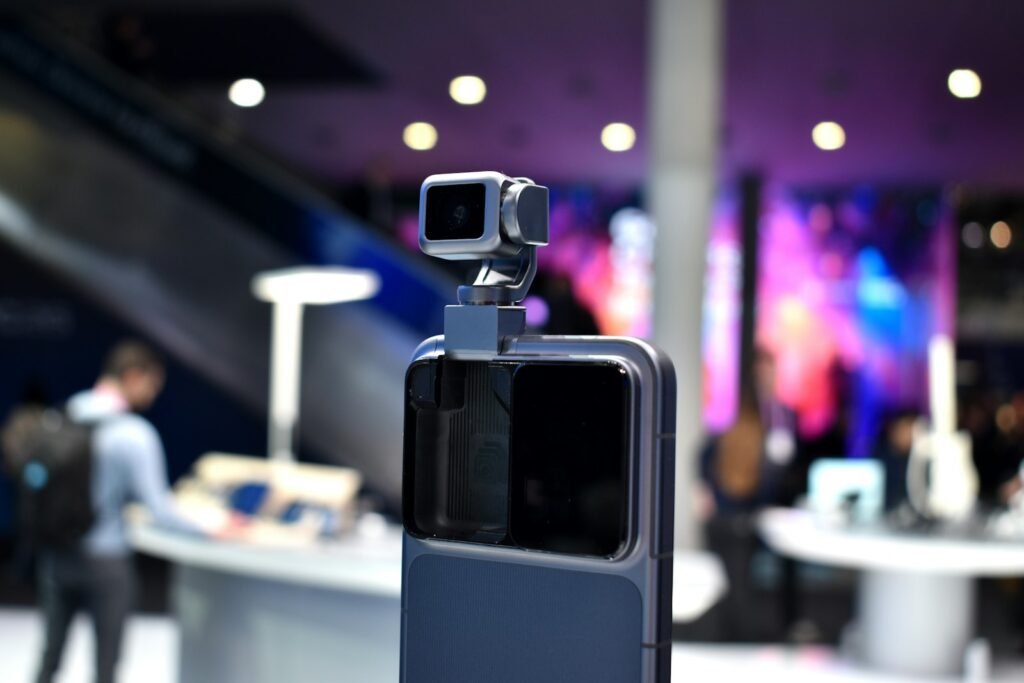
Every few years a phone company builds something that makes the rest of the industry look briefly unimaginative. Usually it is a folding screen, or a camera sensor the size of a coin. This month it was a robot arm.
Honor launched the Robot Phone in China on August 12, and the name is not marketing hyperbole. There is a genuine motorized arm inside the phone, machined from titanium, that lifts a 200MP camera out of the body and then pans, tilts, rolls and spins it while you shoot. It tracks your face across a room. It follows a subject through a crowd. When it has nothing better to do, it nods at you.
The easy reaction is to call it a gimmick, file it next to the pop-up selfie cameras of 2019, and move on. That reaction turns out to be wrong, and the people who have actually held one have been unusually consistent about saying so. What is genuinely frustrating is the other half of the story: Honor has confirmed there will be no global version of this phone at all.
⭐ The short version
- A real mechanical gimbal, not a software trick. Four degrees of freedom, a titanium motor weighing 2.6 grams, and more than 100 precision components packed into a 9.6mm phone.
- Dual 200MP cameras. A 1/1.28 inch main sensor on the arm at f/1.6, plus a 200MP periscope with 2.7x optical zoom and a 50MP ultrawide.
- ARRI co-engineered the imaging. 10-bit LogC3, ARRI Wide Gamut 3, 11 built in Looks and 14 stops of dynamic range, all gradeable in DaVinci Resolve with standard ARRI LUTs.
- It is a flagship underneath. Snapdragon 8 Elite Gen 5, 6.3 inch LTPO OLED, 7,060mAh battery, 120W wired charging.
- Roughly $1,480 to $1,900. 9,999 yuan for 12GB/512GB, 12,999 yuan for 16GB/1TB.
- China only, and Honor has said so plainly. The first generation Robot Phone is not getting an international release.
What Honor Actually Built
Strip away the promo videos and the engineering problem here is simple to describe and very hard to solve. Camera gimbals work because they are big. A DJI Osmo Pocket has room for motors, counterweights and bearings, and it still ends up as a device you carry separately. Honor’s task was to deliver that mechanical range of motion inside a phone that still has to fit in a pocket, survive a year of keys and dust, and leave space for a 7,060mAh battery.
The answer was to shrink everything. Honor says the resulting mechanism is around 65 percent smaller than the gimbal in DJI’s Osmo Pocket line, and the numbers it quotes for the individual parts are the genuinely impressive bit.
The gimbal, by the numbers
Figures as quoted by Honor at the August 12 launch.
Honor has been fairly open about where the expertise came from. The company spent years learning how to make folding hinges survive hundreds of thousands of cycles, and it says the same materials science and simulation work went straight into shrinking this camera module. That is a more credible origin story than it sounds. Hinge engineering and gimbal engineering are the same discipline wearing different hats: tiny moving parts, tight tolerances, and a hard requirement not to fail.
Four Degrees of Freedom, and Why That Number Matters
Most phone stabilization is a compromise. Optical image stabilization shifts a lens element a fraction of a millimeter. Electronic stabilization crops into the frame and slides the crop around, which costs you resolution and field of view. Both help. Neither is a gimbal.
The Robot Phone moves the entire camera assembly, and it does so on four axes rather than the usual two or three.
Four degrees of freedom
The practical result is the one thing software stabilization has never managed. When you walk while filming, a gimbal absorbs the vertical bounce of your steps instead of cropping it away. When you hand the phone to someone and step back, the camera can find you and keep you centered without touching the zoom. Reviewers who tested subject tracking at the launch event described it as fast and accurate in a way that felt closer to a dedicated camera rig than a phone.
| Stabilization method | What moves | The trade off |
|---|---|---|
| Standard OIS | A lens element, by fractions of a millimeter | Cancels handshake, useless against walking motion |
| Electronic (EIS) | Nothing. The software slides a crop around the sensor | Costs resolution and field of view, struggles in low light |
| Micro gimbal vivo X50 Pro, 2020 | The sensor module, pivoting about 3 degrees | Three times better than OIS, but a small range and no tracking |
| Full mechanical gimbal Honor Robot Phone, 2026 | The whole camera, on a motorized arm outside the body | Adds weight, thickness and moving parts that can fail |
It is worth remembering that vivo got here first, in a much quieter way. The vivo X50 Pro in 2020 was the first phone with true gimbal stabilization, using a double ball suspension that let the sensor pivot roughly three degrees, about triple the range of conventional OIS. It worked well and almost nobody copied it. Honor’s version is that idea taken to its logical extreme six years later.
The ARRI Partnership Is the Part Professionals Care About
Phone makers have been signing camera brand partnerships for a decade, and most of them amount to a logo on the back and a color filter in the app. This one is different in a way that is easy to verify.
ARRI does not make consumer products. It makes the cinema cameras that shoot a large share of what you watch in a theater, and its color science is the reference other manufacturers get measured against. The Robot Phone is the first device to carry the company’s “co-engineered with ARRI” designation, and the specifics go well past branding.
How the footage actually gets made
For anyone who has spent an evening trying to match phone footage to real camera footage in an edit, that last box is the whole point. Log footage from a phone is normally its own private format that needs a bespoke conversion. This lands in your timeline as something Resolve already understands.
The video specs back it up too. The main camera records 4K at up to 120fps, drops to 4K60 when you turn LogC3 on, and manages 1080p at up to 240fps for slow motion. That is a meaningfully more serious feature set than the usual flagship, and it makes the Robot Phone a more interesting camera comparison than the annual argument over which iPhone takes the best photos, because it is competing on a different axis entirely.
The Rest of the Phone Is a Proper Flagship
A common failure mode for novelty hardware is that the gimmick eats the budget and you end up with a midrange phone wearing a costume. That did not happen here.
| Component | Honor Robot Phone |
|---|---|
| Processor | Snapdragon 8 Elite Gen 5 with a custom cooling system |
| Display | 6.3 inch LTPO OLED, 2,640 x 1,216, 1 to 120Hz, 6,800 nits local peak |
| Main camera | 200MP, 1/1.28 inch, 23mm equivalent f/1.6, on the gimbal arm |
| Telephoto | 200MP periscope, 2.7x optical zoom |
| Ultrawide | 50MP |
| Front camera | 50MP, f/2.0, 90 degree field of view, 4K60 video |
| Battery | 7,060mAh, 120W wired with the charger included, 50W wireless |
| Body | Metal unibody, 9.6mm thick, 248 grams |
| Memory | 12GB with 512GB, or 16GB with 1TB |
| Price | 9,999 yuan (about $1,480) or 12,999 yuan (about $1,900) |
The two numbers to sit with are 248 grams and 9.6mm. This is a heavy, thick phone by 2026 standards, at a moment when the entire industry is competing to shave grams. Honor spent that budget on a moving camera instead, which is a coherent decision but not a free one. You will notice it in your pocket every day, and you will notice the gimbal maybe twice a week.
The Robot Part, and Why It Is the Weakest Argument
Honor did not stop at stabilization. Because there is a motorized arm with a camera on the end of it, the company turned that arm into a face.
The phone’s assistant, YOYO, uses the gimbal as a physical expression system with more than 100 programmed movements. It nods. It peeks around. It bobs along to music. You can also tell it where to point using your voice, and the hardware obeys. Underneath the theatrics, YOYO Pro is a more serious piece of software than the expressions suggest, capable of chaining over 100 steps across different apps from a single spoken instruction.
Still, this is the part that will age fastest. Charm is not a durable feature, and a phone that dances is delightful for a week and invisible by month three. The gimbal justifies itself through footage, not personality.
The durability question nobody can answer yet:
Over 100 precision components sit in an arm that lifts out of the phone body, which means dust, grit and drops all have a path to something that has to move accurately. Titanium helps with strength, not with contamination, and Honor has not published a cycle rating for the mechanism the way it does for folding hinges. The last time phones shipped with motorized parts, in the pop-up selfie camera era, the mechanisms mostly worked but repair costs were brutal and long term reliability was uneven. Treat the first generation accordingly.
Smartphones Have Tried Moving Parts Before
This is not the industry’s first attempt at putting motors in a phone, and the track record is genuinely mixed.
| Moving part | The problem it solved | How it ended |
|---|---|---|
| Pop-up selfie cameras 2018 to 2020 | Removed the notch, gave you a full screen front | Abandoned. Punch hole cameras solved it with no motor at all |
| Rotating camera modules Asus Zenfone 6 era | One good camera doing both front and rear duty | Faded out. Clever, but a lot of complexity for one saved sensor |
| Micro gimbal sensors vivo, 2020 onward | Real stabilization gains, especially in low light | Survived quietly. Worked well, never became an industry standard |
| Folding hinges 2019 onward | A tablet that fits in a pocket | Won. Took six years and several painful generations to get right |
The pattern in that table is encouraging for Honor. Moving parts survive when they do something software genuinely cannot, and they get abandoned when a cheaper static solution catches up. Punch hole cameras killed the pop-up mechanism in about eighteen months. No amount of processing is going to give a fixed lens the ability to physically follow a running child across a park.
Folding phones are the closest precedent, and they are instructive about the timeline. The first ones were fragile, expensive and a little embarrassing. It took most of a decade of hinge refinement before foldables started fixing their most obvious flaws. If the Robot Phone follows the same arc, generation one is the prototype you admire and generation three is the one you buy.
The Catch: You Cannot Buy One
Here is where the story turns frustrating. Honor has confirmed there will be no global version of the first generation Robot Phone. It went on sale in China on August 18, and that is the entire market.
The reasoning is not hard to reconstruct. A phone with over 100 moving components inside a robotic arm is a support and warranty problem, and you do not want to discover its failure modes across forty countries simultaneously. Restricting the launch to one market where you control the retail and repair network is what a cautious engineering organization does with a first generation mechanism. Honor did tease a global launch at WAIC 2026 without attaching pricing or a date to it, which reads as a promise about some future model rather than this one.
It also lands in a year when the flow of phone hardware between China and the West has been narrowing rather than widening. OnePlus pulled out of the US and Europe entirely not long ago, and the practical effect for buyers on either side is the same: interesting hardware exists, and it is somewhere else.
If you are tempted to import one anyway, know what you are signing up for:
- The software is the Chinese build. Google services are not part of the package, and the YOYO features are tuned for a different app ecosystem.
- Band support is not guaranteed. Chinese market phones frequently miss bands that matter for US and European carriers, which can quietly cost you coverage.
- Warranty service does not travel. On a phone whose headline feature is a motorized arm, this is the one that should stop you.
- Repairs will be specialist work. There is no third party parts market for a mechanism that has existed for a week.
So Does It Matter Outside China?
Yes, but indirectly, and that is the honest answer.
Almost nobody reading this will own a Robot Phone. What it does is settle an argument that has been running quietly for years about whether mechanical stabilization can be miniaturized enough to belong in a phone. Honor has now demonstrated that it fits, that it works well enough to impress people who use real camera equipment, and that a serious cinema brand will put its color science behind the result.
That is the kind of proof that moves an industry. Camera hardware has been stuck in a slow loop for several years now, with each generation adding megapixels and computational tricks to an optical system that fundamentally does not move. A gimbal is the first genuinely new physical capability in a while, and competitors who spent this week calling it a gimmick will be evaluating the parts cost by the end of the quarter.
The Verdict
The Robot Phone is the most interesting phone of 2026, and it is also a phone you should not buy even if you could. Those two things are not in conflict.
It is heavy, thick, expensive, sold in one country, and built around a mechanism with no track record. It is also the first phone in years where the headline feature is a real physical capability rather than a software model, and the ARRI work underneath means the footage is not just stable but properly gradeable. Honor took an actual engineering risk and shipped it, which is rarer than it should be.
The right move is to watch what happens next. If the mechanism holds up through a year of real use in China, this becomes a template, and some version of it turns up in a phone you can walk into a store and buy. If the arms start failing in month eight, it joins the pop-up camera in the museum of good ideas that could not survive contact with pockets.
Either way, someone finally built the thing. That was the hard part.
