

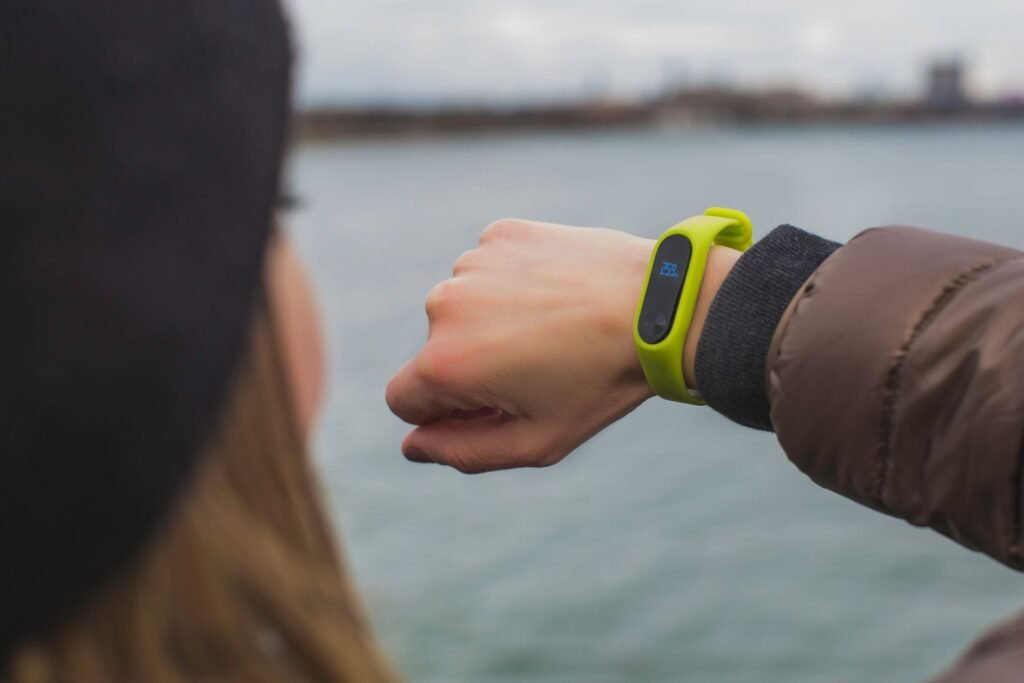
Most people do not buy a smartwatch to train for a marathon. They buy one because they want to walk more, see the steps add up and maybe get a nudge on the days they skip it. That is a very different shopping list from the one a runner or triathlete uses. You do not need a $700 watch with a 3D map. You need steps that look right, a comfortable band, a battery that does not become a chore and GPS that works when you leave the phone at home.
This guide to the best smartwatch for walking in 2026 covers what actually matters for everyday walkers, what the research says about how many steps are worth chasing, and how the main options from Apple, Google, Samsung, Garmin and Fitbit compare. Prices and specs come from manufacturer pages and recent reviews, and they change, so check the current listing before you buy.
Quick answer
For iPhone users, the Apple Watch SE 3 ($249) is the best value walking watch. For Android, the Pixel Watch 5 has the best GPS and the Galaxy Watch 9 is the closest rival. If you hate charging, the Garmin Vivoactive 6 lasts around 11 days, and the Fitbit Charge 6 is the best cheaper tracker with built-in GPS.
Why Walking Is Worth Tracking
The strongest case for tracking steps comes from a 2025 systematic review and dose-response meta-analysis by Ding and colleagues, published in The Lancet Public Health. It pooled studies that measured steps with a device. Compared with walking 2,000 steps a day, people who walked about 7,000 had a 47% lower risk of dying from any cause. The same comparison showed a 37% lower risk of cancer death, a 38% lower risk of dementia and a 22% lower risk of depressive symptoms.
Two cautions. These are observational studies, so walkers may simply be healthier to begin with. And you do not need to hit 10,000 to benefit. The curve rises fastest at the low end, which is good news if you are starting from a desk job. A watch that shows your daily total makes it easy to see where you actually sit.
What to Look for in a Walking Smartwatch
- Step counting you can trust. Wrist devices are generally close for steady walking. They get thrown off when your hand is still, such as when you push a stroller or a cart, so expect small gaps on those days. Consistency matters more than perfection, since you are comparing today with yesterday.
- Built-in GPS. It lets you leave the phone at home and still get an accurate route, distance and pace. Without it, the watch borrows your phone’s GPS and you have to carry it.
- Battery life. A watch that needs charging every night often ends up in a drawer. If you want sleep tracking too, you need a battery that survives the night and still has charge in the morning.
- Comfort and screen. A lightweight case, a soft band and a bright screen you can read in the sun. Our guides to small wrists and large wrists help with fit.
- Reminders and goals. Inactivity nudges, daily goals and weekly summaries are what turn tracking into a habit.
- Phone match. Apple Watch needs an iPhone, Galaxy Watch works best with a Samsung phone, and Pixel Watch is built for Android.
Good to know
In a 2024 study in Frontiers in Digital Health, adults who guessed their own step counts were off by about 29% at the start. Once they could see the numbers from a tracker, their guesses got far closer. Seeing the data is the point, and even a simple watch does that well.
Best Smartwatches for Walking Compared
| Watch | Starting price | Battery | Built-in GPS | Best for |
|---|---|---|---|---|
| Apple Watch SE 3 | $249 (40mm) | About 18 hours | Yes | iPhone users on a budget |
| Pixel Watch 5 | $399 (41mm) | 30 to 40 hours | Yes | Best GPS on Android |
| Galaxy Watch 9 | $379 (40mm) | Charge every 1 to 2 days | Yes | Samsung phone owners |
| Garmin Vivoactive 6 | $299 | About 11 days | Yes | Long battery, any phone |
| Fitbit Charge 6 | $159.95 | About 7 days | Yes | Slim tracker with GPS |
| Fitbit Inspire 3 | $99.95 | About 10 days | No (uses phone) | Cheapest step counter |
Battery figures are rated or typical numbers and drop with GPS, the always-on display and cellular use. Samsung has raised battery capacity on the Watch 9, but we are not quoting a rated runtime here, so plan on regular charging.
Apple Watch SE 3: the best value for iPhone walkers
At $249 for the 40mm and $279 for the 44mm, the SE 3 gets the things walkers need: accurate steps, built-in GPS, inactivity reminders and the Activity rings that many people find genuinely motivating. Reviewers call it the best Apple Watch for most people, and the main weakness is battery life of about 18 hours, or roughly 36 in Low Power mode. It also skips the ECG and blood oxygen sensors. If those matter, look at the bigger Series models, and see our test of Apple Watch Series 12 battery life for what daily charging really looks like.
Pixel Watch 5: the most accurate GPS on a mainstream watch
The Pixel Watch 5 starts at $399 for the 41mm and $429 for the 45mm, which is a price increase over last year. What you get is a refined watch and improved GPS. Google says it reprocesses tracks using its 3D map and calls the result twice as accurate as the Pixel Watch 4 in tough spots such as city canyons and tree cover. That helps if your walks go through downtown streets. Battery is the soft spot, rated at up to 30 hours for the 41mm and 40 hours for the 45mm with the always-on display.
Galaxy Watch 9: strong, but best with a Samsung phone
The Galaxy Watch 9 starts at $379 for the 40mm Bluetooth model and $429 for the 45mm, about $30 more than the previous generation. Batteries are bigger (390 mAh in the 40mm), and it adds Samsung’s wide health feature set. It is a great fit for Galaxy phone owners and a fair option for other Android users. For a wider comparison, see our guide to the best Android smartwatches.
Garmin Vivoactive 6: the one you forget to charge
Around 11 days of battery makes the Vivoactive 6 the practical pick for people who walk daily and want sleep tracking without a charging routine. At $299 it has built-in GPS, a bright AMOLED screen and Garmin’s walking and general fitness profiles, and it works with both iPhone and Android. Our Vivoactive 6 review goes deeper on what it does well.
Fitbit Charge 6 and Inspire 3: simple and cheap
The Charge 6 ($159.95) is a slim band with built-in GPS and about seven days of battery, falling closer to four if you use GPS often. The Inspire 3 ($99.95) lasts up to 10 days but has no GPS of its own, so outdoor routes need your phone nearby. If all you want is a reliable step counter and a few reminders, the Inspire 3 is hard to beat on price.
How to Choose the Right One
- Start with your phone. That removes half the options straight away.
- Decide how you feel about charging. If daily charging sounds annoying, go Garmin or Fitbit. See our list of smartwatches with the longest battery life.
- Check whether you need GPS. If you always carry your phone, a cheaper tracker works. If you walk with headphones and nothing else, built-in GPS is worth the extra money. Our best GPS smartwatch guide goes into more detail.
- Set a realistic goal. Start from your current average and add about 1,000 steps a day, rather than jumping straight to 10,000.
- Turn on reminders. A nudge to stand and walk is often more useful than any extra sensor.
Frequently Asked Questions
What is the best smartwatch for walking?
For most iPhone users it is the Apple Watch SE 3. On Android, the Pixel Watch 5 has the best GPS and the Galaxy Watch 9 suits Samsung phones. Garmin Vivoactive 6 is the pick for battery life.
Is a smartwatch step counter accurate?
For steady walking it is usually close. Numbers can drift when your arm does not swing, for example while pushing a stroller, so use the trend over weeks instead of one day’s total.
How many steps should I walk each day?
A 2025 Lancet Public Health meta-analysis linked about 7,000 steps a day with a 47% lower risk of death from any cause compared with 2,000. Benefits for several outcomes level off between 5,000 and 7,000, so 10,000 is not a magic number.
Do I need GPS to track walking?
Only for routes, distance and pace without your phone. Steps work without it. A watch with built-in GPS lets you leave your phone at home.
What is the cheapest good smartwatch for walking?
The Fitbit Inspire 3 at $99.95 is a solid step counter with a long battery. For built-in GPS at a low price, the Fitbit Charge 6 is the better choice. You can also browse our best budget smartwatch picks.
Final Verdict
The Bottom Line
The best smartwatch for walking is the one you will wear every day. Apple Watch SE 3 wins for iPhone owners, Pixel Watch 5 for Android GPS, and Garmin Vivoactive 6 for people who want a battery that lasts more than a week. If you just want to count steps cheaply, the Fitbit Inspire 3 does the job.
This article is for general information and is not medical advice. Talk to your doctor before starting a new exercise routine.
Sources and Further Reading
- The Lancet Public Health: Daily steps and health outcomes in adults, a systematic review and dose-response meta-analysis
- Frontiers in Digital Health: Smartwatch step counting and daily step-count estimation accuracy
- TechRadar: Apple Watch SE 3 review
- TechRadar: Google Pixel Watch 5 review
- SamMobile: Galaxy Watch 9 pricing
- Android Authority: Fitbit Charge 6 vs Inspire 3
Featured image: Pexels.
About this article: GeekBlog covers U.S. technology news, AI, phones, smartwatches and gaming. Every story is written and checked under our Editorial Policy. Spotted a mistake or have a story tip? Contact our editors.
